All the evidence shows voters want Labour to shift to the left — but initial signs from Andy Burnham are worrying on that front, cautions DIANE ABBOTT


 Latest editorial
Error message
An error occurred while searching, try again later.With unity we can become a force that cannot be ignored
As the STUC gathers in an election year, the message to politicians is clear – continuing managed decline is unacceptable to Scotland’s workers, says ROZ FOYER
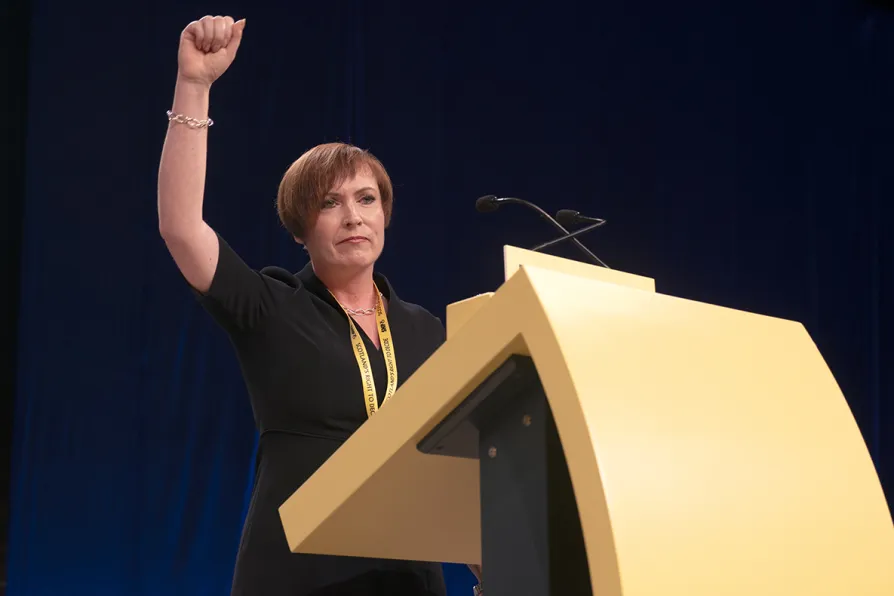 STUC general secretary Roz Foyer delivers a speech during the SNP annual conference at the Event Complex Aberdeen, October 11, 2025

ANDY McDONALD MP says Labour must show it is capable of delivering real improvements in people’s lives — bold action is required
ANGUS REID and ANDREW JOHNSTONE report on an initiative that we must take this summer
ALLISON FEWTRELL on what Plaid Cymru's historic election victory means for the communities being failed by Wales’s housing crisis, and four things the new government can do right now
France Insoumise MP JEROME LEGAVRE speaks to Christophe Domec on building the Europe-wide peace movement that came together in the International Conference Against War last weekend
At last weekend’s International Conference Against War, LINDA PENTZ GUNTER talks to the Palestinian physician and politician about the struggles ahead to achieve a truly free Palestine





SCOTLAND’S trade union movement has always understood a simple truth: progress does not arrive by accident.
It’s won by workers. Each year, at STUC Congress, working people from across the country come together to do exactly that — to debate, to decide and to unite behind the demands that can shape a better Scotland.
For those who are new to our ranks, there can be some confusion or even downright misinformation about what Congress is. Simply put, it’s the expressed voices of unions, their workplaces and their communities.
It is where care workers and engineers, teachers and transport workers, young members and seasoned activists converge with a shared purpose: to turn lived experience into collective action.
In a political moment defined by global instability and domestic unrest enforced by far-right forces, collective action has never been more important.
This year’s Congress theme — “Workers United, Demanding Better” — is pertinent. Across Scotland, unions are working alongside communities, campaigning not just in workplaces but in towns and cities, building alliances that stretch far beyond traditional boundaries.
Whether it is through local trades councils confronting division and extremism — with Clydebank, Dumfries, Falkirk, Edinburgh TUCs, to name but a notable few, or community campaigns for energy ownership, like Moray TUC, the message is clear: when working people come together, they are a force that cannot be ignored.
That unity matters because the challenges facing working people are profound. The cost-of-living scandal continues to cause hardship and strife to so many; public services are stretched to breaking point; secure, well-paid work remains out of reach for too many and, all the while, wealth continues to accumulate in fewer and fewer hands.
What is a kick in the teeth to workers is that we all know things can be different.
That is why STUC Congress matters so much in an election year. It is where the priorities of workers are set out clearly and collectively. It is where we flip the dynamics of power; for those who seek our votes, they must agree to our demands.
The demands coming from Congress aren’t abstract nor archaic. They are rooted in the everyday realities of working people’s lives. First and foremost, there is the need for high-quality jobs: secure, unionised work that pays a fair wage and provides dignity. Work should be a route to a decent life and the uplifting of societal standards, not a source of insecurity or hardship. Delivering that means strengthening employment rights, including building on the Employment Rights Act, supporting collective bargaining and ensuring that economic growth benefits workers, not the wealthy.
Alongside that sits the urgent need for a coherent industrial strategy. Scotland cannot continue to drift from one industrial loss to another, watching key sectors decline without a plan for the future. There can be no more Grangemouths. There can be no more Mossmorrans.
From energy to manufacturing, from transport to infrastructure, there must be a clear, long-term vision for how we create and sustain jobs. That means investment, public ownership and a commitment to building supply chains that keep wealth, jobs and opportunity in Scotland.
It also means recognising that economic security is inseparable from public ownership and public investment. The loss of strategic assets and industries over decades has left communities more vulnerable and less able to shape their own futures. Rebuilding that capacity through governments making investment conditional upon Fair Work principles and through a willingness to act in the public interest is essential if we are to create a more resilient economy.
Underpinning all of this is the need to properly fund public services. The erosion of local services, the strain on the NHS, and the pressures facing schools and communities can no longer be ignored.
Congress is clear: austerity cannot continue under another name. Closing funding gaps by taking a sledgehammer to our public sector is not the road to economic growth.
There are alternatives. A fairer tax system, investment in public services, and an end to the outsourcing model that drains billions from the public purse are all within reach. The issue is not a lack of resources, but a lack of political will.
In that sense, STUC Congress reflects the concerns, frustrations and aspirations of working people and also provides a clear set of priorities that politicians cannot credibly ignore. Those seeking votes in the months ahead would do well to listen carefully.
Because the consequences of failing to deliver are already visible. Disillusionment with politics is at record levels with trust being eroded to the detriment of our democracy. Into that vacuum of hopelessness step those who seek to divide, to scapegoat and to offer easy answers, dripped in racism and xenophobia, to complex problems.
Trade unions have always understood that change does not come from waiting. It comes from organising. Every day, workers are doing that across Scotland’s workplaces. That will continue unabated and it’s for our political class to realise that it’s we, those who know our workplaces and communities best, who are demanding better for our people.
That is the central message from this year’s gathering. Scotland has the wealth, the skills and the resources to build a fairer, more secure society that workers for workers. What has been lacking is the political courage to make it happen.
Political courage is therefore no longer an optional extra, it’s demanded. We know what needs to be done and we know workers have had enough of managed decline, enough of broken promises and enough of inequality dressed up as inevitability. The question for those seeking office is whether they are prepared to do it.
Because ultimately, the power that matters is not exercised once every five years at the ballot box. It is built every day — in workplaces, in communities and here at Congress — where working people unite, organise and demand better.
Roz Foyer is general secretary of the STUC.