All the evidence shows voters want Labour to shift to the left — but initial signs from Andy Burnham are worrying on that front, cautions DIANE ABBOTT


 Latest editorial
Error message
An error occurred while searching, try again later.Salmon workers’ safety fears ignored
Dangerous conditions and political inaction still define the salmon industry, where BFAWU is pressing hard for change, says SARAH WOOLLEY
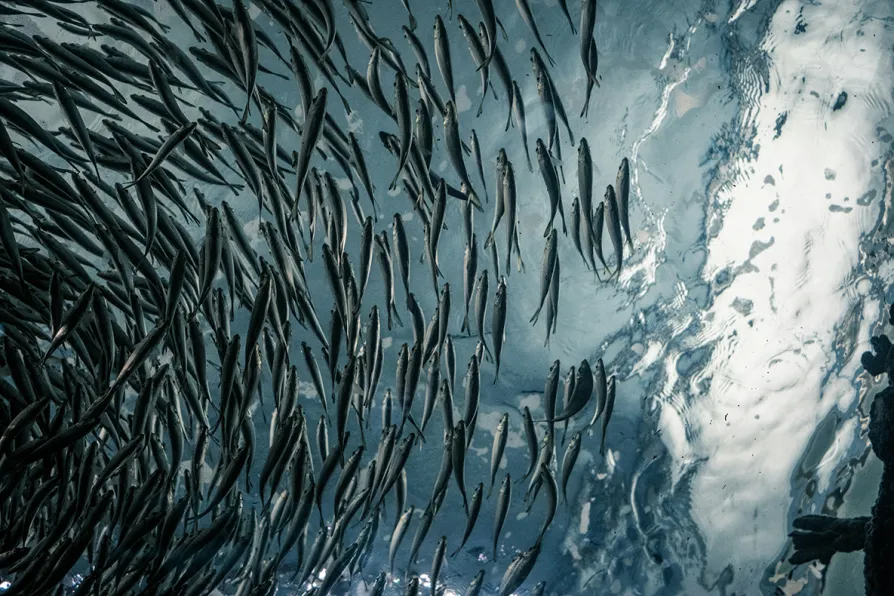 [Pic: Lance Anderson / Creative Commons]
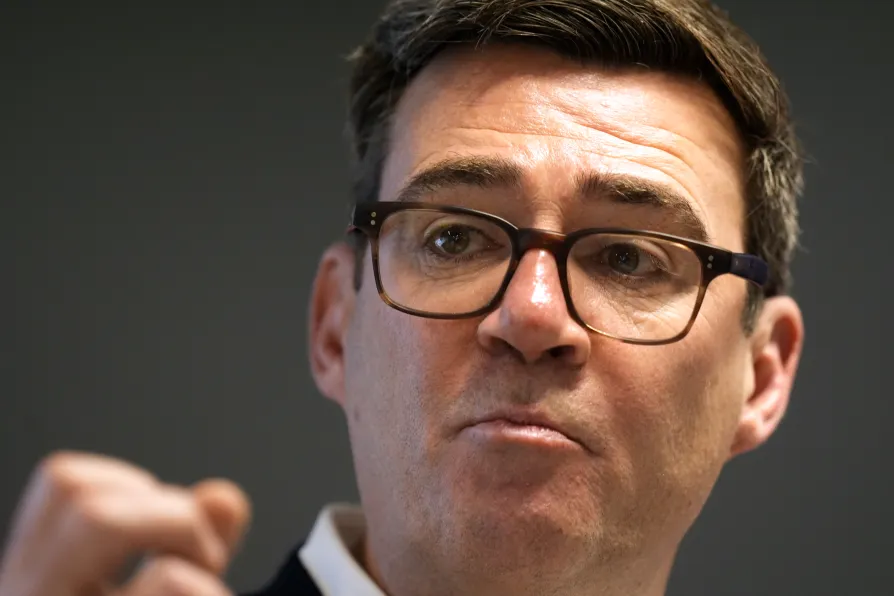
ANDY McDONALD MP says Labour must show it is capable of delivering real improvements in people’s lives — bold action is required
ANGUS REID and ANDREW JOHNSTONE report on an initiative that we must take this summer
ALLISON FEWTRELL on what Plaid Cymru's historic election victory means for the communities being failed by Wales’s housing crisis, and four things the new government can do right now
France Insoumise MP JEROME LEGAVRE speaks to Christophe Domec on building the Europe-wide peace movement that came together in the International Conference Against War last weekend
At last weekend’s International Conference Against War, LINDA PENTZ GUNTER talks to the Palestinian physician and politician about the struggles ahead to achieve a truly free Palestine




OUR union has been successfully recruiting new members at Mowi in Rosyth over the course of the past three years. This has not been an easy task due to the transient nature of the workforce, the many workers where English is not their first language, the number of temporary workers and the hostile approach taken by the management when trying to constructively engage with them.
We hope that Mowi’s approach will now change as it dawns on them that their hand is not as strong as it was as a result of the Employment Rights Act. A new reality that is incumbent on all of us to understand and use to our advantage against intransigent employers.
We have again written to the company asking them to meet with us. The Employment Rights Act changes the context of the relationship we have with Mowi and our attempts to meet and be recognised by them.
The Employment Rights Act will make it easier for unions to be recognised by employers with trigger recognition thresholds lowered, ballots simplified with the support threshold of 40 per cent being abolished and a simple majority needed to ensure recognition.
We will also now have mandatory access to workplaces to meet and organise workers. Companies will also have a legal requirement to write to all staff informing them of their right to join a union and there will be restrictions placed on employers if they are tempted to involve themselves in non-unionisation efforts.
This legislation is a significant moment in industrial relations and will ultimately lead to employers, hitherto resistant to recognising trade unions, having to do so and we hope that it proves to be a game changer for our organising efforts at Mowi where a belligerent company has tried to ignore us and hope we go away.
It is not just the industry that is ignoring, downplaying and paying little attention to the Bakers Food and Allied Workers Union (BFAWU) and our ongoing campaign to get union recognition and highlight the plight of many workers in the salmon industry.
Governments, parliamentary committees and even the Health and Safety Executive (HSE) seem not to be taking workers’ issues seriously, shown by their refusal to initiate an urgent review of health and safety despite the growing body of evidence outlining concerns.
We are of course very sympathetic to the concerns raised around fish mortality, fish welfare, sea lice etc and believe that much needs to be done to make improvements and ensure that this industry going forward is sustainable and fulfilling its regulatory requirements. Only in doing so can workers feel confident that their jobs in the salmon industry will exist in the long term.
But the conditions facing workers are at best being treated complacently by policymakers, at worst they are being wilfully neglected, with politicians instead focused on only extolling the virtue of new jobs coming to Scotland. Job creation is of course important, particularly in economically challenged rural areas of Scotland. But, the types of jobs and the health, safety and wellbeing of workers, as well as the pay, terms and conditions should also be considered. You can’t just stop and be thankful for the fact jobs are created, you must also think about what the working life is like for the workers in the industry.
Yet all parliamentary committees at Holyrood and Westminster, alongside the respective Scottish and UK governments, have failed to properly address or even think about the experiences of workers in the salmon industry. That is a fundamental failure that must be rectified.
In representing our members we have uncovered evidence that health and safety is an issue at Rosyth and across the whole industry. Testimony from our members, and our understanding of issues affecting them, led to the union’s report,On the Line, Worker Treatment and Conditions at Mowi Rosyth. This report raised concerns about inadequate toilet facilities, breaks, canteen facilities, cold working conditions, manual handling, PPE and their discretionary sickness absence policy.
Recent HSE data obtained from freedom of information requests shows an alarming regularity of severe accidents, which is disproportionate to other industries. This evidence shows finger amputations and fractures are commonplace across the salmon industry.
Out of a workforce of approximately 2,500 directly employed workers there were 139 reportable accidents across from 2020 to March 2025. We put in a further FOI request from late March 2025 until January 2026 and this showed a health and safety situation that is not getting any better with another 29 accidents reported to the HSE in just 10 months last year.
The ASC, the industry’s own auditor, also found several major non-conformities across 75 salmon farms. These included blatant breaches of labour legislation, such as excessive working hours, insufficient rest periods, incorrect overtime rates, with workers exposed to fatigue and increasing safety risks.
Another major area of concern is around bioaerosol inhalation and the respiratory diseases that workers can and do develop as a result of working in the salmon industry. It even has a name, salmon asthma.
Norwegian researchers recently reported how salmon processing workers are at risk of developing work-related respiratory diseases, allergy, and other hypersensitivity responses due to occupational exposure to airborne particles of biological origin (bioaerosols) generated during processing.
A recent paper by Norwegian academics published worrying data. This study of salmon workers, incorporating a questionnaire and spirometry tests (a fundamental lung function test used to measure how much air a person can inhale and exhale, as well as how quickly they can empty their lungs), found that: of the 867 workers regularly or variably exposed to salmon bioaerosols, 170 (20 per cent) had work-related asthma symptoms. Exposure was associated with symptoms, but not with lung function. Of the 440 exposed workers with spirometry data 9.8 per cent had expiratory airflow limitation, and all mean lung function measures were below the reference values.
Despite us raising these concerns with the HSE, the industry itself, the Scottish and UK governments and the rural affairs and island committee there has been a wall of deafening silence and inaction.
It seems that in spite of the evidence from Norway they all seem to think all is well and there is nothing to see here. Salmon Scotland’s relentless cosy schmoozing with politicians from all parties — the lobbying register shows they have met government ministers, special advisers and MSPs 110 times over the course of the past parliamentary session — has definitely paid dividends for them.
At its many meetings with Salmon Scotland and salmon companies the Scottish government even admitted to us that it has never ever raised health and safety concerns with them. Frankly, that is a disgrace, a dereliction of duty and exposes the hollowness of their so-called Fair Work agenda.
Unionised workplaces are healthier and safer workplaces. After this Scottish election we have a fight on our hands to get recognition and drive improvements to health and safety and indeed pay and allowances (to ensure parity with their Norwegian counterparts).
We need the help of the wider movement to help us — please support the BFAWU and help drive forward our campaign to improve pay, conditions and health and safety for salmon industry workers.
Sarah Woolley is general secretary of the BFAWU.