All the evidence shows voters want Labour to shift to the left — but initial signs from Andy Burnham are worrying on that front, cautions DIANE ABBOTT


 Latest editorial
Error message
An error occurred while searching, try again later.Scotland’s firefighters showed their worth in Glasgow. Now politicians must show theirs
A recent Union Street blaze showed firefighters at their best, but years of underfunding and job losses are stretching the service to its limits, writes JOHN McKENZIE
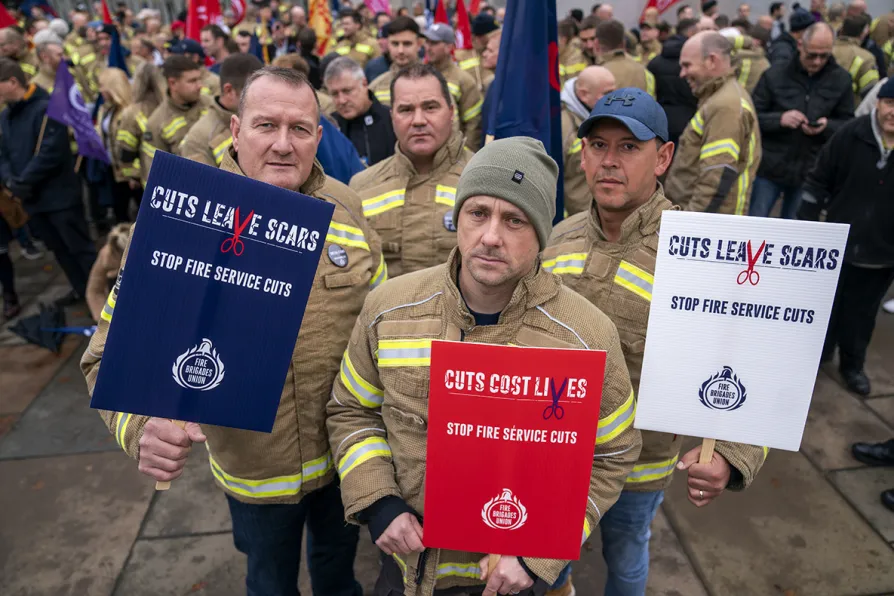 Firefighters from the Fire Brigades Union (FBU) take part in the Cuts Leave Scars rally outside the Scottish Parliament in Edinburgh, calling for an end to cuts imposed on the Scottish Fire and Rescue Service over the last 10 years, October 26, 2023
ANDY McDONALD MP says Labour must show it is capable of delivering real improvements in people’s lives — bold action is required
ANGUS REID and ANDREW JOHNSTONE report on an initiative that we must take this summer
ALLISON FEWTRELL on what Plaid Cymru's historic election victory means for the communities being failed by Wales’s housing crisis, and four things the new government can do right now
France Insoumise MP JEROME LEGAVRE speaks to Christophe Domec on building the Europe-wide peace movement that came together in the International Conference Against War last weekend
At last weekend’s International Conference Against War, LINDA PENTZ GUNTER talks to the Palestinian physician and politician about the struggles ahead to achieve a truly free Palestine





IT HAS been a little more than a month since people across Scotland watched, with worry and admiration, as firefighters battled the major blaze at the five-storey listed building on Union Street in Glasgow.
Over the course of the incident, more than 250 firefighters were deployed, with appliances and specialist equipment brought in from stations across the country. Crews remained on scene for three days before the incident was brought to a close.
That no member of the public or firefighter lost their life or suffered injury is testament to the courage, professionalism and skill of Scotland’s firefighters. Those firefighters in Scotland’s control rooms and on the incident ground deserve the country’s thanks and respect.
But gratitude alone will not keep communities safe. It will not replace lost staff, improve response times or ensure that when the next major incident happens, the right number of crews and appliances are available.
The Glasgow fire was handled by dedicated professionals doing their utmost in the toughest conditions. It was also made more difficult by years of cuts.
Since 2013, 1,250 firefighter jobs have been lost in Scotland. One in six posts have gone since 2012/13 as real-terms funding has fallen. Behind those figures are longer response times, reduced resilience and greater pressure on remaining crews.
The Scottish Fire and Rescue Service is not a luxury; it is a national strategic asset. Firefighters respond to a wide range of emergencies from fires and road traffic collisions to floods, wildfires and rescues from height. They prevent harm, protect life and property, and support communities in moments of crisis.
Demand is not diminishing. Politicians are quick to cite domestic dwelling fires (house fires) have reduced over recent years, but don’t reference the significant increase in other areas of work.
Climate change is increasing the frequency and severity of extreme weather and wildfires, and initial assessment from the Union Street fire points to lithium ion batteries being a significant contributory factor to the ferocity of that fire. The use of these batteries is widespread in vapes, e-bikes, power tools and cars — such new and emerging technologies bring with them increased risks.
Population changes and pressures on services such as the Scottish Ambulance Service and NHS highlights the need to do things differently. Evidence from previous trials and academic research clearly show the positive effect that expanding the role of firefighters could have.
Firefighters can be central to managing these risks, and providing early, lifesaving intervention but only if the service is properly resourced.
Instead, funding has moved in the opposite direction. Since the creation of the Scottish Fire and Rescue Service in 2013, real-terms reductions mean the service is expected to deliver £900 million in savings by 2027/28 — more than double its current annual resource and capital budget. The consequences are clear: reduced capacity, increased strain and growing risk.
The resource budget illustrates the gap. In 2012/13, the combined budget for Scotland’s fire services was £290.7 million. In 2025/26, the SFRS allocation stands at £332.1m. Adjusted for inflation, that earlier figure would now be just under £418.5m — more than £86m higher than today’s funding. That shortfall directly affects front-line services.
Underfunding is also visible in the condition of infrastructure and equipment. Fire stations in some areas are no longer fit for modern demands due to years of insufficient capital investment.
Recruitment has failed to keep pace with departures, and in September 2023 10 wholetime appliances were removed from availability because of financial pressures with the loss of 166 firefighter posts.
Alongside this, the Scottish Fire and Rescue Service’s Service Delivery Review raises serious concerns. The Fire Brigades Union has always supported meaningful reform, including modernising stations, strengthening prevention work and expanding the role of firefighters. But change cannot be driven by cuts.
A review that results in reduced local provision risks weakening the very service it claims to improve. There is a clear distinction between reform that strengthens capability and measures that reduce it. Communities are not safer with fewer firefighters or diminished cover.
The FBU does welcome commitments to expand the role of firefighters, in 2022 we negotiated an in-principle agreement to do just that, lack of funding has prevented the clear societal benefits being realised.
There is real potential to enhance emergency response and strengthen collaboration with partners such as the Scottish Ambulance Service and the NHS. But expansion must be properly funded. It cannot come at the expense of core services or further reductions in firefighter numbers.
This is a critical moment. Political parties are setting out their manifesto commitments, and those pledges will determine the future of Scotland’s fire and rescue service. The key question is whether they are prepared to reverse the cycle of cuts and invest in the service the public relies upon.
The Scottish Parliament bears responsibility for the reductions imposed over the past decade through inadequate budgets. Those decisions have had real consequences in communities across the country. A modern, effective fire and rescue service cannot be built on sustained financial constraint.
Scotland’s firefighters are proud of the work we do and the role we play in protecting the public. The response at Union Street demonstrated that professionalism and dedication at its best. But pride cannot compensate for diminishing resources.
Firefighters can do more to support Scotland’s communities through prevention, protection and response if they are given the tools and staffing required. Investment is not an abstract demand; it is the foundation of public safety.
The choice facing Scotland is straightforward. Continue with cuts that erode resilience and increase risk, or commit to funding a modern, properly staffed fire and rescue service capable of meeting today’s challenges and tomorrow’s demands.
Scotland’s firefighters have shown what they can do. It is now for politicians to match that commitment with action.
John McKenzie is FBU Scotland regional secretary.