Concrete proposals are needed to bring about full integration of the rail system, with real protections for workers and an end to private operators, argues EDDIE DEMPSEY


 Latest editorial
Error message
An error occurred while searching, try again later.
Time to back Scotland’s artists with a guaranteed income
Inspired by Ireland’s success, Equity urges all parties to support a basic income for artists that could unlock talent and boost the economy, says MARLENE CURRAN
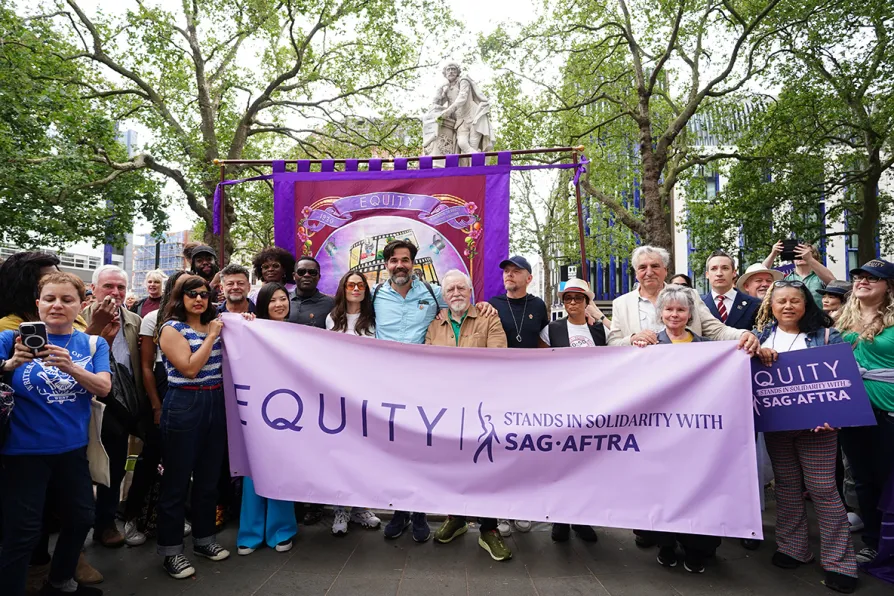 The protest by members of the British actors union Equity in Leicester Square, London, in solidarity with striking Hollywood members of the Screen Actors Guild - American Federation of Television and Radio Artists (Sag-Aftra), July 21, 2023
A recent Union Street blaze showed firefighters at their best, but years of underfunding and job losses are stretching the service to its limits, writes JOHN McKENZIE
As the STUC gathers in an election year, the message to politicians is clear – continuing managed decline is unacceptable to Scotland’s workers, says ROZ FOYER
A major new report highlights the the dire state of our prison system – and demands urgent action from government, explains PHIL FAIRLIE
Dangerous conditions and political inaction still define the salmon industry, where BFAWU is pressing hard for change, says SARAH WOOLLEY




EQUITY has called for a Scottish basic income for artists, and it seems Holyrood candidates are on board, with both Scottish Labour and the SNP backing versions of our call.
Now it’s time for all parties and our trade union movement to get behind this innovative policy which would support working-class artists and make Scotland the leading nation in the UK for developing a fairer creative economy.
You may have heard of the argument for a universal basic income (UBI). That’s not what we’re calling for here, although there are of course similarities.
Equity, as a union representing people working across the entertainment and performing arts, is advocating a more focused basic income for artists (BIA). This would be a regular payment for the successful number of applicants who work in the creative industry and are based in Scotland. We argue that a society which gives the BIA to creatives will reap the benefits for the economy, its people and the arts. Scotland must grab this opportunity and lead the way in the UK.
A BIA would bring increased dedicated time to the arts, something that would benefit everyone, not only those working in the sector, with improved health, wellbeing and sense of place. Crucially, a BIA would help remove the class privilege of those who can work in the arts, making it a viable career for the many talented working-class Scottish creatives who cannot rely on the bank of mum and dad for a leg up.
Addressing the class barrier would bring through innovative Scottish creatives making home-grown Scottish art and help develop and deliver modern Scottish art and culture to wider audiences.
The economic benefits are clear too, both within the creative sector and the wider economy. A BIA would help retain talent in the sector and have an increased economic return. Arts and culture boost local economies, bringing audiences into our town and city centres and increasing hospitality, transport and other sectors.
This isn’t pie in the sky (or even Skye). The Republic of Ireland has successfully piloted and now introduced a basic income for the arts.
In 2022, the Irish government launched a pilot scheme of the BIA to address the issues that precarious earnings and unstable working conditions in the industry brings. In the pilot, 2,000 artists were randomly selected from over 9,000 applicants. Throughout the three-year pilot programme, each artist selected received €325 (£283) a week. Research over the three-year period confirmed that supporting creatives and artists financially, with the BIA, generated economic returns.
For every €1 invested by the Irish government, €1.39 was returned to the economy. The cost of the BIA programme’s net cost fell from €105 million (£91m) to under €72m (£63m) due to tax revenue and reduced welfare use.
Ireland will adopt the BIA scheme permanently from this year (2026), due to the success.
Equity is recommending that the new Scottish government actively support workers in the creative industries by piloting a Scottish basic income for artists programme.
Just three weeks after we launched our campaign, Scottish Labour was the first party to back a form of a basic income for artists.
Anas Sarwar pledged that Scottish Labour will set up a pilot scheme of a creative enterprise allowance, a weekly payment, supporting up to 1,000 creatives and artists over a two-year pilot from a £30m funding pot. A great early win for Equity, and one we welcomed.
And in the past week, the SNP has pledged in its manifesto to introduce a Scottish artists minimum income, closely based on the successful Irish model. The SNP’s commitment outlines how up to 2,000 artists and workers would benefit from almost £15,000 a year with a £30m funding pot for the pilot scheme. Another boost for creatives and an Equity win!
While they fall short of backing our call for a BIA, the Scottish Greens have pledged to “improve pay and conditions for arts and cultural workers” with a focus on achieving the Real Living Wage.
We urge them to go further and seriously consider our BIA proposals.
The Scottish Conservatives are out of step with wider sentiment and have described a basic income for artists as a “gimmick.” We think they have time to come round to the idea and urge them to investigate the positive economic and social benefits that a BIA would bring to Scotland.
With less than three weeks until polling day, Equity is asking voters to ensure that arts are on the agenda and part of their voting decisions.
A basic income for artists would transform the industry socially by removing financial barriers and be economically viable for Scotland.
It would allow iconic Scottish culture to thrive while adhering to the Scottish government’s Fair Work First framework.
We’re asking all Holyrood candidates to back a pilot scheme of a Scottish BIA and for voters to recognise this important area when casting their votes on May 7.
Marlene Curran, Equity Scotland official.