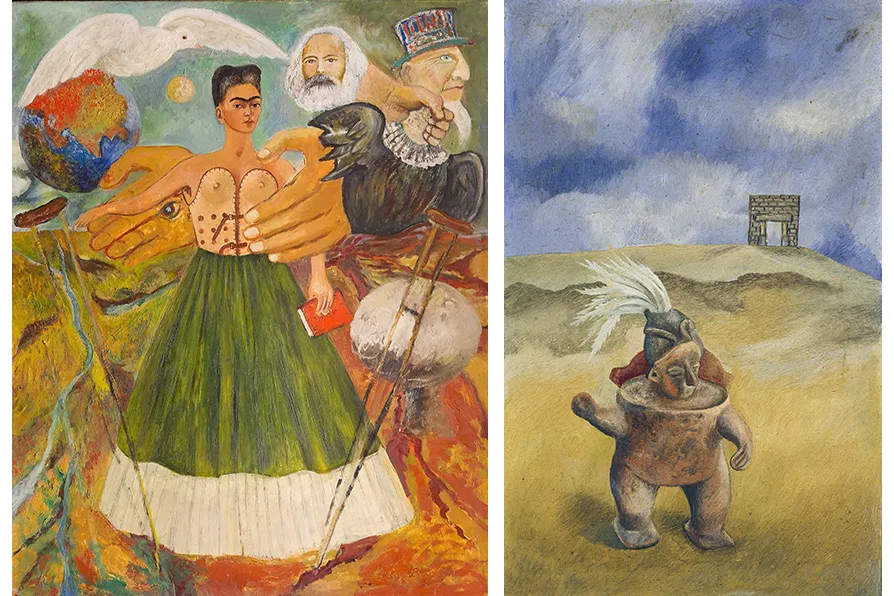
To rescue Kahlo from the clutches of the corporate art market, we need to acknowledge the overt and covert political dimensions of the work, demands GAVIN O’TOOLE


 Latest editorial
Alienation and the pop song
ANDY HEDGECOCK explores the implications of a recent statistical study of music lyrics that highlights the role of monopoly capital in silencing complexity
 CATTLE MARKET: Ready for showtime #xfactor
[Jovan Marković/CC]
CATTLE MARKET: Ready for showtime #xfactor
[Jovan Marković/CC]
If you can see past the relentless commodification you will be rewarded by enormously powerful work, suggests JENNY MITCHELL
CHRIS SEARLE revels in the one-off collaboration between an American polymath and a British Muslim, and detects the presence of their revolutionary forebear
GORDON PARSONS revels in an ebullient production of Shakespeare’s magical comedy
BRENT CUTLER welcomes a thoughtful analysis of the Erdogan regime, viewed through the evolving history of a neighbourhood in Istanbul
GORDON PARSONS regrets the price, but is dazzled by an outstandingly ambitious study of the way art restoration in particular, and culture in general was weaponised by the Nazis





“WE learned more from a three-minute record, baby, than we ever learned in school,” proclaimed Bruce Springsteen in one of his paeans to the transformative power of music. The New Jersey rocker has seldom been guilty of understatement, but there’s a grain of truth in this line from No Surrender (1984).
In my early teens, the idiosyncratic observations and complexity of songs by Joni Mitchell, Peter Gabriel and Be Bop Deluxe instilled a lifelong love of language. David Bowie led me to the work of Jean Genet, William Burroughs and the New Wave of science fiction. Al Stewart’s Year of the Cat (1976) taught me about syllepsis, a rhetorical device: “She comes out of the sun in a silk dress running, like a watercolour in the rain.” These were songwriters who respected their audience. Do contemporary musicians offer the same level of sophistication and challenge?
There’s a trap for older listeners here: the nostalgia-fuelled temptation to cherry-pick a crass chorus from the current download chart and compare it to a classic line from one’s youth.

Similar stories
New releases from Kneecap, Sam Blasucci, and Juni Habel
New releases from The Dreaming Spires, Bruce Springsteen, and Chet Baker
New releases from Allo Darlin’, Loyle Carner and Mike Polizze

RON JACOBS welcomes a survey of US punk in the era of Reagan, and sees the necessity for some of the same today