All the evidence shows voters want Labour to shift to the left — but initial signs from Andy Burnham are worrying on that front, cautions DIANE ABBOTT


 Latest editorial
Error message
An error occurred while searching, try again later.The struggle against the Monroe Doctrine goes on
Continuous US threats against Cuba and Venezuela are a grave threat to democracy throughout the region, writes FRANCISCO DOMINGUEZ
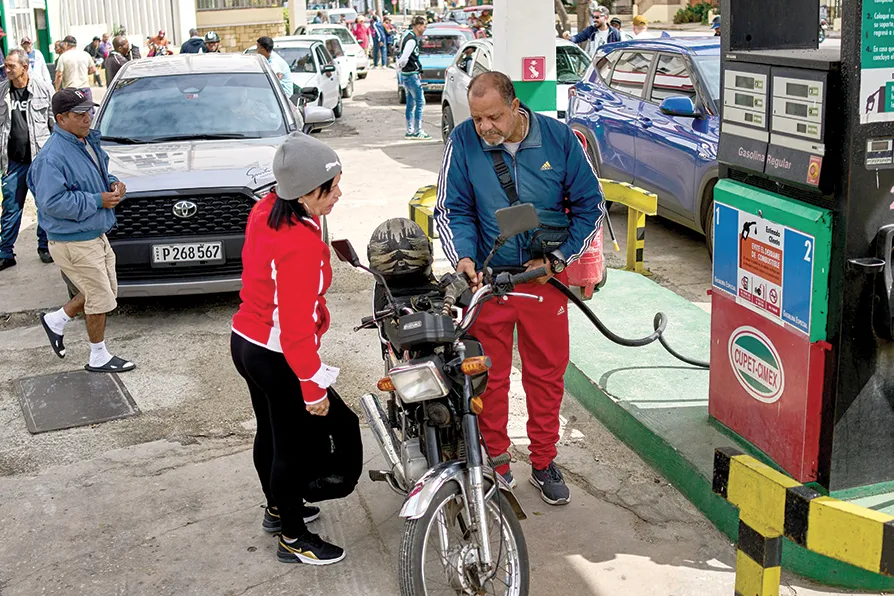 DAILY MISERY: A driver refuels a motorcycle as other drivers wait in a long line at a petrol station in Havana, Cuba, Friday, January 30 2026
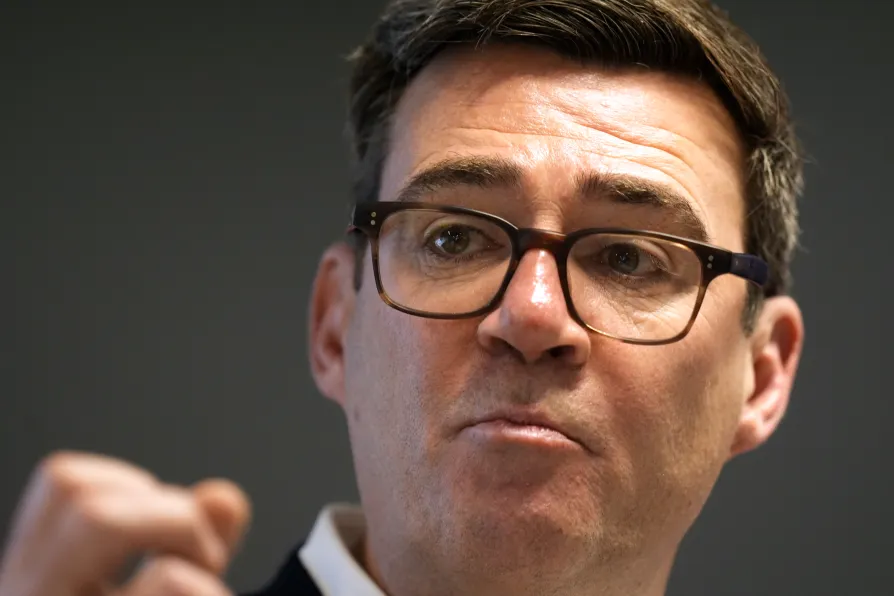
ANDY McDONALD MP says Labour must show it is capable of delivering real improvements in people’s lives — bold action is required
ANGUS REID and ANDREW JOHNSTONE report on an initiative that we must take this summer
ALLISON FEWTRELL on what Plaid Cymru's historic election victory means for the communities being failed by Wales’s housing crisis, and four things the new government can do right now
France Insoumise MP JEROME LEGAVRE speaks to Christophe Domec on building the Europe-wide peace movement that came together in the International Conference Against War last weekend
At last weekend’s International Conference Against War, LINDA PENTZ GUNTER talks to the Palestinian physician and politician about the struggles ahead to achieve a truly free Palestine




DONALD TRUMP’S order that the US military attack Venezuela on January 3 2026 led to heavy bombardment of four cities (Caracas, Miranda, La Guaira and Maracay), focusing on military and civilian targets, leading to the violent kidnapping of President Nicolas Maduro and his wife, Cilia Flores, both of whom were taken prisoner and flown to New York City.
The US government’s narrative to justify this blatant violation of international law evolved from bogus charges about the Venezuelan government being responsible for “drug-trafficking” and “narco-terrorism,” attempting to obscure the real objective: taking possession of Venezuela’s oil — the world’s largest reserves — by military force.
After the US military assault on Venezuela, Trump claimed that Venezuela had taken “our oil away from us” and had stolen “our assets.” In the same vein, White House deputy chief of staff Stephen Miller, leading right-wing ideologue in the US administration, said that since the US “created the oil industry in Venezuela,” its nationalisation in 1976 “was the largest recorded theft of American wealth and property.”
The US war fleet deployed in the Caribbean (Operation Southern Spear) had nothing to do with fighting “drug trafficking” or “narco-terrorism” but everything to do with violent “regime change” to control Venezuela’s oil.
In fact, Trump announced he was putting Venezuela under temporary US control: “We will run the country until such time as we can do a safe, proper and judicious transition” and that major US companies would move into Venezuela.
The US war fleet – the largest in 30 years – is still deployed off the coast of Venezuela and, at a US Senate hearing, Marco Rubio repeated Trump’s threat: force could even be used to ensure “maximum co-operation – from the interim president – if other methods fail.”
In short, the Venezuelan interim government has a US gun pointed at its head.
Then the Department of Justice (DoJ’s) false contention that Venezuela was run by the non-existent drug Cartel de los Soles, allegedly headed by President Maduro and the Bolivarian government, was dropped.
The designation of the Cartel de los Soles as a foreign terrorist organisation was in November 2025. On January 6 2026 (three days after the kidnapping of Venezuela’s head of state), the US DoJ referred to it as “patronage system,” thus admitting it isn’t real.
Between September 2025 and January 2026, Operation Southern Spear involved the blowing to smithereens of 29 small boats and the extrajudicial killing of well over 100 alleged drug-traffickers and narco-terrorists.
Yet US authorities squarely refuse to provide any information about the individuals executed or present any evidence. After President Maduro’s kidnapping, US strikes against small boats have altogether stopped.
Paradoxically, US pundits, politicians and retired generals have pointed to DEA’s (the Drug Enforcement Administration) and UNODC’s (the United Nations Office on Drugs and Crime) repeated reports that over 85 per cent of the cocaine produced in Colombia reaches the US trough the Pacific, that a tiny proportion (5–7 per cent) tries – not always successfully – to use Venezuela as a transit route and that Venezuela’s contribution to fentanyl trafficking is zero.
Trump’s pardon for former Honduras president Juan Orlando Hernandez who was serving 45 years in prison for having shipped 400 tonnes of cocaine into the US, confirmed that the US military attack on Venezuela was definitely not about drug-trafficking.
Interestingly, Trump dismissed extreme right-wing politician Maria Corina Machado out of hand as a replacement of President Maduro because she “is not respected,” ie she does not enjoy support in Venezuela (even less after her abject servility to Trump led her to give the US president her Nobel Peace Prize medal).
This means the Bolivarian state is shaken but intact.
No sooner had Trump and Rubio accepted the limitations of what they could impose on Venezuela, and, grudgingly, recognised the interim president’s authority, Washington launched a smear campaign against Delcy Rodriguez, saying she was “compromising on the heritage of President Nicolas Maduro and Hugo Chavez.”
A UK daily went as far as to report of secret meetings held by Rodriguez to hand over President Maduro. The corporate media seek to portray her as a “Trump asset” falsely claiming her appointment as interim president had been the “result of prolonged negotiations.” The obvious aim is sowing divisions in the Chavista movement.
Rodriguez’s appointment as interim president by the Supreme Court has the full support of the National Assembly, the United Socialist Party of Venezuela (PSUV) and the armed forces. This has ensured constitutional continuity and secured political normality.
Her very first statement (January 4 2026) as interim president was to demand the immediate release of President Maduro and First Lady Cilia Flores firmly stating: “The only president of Venezuela is President Nicolas Maduro.”
She also implemented a Maduro executive decree placing the country in state of upheaval and activated the National Defence Council.
On the same day, a special extraordinary summit of Celac (the Community of Latin American and Caribbean States) took place prompted by the US attack on Venezuela at which Venezuela’s Foreign Minister Yvan Gil Pinto demanded Celac request the immediate withdrawal of all US military forces in the Caribbean with Cuba demanding “due respect for Venezuelan territorial integrity and independence and the immediate release of the Venezuelan leader and his wife.”
The following day Venezuela demanded an urgent meeting of the UN security council at which the US attack on Venezuela and the kidnapping of its president were deemed unjustifiable crimes, and the immediate release of Nicolas Maduro and his wife was demanded.
In response to Trump’s contention that the US was running Venezuela, interim Rodriguez retorted: “The government of Venezuela rules in our country and no-one else; there is no external agent that governs Venezuela.” On January 7 2026 at a mass march of women to demand the president’s safe return, Interior Minister and PSUV general secretary Diosdado Cabello spoke pointed out that US military actions had generated deep anti-imperialist sentiment in the country.
The mainstream media have also focused on the updating of Venezuela’s existing law ruling over the nation’s oil industry — the Hydrocarbons Law — which is deliberately misrepresented as US-forced privatisation.
The law was unanimously approved by the National Assembly and strongly supported by the labour movement and is, in fact, a reform of the existing Anti-Blockade Law and very similar to Cuba’s Law of Investments — both having the same aim: to attract direct foreign investment to their blockaded and sanctioned economies given their inability to generate sufficient resources domestically.
In line with Rodriguez’s policy, Foreign Minister Gil Pinto condemned the forced sale of Venezuela-owned oil company Citgo operating in the US as one of the most outrageous acts of “theft, criminality, and judicial piracy in modern history.”
Encouraged by the attack on Venezuela, Trump will impose tariffs on imports from countries that sell or supply oil to Cuba and has deployed two warships to the north of Cuba. This is gunboat diplomacy on steroids.
Naturally, Cuban President Miguel Diaz-Canel slammed the aggression: “We will face this new onslaught with firmness, equanimity, and the certainty that reason is absolutely on our side.”
Gil Pinto also condemned it as a flagrant violation of international law, an attack on national sovereignty and said that free trade should not be subject to coercion. He added: “To consider Cuba a threat to the national security of the United States of America is absurd and poses a serious threat to its very existence as a nation.”
Both statements typify the independent governments leading sovereign nations.
US gunboat diplomacy is seriously jeopardising Venezuela’s, Cuba’s and Latin America’s sovereignty. The struggle against the Monroe Doctrine continues.
For the immediate and unconditional withdrawal of the US war fleet illegally deployed in the Caribbean!
No War on Venezuela! No War on Cuba! No War on Latin America!
For the immediate and unconditional release of President Maduro and Cilia Flores!
Francisco Dominguez is secretary of the Venezuela Solidarity Campaign.