The PM says Mandelson 'betrayed our values' – but ministers and advisers flock to line their pockets with corporate cash, says SOLOMON HUGHES


 Latest editorial
Error message
An error occurred while searching, try again later.
Austerity on the table: Britain’s food workers driven into hunger
New survey findings from the BFAWU reveal a grim reality: low wages and years of government cuts have left millions unable to afford food, heating or a dignified life. A legally enforced right to food is now urgently needed, argue SARAH WOOLLEY and IAN BYRNE MP
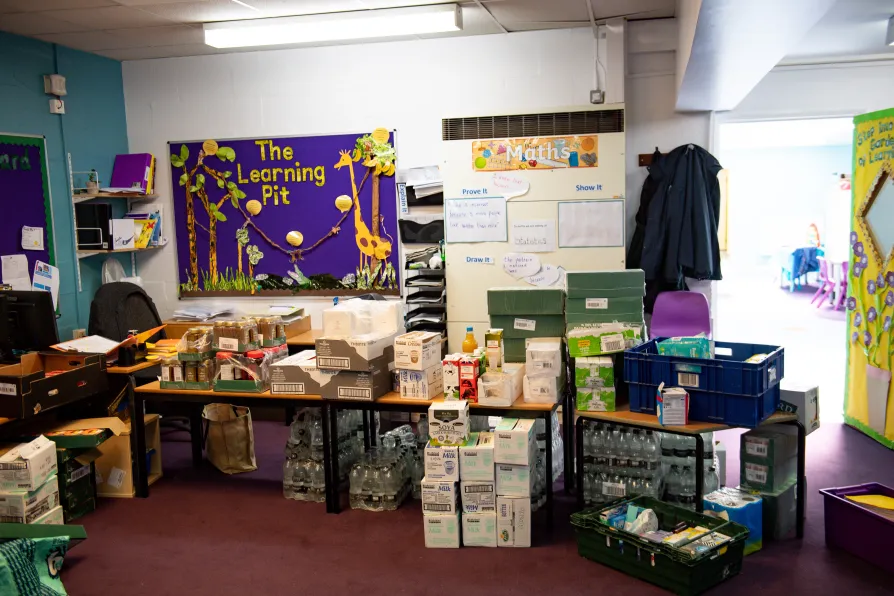 UNAFFORDABLE: A foodbank at Kempsey Primary School in Worcester. Families are struggling to pay for basics

DR GLYN ROBBINS ties fights at universities and sixth-form colleges to the consequences of the market system that began a generation ago with tuition fees
In the first of a series of articles, Storming the Heavens author JENNY CLEGG introduces the key themes of her book on the Chinese revolution
The far right thrives on division, but denying racism within the left only strengthens it. As we mobilise for the All Together March, real solidarity demands honesty about our own failures, argues ROGER McKENZIE
TOM GALLAHUE argues that asking what role Irish diaspora educators can play in shaping Irish unity is to ask a deeper question about democracy itself
Hundreds in Berlin gathered on January 15 to honour the US-born socialist who made East Germany his home. Florentine Morales Sandoval reports





COST-of-living pressures brought on by low wages, cuts to welfare and 15 years of a destructive austerity programme on top of an already ruinous neoliberal economic system and a massive wealth redistribution in reverse, from the working class to the super-rich, has resulted in millions of people in this country unable to afford the basic necessities needed to comfortably get on in their day-to-day lives.
One central consequence is food insecurity. Millions of people are today feeling food insecure in this country. This means they are eating less, skipping meals, choosing cheaper, less healthy and less nutritious options, are reliant on family and friends to eat and worry if they will have enough money to buy the food they need to eat each day.
As a result foodbanks, literally unheard of until the Tory and Liberal coalition austerity began in 2011, are a normalised part of our society. In the Britain of 2025 it is a scandal that millions are reliant on charity to feed themselves and their children. The real-life consequences from food insecurity, particularly on children, are profound.
Child development is stunted, meaning that long-term life outcomes are negatively affected. Educational attainment is hindered and subsequent employment opportunities reduced. The fact that so many children go to school, and to bed at night, hungry amounts to state sanctioned child cruelty. Ultimately, a price is paid by the whole of society for the way we treat so many of our fellow citizens, but of course the price is mostly felt by those who are directly affected.
The millions affected by this situation also includes people in work. The Bakers, Food and Allied Workers Union (BFAWU) recently surveyed its membership to understand from them how they were affected by cost-of-living pressures. The results are grim and an indictment on the way our economy is organised and how so many workers are treated in the workplace.
The BFAWU survey of their members found how, in spite of being in-work, six out of 10 of food workers and members of the BFAWU say that their wages are insufficient for them to meet their basic needs like food and energy and that they are fearful of running out of food due to a lack of money.
Nearly half said they are feeling food insecure, and three out of 10 reported they don’t have enough food to feed them and their families. Only 13.5 per cent said they are not eating less, the rest say they are eating less to some extent and 83 per cent said they choose to eat cheaper alternatives, which invariably mean they eat lower-quality, less nutritious food.
A growing number also reported that they are skipping meals, while relying on friends and family and/or foodbanks to eat. The number of workers reliant on foodbanks has actually grown each time the bakers’ union has conducted such a survey (the previous ones were in 2021 and 2023).
It is not just food where food workers are struggling. Nearly nine out of 10 say they have reduced their heating to save money, with almost 40 per cent saying they were either cold all the time or most of the time in their own homes while over 50 per cent said they were dreading this winter because they feared they wouldn’t be able to afford to heat their homes.
With Christmas on its way, 45 per cent of BFAWU members said they would not be able to eat what they would like this Christmas and 55 per cent said they would not be able to provide everything for their family that they want to. This underlines how it’s not just the basics that people lack the means to purchase. It is also the ability to live their lives in dignity and do the things they want to provide enjoyment and happiness to themselves and their families.
Some of the quotes in the report are heartbreaking.
One said “We are cold, sometimes hungry, I don’t wash clothes as much because of electricity and water, I still don’t have enough for my rent.”
Another described how they felt and what life was like for them: “Clock-watching and meter-watching, anxiety about energy prices. Physically cold and sometimes hungry. Waiting to eat until I go to work where I get a meal per shift and the heating is on.”
Another said: “It’s constantly cold in the house, we only put hot water on when needed, sit in darkness too sometimes, making everyone depressed.”
Another food worker described how: “It makes you feel degraded when you work so hard for your wages and then struggle to buy food, whether to put heating on or sit under a duvet and a coat.”
Another said: “It makes others cold in the house, sometimes skipping meals close to payday and cutting back on cheaper alternatives that are not as nice and eating less. It makes people generally in the household feel down a lot of the time especially when I’m fully working and bringing in a full-time wage.”
Another rightly said: “Like life shouldn’t be this hard. I earn a good wage and it should be enough to afford to eat and heat without worry but it’s not.”
Among the many contributions our members regularly said they felt ashamed, depressed, miserable, degraded and embarrassed. Their testimonies are a shocking indictment on how food workers in this country are treated.
That the people who grow, process, produce, deliver and serve our food are feeling this way because they are not paid enough to cover basic necessities like food and heating is a shocking stain on our country.
In this UK-wide survey over 90 per cent of BFAWU members said that they felt the government was not doing enough to help families struggling with cost-of-living pressures. It is now time for the government to listen and act.
Radical economic action is needed to help people and alleviate the cost of living pressures facing them in real and tangible ways.
To make sure people in this country are fed properly we have been campaigning for Right to Food legislation. We have recently formed a Right to Food Commission and this commission will provide a legislative roadmap for policy-makers so that a right to food is legislated, ensuring that not one single person goes hungry in this country in the future.
This is exactly the type of change that people need and want this government to deliver. This latest BFAWU survey, as well as the mounting evidence of hunger and fuel poverty affecting millions of people makes clear that the economic challenges facing people are having a huge impact on their lives and wider well-being. These conditions are undoubtedly helping to drive people to the false prophets of the far right.
A new radical economic orthodoxy that makes sure people have enough food to eat and can afford to heat their homes, enjoy Christmas and ensure every child in this country is able to realise their potential is urgently needed. After all it’s not the bond markets that ensure we are fed, it’s the workers who day in and day out go to work round the clock — it’s them that need our help and support and the sooner they get it the better for them and indeed for this current government.
Sarah Woolley, general secretary of the BFAWU, and Ian Byrne MP are joint chairs of the Right to Food Commission.
To learn more about the Right to Food Commission please visit www.ianbyrne.org/rtfcommission.
To submit evidence please visit www.ianbyrne.org/rtfcommission-call-for-evidence.