All the evidence shows voters want Labour to shift to the left — but initial signs from Andy Burnham are worrying on that front, cautions DIANE ABBOTT


 Latest editorial
An emasculated Employment Rights Act gets over the line
Labour’s long-promised Act has scraped through the Lords. While the law marks a step forward, its lack of collective rights leaves workers short-changed — and sets the stage for a renewed campaign for an Employment Rights Bill #2, argues TONY BURKE



ANDY McDONALD MP says Labour must show it is capable of delivering real improvements in people’s lives — bold action is required
ANGUS REID and ANDREW JOHNSTONE report on an initiative that we must take this summer
ALLISON FEWTRELL on what Plaid Cymru's historic election victory means for the communities being failed by Wales’s housing crisis, and four things the new government can do right now
France Insoumise MP JEROME LEGAVRE speaks to Christophe Domec on building the Europe-wide peace movement that came together in the International Conference Against War last weekend
At last weekend’s International Conference Against War, LINDA PENTZ GUNTER talks to the Palestinian physician and politician about the struggles ahead to achieve a truly free Palestine





AND SO the Labour government’s Employment Rights Act is finally through the House of Lords, as Tory peers faced the threat of sitting through Friday and Saturday in the week before Christmas.
The Tory peers were under great pressure from the CBI and other employers’ bodies worried about losing concessions they had already gained, day one rights extended to six months, so they dropped their final amendment to the Bill (in regard to compensation payments from employment tribunals) after trying to wreck it altogether — aided and abetted by Lib Dem peers.
The Employment Rights Act is a long way short of what was promised in the green paper, New Deal for Working People, but nonetheless, even in its diluted form, it was a clear Labour manifesto commitment that the unelected Lords sought to water down even further to the point where Unite general secretary Sharon Graham said it was a “shell of its former self.”
Of particular note is the fact that the Act was opposed by 47 hereditary peers in one vote and 33 in another that defeated the government by 24 votes.
As the campaign’s Lord John Hendy KC has pointed out there is the so-called “Salisbury convention that Bills fulfilling the government’s manifesto commitments must be allowed to pass.”
He also notes “the struggle over the Employment Rights Bill, and the House of Lords’ repeated attempts to block the government’s elected programme of stronger employment protections, is more than a quarrel about constitutional etiquette. It is a test of whether our democracy still has the capacity to deliver for working people.”
The Labour government had already succumbed to pressure from employers on key areas of the Act such as on zero hours, fire and rehire, day one rights, union rights to have access to workers. They sacked key ministers driving the Act through Parliament — for no apparent reason other than to appease the employers’ lobby — causing disbelief and anger across the labour movement.
Unions, lawyers and employment law specialists warned that the essential content of the Act was a platform of (although welcome) employment rights for individual workers, that mainly have to be enforced by application to the employment tribunal, rather than collective rights for unions and union members.
The average wait for an employment tribunal hearing is around 335 days from the claim being lodged, longer for more complex cases.
Research has shown that in 2013 51 per cent of successful applicants were never paid their compensation by employers; in 2025 75 per cent of applicants using the government’s employment tribunal penalty and naming scheme have not received their awards.
Little wonder that unrepresented applicants would in all likelihood just not bother.
Previous experience with the Blair government shows a Labour government is highly susceptible to pressure from the employers’ lobby. For example, the recognition procedures that allowed for non-independent unions to usurp rights originally thought only would be enjoyed by bona fide independent unions, said to have been enacted at the behest of the Murdoch print and media empire.
However, on more than one occasion Blair was confronted with concerted opposition from the House of Lords. On such occasions Blair faced down the Lords which was ultimately more successful than appeasement.
So after a deal was apparently done to set the qualifying period for ordinary unfair dismissal at six months we now have a still welcome (it would be churlish not to give it a welcome), but deficient, Employment Rights Act soon to become law.
It may be that the movers and shakers in Congress House view the Starmer government being one term only and will spend the next two years or so, before the next general election, dealing with the innumerable consultations that will arise to give effect to the new rights through regulations.
The Campaign for Trade Union Freedom, however, is calling for an Employment Rights #2 Bill to be introduced in this Parliament. The new Bill would be to implement the many areas of collective rights missing from the current version, including statutory support for sectoral collective bargaining, the right to strike and to take solidarity action, a single status of workers and for proper and readily enforceable remedies.
The campaign will be holding a major rally in March 2026 to campaign for an essential Employment Rights #2 Bill and to call for the Regulations related to the new law remaining consistent with the manifesto and for no further watering down during their drafting and consultation.
This article first appeared on Labour Outlook labouroutlook.org.
Tony Burke is co-chair of the Campaign for Trade Union Freedom and TULO officer at North Bedfordshire CLP. Follow the Campaign on Twitter/X @ctufevents and BlueSky @unionfreedom.bsky.social.

Similar stories

ADRIAN WEIR charts the intercontinental trade union solidarity with Cuba and its desperate predicament
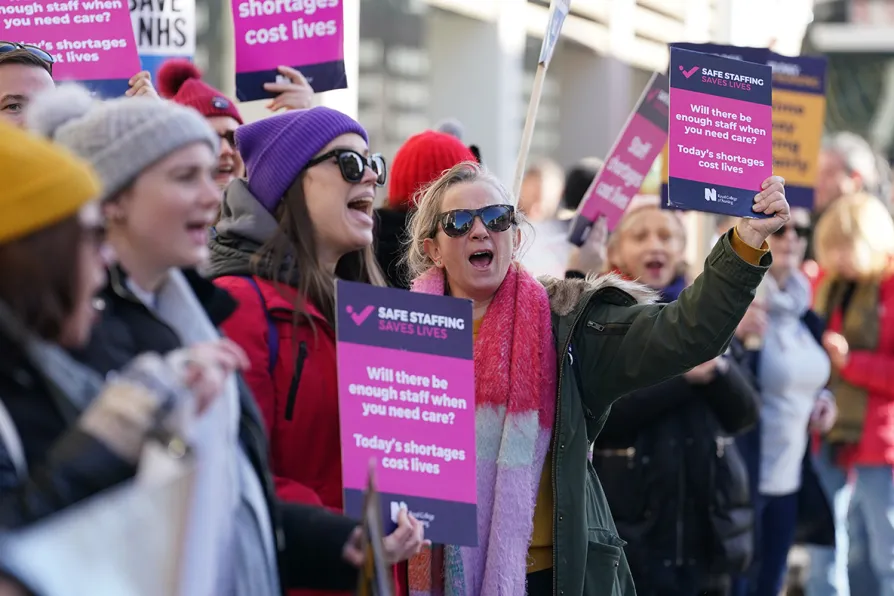
Employment lawyer ALICE BOWMAN warns ‘day one rights’ include an undefined ‘initial period’ and the zero-hours contract fixes create baffling fixed-term loopholes. If the Bill doesn’t work properly and deliver, Labour is doomed
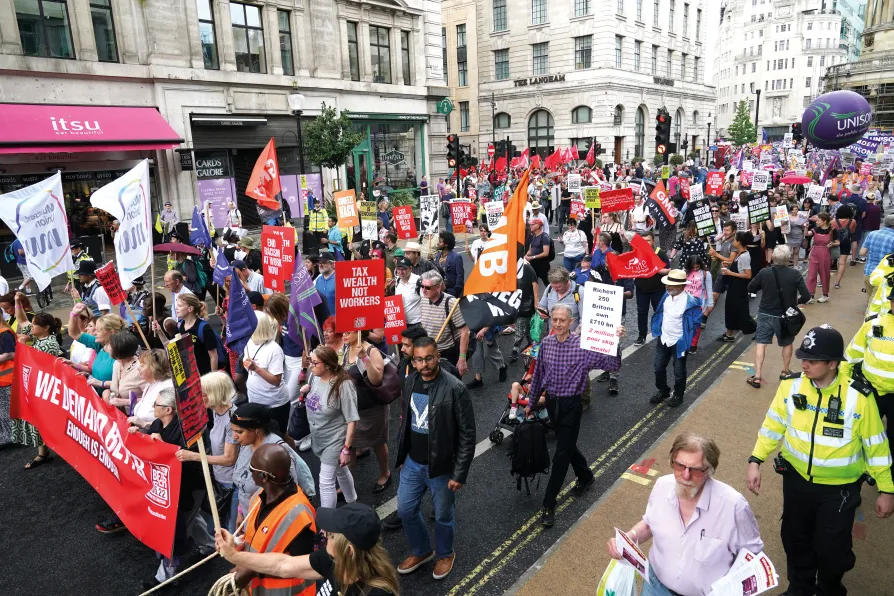
Labour must not allow unelected members of the upper house to erode a single provision of the Employment Rights Bill, argues ANDY MCDONALD MP

It is only trade union power at work that will materially improve the lot of working people as a class but without sector-wide collective bargaining and a right to take sympathetic strike action, we are hamstrung in the fight to tilt back the balance of power, argues ADRIAN WEIR