JAYNE FISHER on why the government’s latest amendments to the Crime & Policing Bill, which returns to the Commons on Tuesday, is a serious threat to our freedoms


 Latest editorial
Error message
An error occurred while searching, try again later.
Peace will give the Iranian people a chance
The June 2025 attacks on Iran have heightened the risk of a wider war, exposed the fiction of a rules-based international order and left ordinary Iranians trapped between external aggression and internal repression, says the Committee for Defence of Iranian People’s Rights
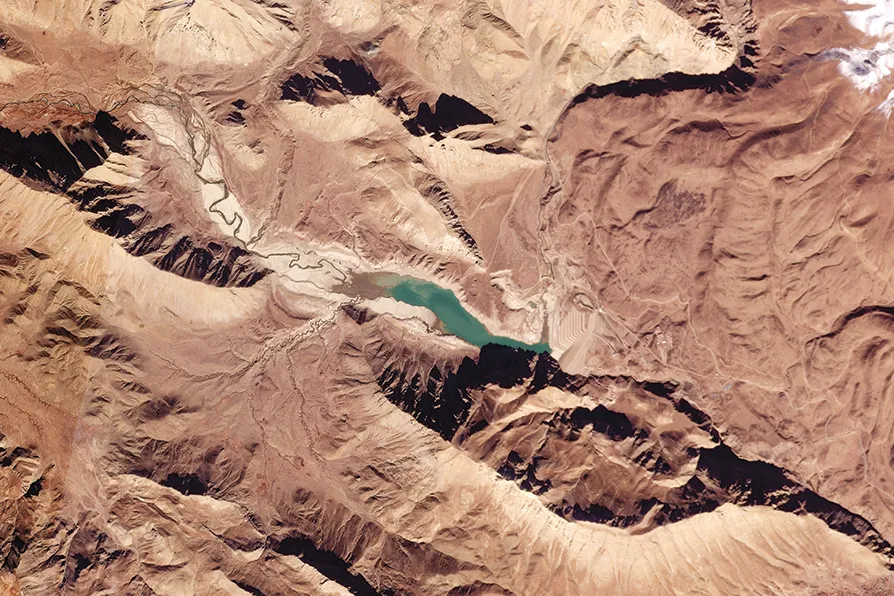 OPTIONS DRY UP: A satellite picture from Planet Labs PBC shows Lar Dam outside of Tehran, Iran on November 18 2025 and illustrates the worsening drought around the capital [Pic: Planet Labs PBC via AP]
A surge in futures activity minutes before news of US–Iran talks has led to questions about insider trading and oversight gaps, writes CJ ATKINS
In his fortnightly Borderlands column, MARK SEDDON visits overgrown forts along Offa’s Dyke and reflects on wars past and present
With attacks on industry, healthcare and education intensifying, JAMSHID AHMADI warns of a deliberate drive to cripple Iran and calls for urgent global action
The Committee for the Defence of the Iranian People’s Rights (Codir) cautiously welcomes the ceasefire, but remains suspicious of US and Israeli intentions
JOHN McINALLY assesses what we’ve learned from the disastrous US war so far





THE right to life is a basic human right which is invariably jeopardised in a war situation and undermined entirely when that war has no legal basis or legitimacy.
The attacks upon Iran, by Israel and the United States in June 2025 constituted such a war and the associated assassination of key military and scientific personnel further contravened all previously established international norms.
However, international norms are not constraints upon the behaviour of either the Israeli military or the United States, with actions sanctioned by the leadership of both nations over many decades illustrating that any notion of a “rules-based international order” is closer than ever to being a fiction than a reality.
In the case of the United States the people of Afghanistan, Iraq, Libya and Syria can testify to this in the Middle East. Interference in the affairs of Latin American nations is accepted by US ruling circles as an integral part of US foreign policy.
The ongoing illegal blockade of Cuba and the present threat to Venezuela being current examples. The encirclement of Russia by Nato, fuelling war in Ukraine, along with threatening talk of military action to restrain China, all reinforce the US perception of itself as the policeman of international capital.
For Israel the main focus has been upon Palestine, though conflict with other Arab nations, notably Egypt and Jordan, has been deemed necessary by Israel to flex its military muscles at certain points.
The emergence of the Islamic Republic of Iran, following the revolution which overthrew the Shah in 1979, and its persistence as a focus for the development of political Islam has increasingly been seen as a threat by Israel. The United States has been equally concerned with the turn of events following 1979 and was instrumental in encouraging the attack upon Iran by Iraq in 1980, which led to the Iran-Iraq war raging from 1980-88.
The war did not dislodge the Iranian dictatorship but encouraged the intensification of the arrest, torture and execution of dissident voices inside Iran and a consolidation of its control of the state by the medieval theocracy.
The fragile alliance with Iraq, having served its purpose soon saw the US perform a volte face, eventually resulting in the downfall of former ally Saddam Hussein and the fragmentation of Iraq as a functioning state following the invasion of 2003.
It is against this background that the legitimate fears of the Iranian people of further military action must be viewed. Since the attack upon Iran in June the regime in the Islamic Republic is reported to have significantly increased missile production with a view to generating enough capability to overwhelm Israeli missile defences. Inside Iranian ruling circles the threat of renewed conflict is widely considered high, with some officials and experts suggesting that another war is “only a matter of time.”
Such thinking is fuelled, not only by the desire of the regime to increase its defence capability, but also by reports from reliable Israeli sources that Israel aims to topple the existing regime in Tehran by the end of the term of US President Donald Trump in 2029. Israeli security sources indicate that Israel is preparing to respond “much more aggressively” and for hostilities to last longer than the June conflict.
The religious zealots in the Israeli government view Iran as an existential threat and, in spite of the degrading of the network of Iran’s proxies in the Middle East notably Hamas and Hezbollah, the ultimate goal remains the elimination of the regime in Iran itself.
Iran’s continued enrichment of uranium and increase in missile production are seen as sufficient justification for such an approach.
The current situation is exacerbated by the diplomatic impasse which has existed since the June attacks with efforts to resume nuclear talks between the US and Iran floundering, removing a key channel for de-escalation.
The threat of war, likely to be launched by Israel with the backing of the United States, is clearly the most urgent and pressing issue facing the Iranian people. Wider escalation across the Middle East, which could follow, would be disastrous not only for the people of Iran but would bring closer the prospect of worldwide conflict, given the geopolitical significance of Iran for both Russia and China.
In parallel, the debate over access to nuclear facilities attacked in the June assault by the United States continues, with the International Atomic Energy Agency (IAEA) recently passing a resolution requesting access to sites in Fordo and Natanz, which were hit in the strikes.
Iran’s resistance to further inspections of these sites, though it has allowed access to others, is fuelled by the reluctance of the IAEA to condemn the June attacks.
In response to the IAEA resolution Iranian ambassador to the IAEA, Reza Najafi, told reporters that, “I’m afraid the resolution will have its own consequences.” Asked what those were, he said, “We will announce the consequences later.”
Recent pronouncements from the United States suggest that President Donald Trump may be willing to break the current diplomatic impasse, claiming that Tehran is seeking a diplomatic resolution with Washington, which has sought the dismantlement of its nuclear programme.
“I am totally open to it, and we’re talking to them,” Trump said.
“And we start a process. But it would be a nice thing to have a deal with Iran. And we could have done it before the war, but that didn’t work out. And something will happen there, I think.”
The actions of the US in giving Israel the green light to attack Iran when negotiations were ongoing, and the subsequent US role in attacking nuclear sites, make it difficult to take Trump’s words at face value.
There is no doubt that a section of the corrupt leadership in Tehran realises that its survival depends upon some rapprochement with the West, while more hard-line factions are reluctant to engage in anything they would regard as compromise.
Perhaps the only certainty in the current situation is that the main losers are the Iranian people who, as well as the threat of external intervention, are also having to struggle with the impact of international sanctions, endemic corruption within the state and widespread economic mismanagement.
The response of Iranian workers to the collapsing political and economic environment they face has been to increase their demand for recognition, fair pay and employment rights. Strike action in the oil industry, the transport sector, the public sector and among pensioners has demonstrated the extent of internal resistance to the policies of the regime.
The regime continues to respond with the arrest, imprisonment and torture of trade union, cultural and academic activists, underlining its inability to fulfil the needs of its people and resort only to force to maintain its position.
The future of Iran ultimately must lie with its people and their resistance to the theocratic dictatorship, opposition to the pressures of external intervention and the demands for a non-aligned democratic Iran. Opposing war against Iran is the first step in this process and one which should be a priority for international solidarity work in the coming year. Only peace will give the people of Iran the chance they deserve.
For more information about the Committee for Defence of Iranian People’s Rights visit codir.net.