All the evidence shows voters want Labour to shift to the left — but initial signs from Andy Burnham are worrying on that front, cautions DIANE ABBOTT


 Latest editorial
The science, sex and gender debate
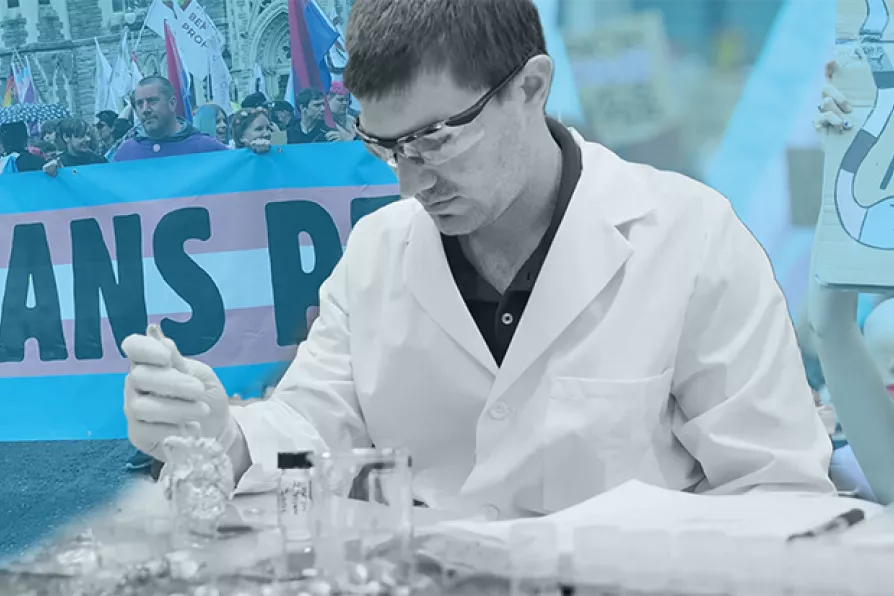
Does science 'disprove' transgender identity? No, argue ROX MIDDLETON, LIAM SHAW and JOEL HELLEWELL

ANDY McDONALD MP says Labour must show it is capable of delivering real improvements in people’s lives — bold action is required
ANGUS REID and ANDREW JOHNSTONE report on an initiative that we must take this summer
ALLISON FEWTRELL on what Plaid Cymru's historic election victory means for the communities being failed by Wales’s housing crisis, and four things the new government can do right now
France Insoumise MP JEROME LEGAVRE speaks to Christophe Domec on building the Europe-wide peace movement that came together in the International Conference Against War last weekend
At last weekend’s International Conference Against War, LINDA PENTZ GUNTER talks to the Palestinian physician and politician about the struggles ahead to achieve a truly free Palestine





BIOLOGICAL SEX is an important adaptive function for a vast number of plant and animal species. The recombination of genes during sexual reproduction allows fast adaptation by producing a kaleidoscope of new possibilities. Species that use sexual reproduction have sex gametes which divide up and recombine genes from each parent to produce a new organism.
Many species of plants and animals are also hermaphroditic. This means a single organism has both male and female sex cells, allowing for self-fertilisation where sexual reproduction does not require another organism. Other species convert between different sexes depending on their age, the sex of their peers, or their environment. Other species do not have different sexes at all.
The observation of nature is a fascinating resource to draw on when understanding ourselves as animals. We can observe both similarity and difference between ourselves and other organisms, whatever they are, as a function of our imagination and capacity to think through analogy.

Similar stories

Professor MARY DAVIS argues that feminism has been hollowed out by liberal co-option – and only a revival of socialist, class-based politics can restore International Working Women’s Day’s original, radical purpose

Comments from Matt Goodwin and Danny Kruger expose a reactionary vision in which falling birth rates are blamed on women, says JUDITH CAZORLA

Half a century after transformative laws reshaped Britain, women’s rights are again contested. This International Women’s Day is a call to remember how change was won, and to organise to defend it, says KATE RAMSDEN

WILL PODMORE welcomes the case put by a feminist, disentangling the abusive rhetoric of the trans rights debate