All the evidence shows voters want Labour to shift to the left — but initial signs from Andy Burnham are worrying on that front, cautions DIANE ABBOTT


 Latest editorial
Error message
An error occurred while searching, try again later.The crisis in the Labour Party has deep roots
Labour’s collapse in public support and the stench of sleaze around its leadership share a common origin in the New Labour project. Without a decisive rejection of this harmful ideology, the road is clear for a Farage-led government, warns DIANE ABBOTT
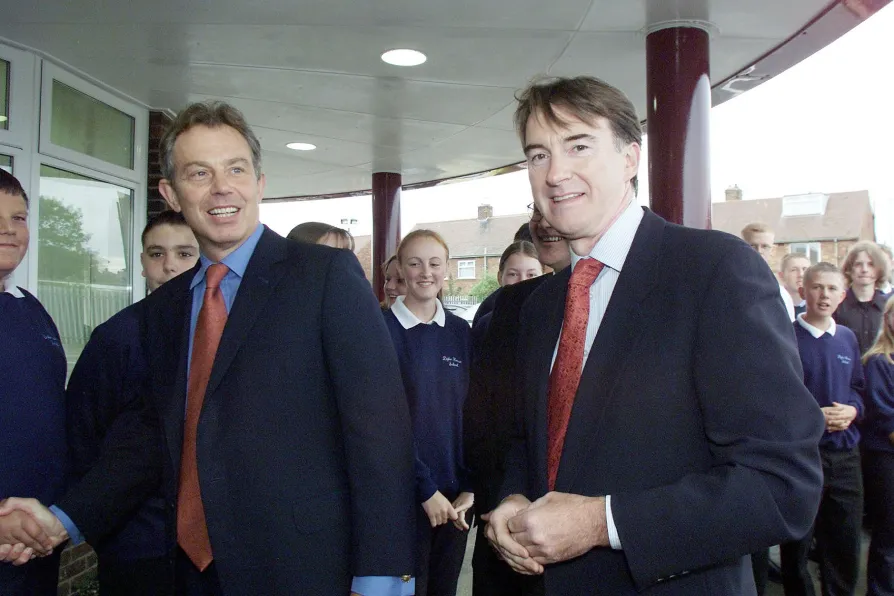 Then Prime Minister Tony Blair (left) with then Hartlepool MP and former Northern Ireland Secretary Peter Mandelson meeting pupils at the City Learning at Dyke House School in Hartlepool, September 7, 2001
ANDY McDONALD MP says Labour must show it is capable of delivering real improvements in people’s lives — bold action is required
ANGUS REID and ANDREW JOHNSTONE report on an initiative that we must take this summer
ALLISON FEWTRELL on what Plaid Cymru's historic election victory means for the communities being failed by Wales’s housing crisis, and four things the new government can do right now
France Insoumise MP JEROME LEGAVRE speaks to Christophe Domec on building the Europe-wide peace movement that came together in the International Conference Against War last weekend
At last weekend’s International Conference Against War, LINDA PENTZ GUNTER talks to the Palestinian physician and politician about the struggles ahead to achieve a truly free Palestine





ANYONE who still believes that the Labour Party is not in a profound crisis is delusional.
Less than two years into a Labour government with a massive parliamentary majority, there are open calls for the Prime Minister to go. Labour was already supported by fewer than one in five voters before the Mandelson scandal.
After it, and given that Mandelson was a central figure in the formation of the current government, the sleaze threatens to engulf the whole party and pave the way for a government of the radical right.
We can and should all do everything we can to prevent that from happening.
The roots of the current crisis stretch way back in time, to the genesis of “New Labour,” with Mandelson, Tony Blair and Philip Gould as its key architects. It connects to the current crisis (and the recurring crises throughout Mandelson’s political career) because part of the New Labour approach was extreme friendly relations business which often bordered on sycophancy. Mandelson declared: “We are intensely relaxed about people getting filthy rich.” How prescient those words unintentionally were.
The favours shown to businesses and businesspeople rapidly became a reliance on them, and a series of scandals, usually around money, dogged the entire New Labour years. This was the inevitable consequence of New Labour’s political character.
New Labour was and remains an anti-worker, anti-union and anti-socialist grouping. Its declared project was to “heal the Lib-Lab split” of the early 20th century. Where the left saw the formation of the Labour Party as a first decisive step towards political independence, New Labour saw it as a schism that handed the Tories an unnecessary grip on electoral office. The split, they believed, could be healed by the Labour Party moving rightwards.
The basis for the New Labour project was ahistorical claptrap. The decline of empire, the rise of union militancy, the entry of women onto the political stage and the first successes in the ancient struggle for Irish independence were deadly blows to Liberalism, and the attempts to put each of those genies back into the bottle are reactionary aims that fly in the face of history.
Even so, reactionary ideas last long after they have been shown to be nonsense. New Labour’s influence persists to this day, as the numerous press articles about connections between Mandelson and the current Labour leadership testify.
New Labour has also been adapting to new conditions while maintaining its reactionary core. New Labour lost the general election in 2010. It had presided over the worst financial collapse since the 1930s and offered a particularly severe example of the effects of the global financial crisis because the British economy had become so dependent on financial speculation.
Into this mess stepped “Blue Labour,” which blamed the election loss not on Blair’s record in government, his role in the Iraq war and the financial crisis, but on the notion that Labour was “too soft on immigration.”
This was a fact-free diagnosis for an election that was dominated by the financial crisis and the ostensible surge in support for the Lib Dems, who had then a very liberal approach to immigration and asylum. New Labour’s response to the Blue Labour challenge was to incorporate its anti-immigrant stance. Mandelson wrote in the Financial Times that the two currents previously at loggerheads should merge, suggesting they could come together as “purple Labour.”
The reason for delving back into this history is because Mandelson had his way. To some extent the two currents did merge and the new outfit became Labour Together. Morgan McSweeney, Starmer’s chief of staff at the time of writing, personifies this. He is said to be a protege of both Mandelson and Blue Labour’s main ideologue, Maurice Glasman.
This is the current that now dominates the leadership of the Labour Party. They have presided over a disaster for Labour and have undoubtedly made things worse for the people of this country and internationally. They care little for the effects of their policies. They are driven more by a hatred of the left.
This leadership current was mentored by a man who consorted with a convicted paedophile and child sex trafficker, even after he had been convicted. The current’s leaders, including Keir Starmer, are so in thrall to Mandelson that he was still appointed to be Britain’s ambassador to the United States, even though these actions, and perhaps others, were already known.
From outside this faction it is possible to see clearly that both Labour’s massive unpopularity and the sleaze surrounding this government have the same New Labour roots. The key question now is, what should now be done to clean the Augean stables?
The current clamour for the departure of both McSweeney and of Starmer is sure to grow. The intelligence services are extremely unlikely to have found that Mandelson is a saintly character, beyond reproach. Any reservations they expressed about him will be laid at the door of McSweeney and Starmer for disregarding or overriding them.
At the same time, the public is fully aware of the scandal. It is way beyond a “Westminster bubble” story. YouGov found that 95 per cent of the public are aware of the story. The public also has a righteous anger about anything that appears to be preferential treatment for people associated with paedophiles.
Yet it follows from the analysis outlined above that it would be wholly insufficient to deal with this crisis by changing personnel alone, however exalted a position they currently hold, or however merited their exit might be. It is the New Labour ideology and its variants that must all go.
Margaret Thatcher famously said that the emergence of New Labour was her greatest achievement. For once, she was probably right.
Sleep-walking into every war begun by the United States, demonising migrants, implementing austerity and reviving PFI, clamping down on free speech, and removing rights to protest, and the right to a jury trial are all characteristically New Labour policies.
But they are not policies based on Labour values. And they are deeply unpopular with voters. New Labour is an alien organism, and it should be surgically removed.
If not it will continue to eat away and both Labour and its support. And New Labour’s lasting legacy could well be the victory of a Farage-led or influenced government. That is something worth fighting against.
Diane Abbott is MP for Hackney North and Stoke Newington.