Latest editorial

Tehran retaliates with attacks on Israel, the Gulf Arab states and crude oil flows
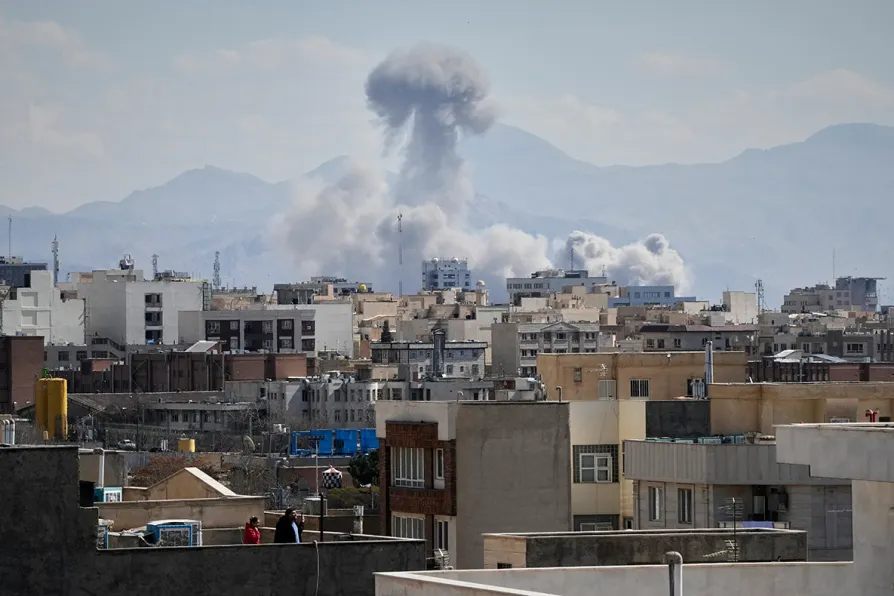
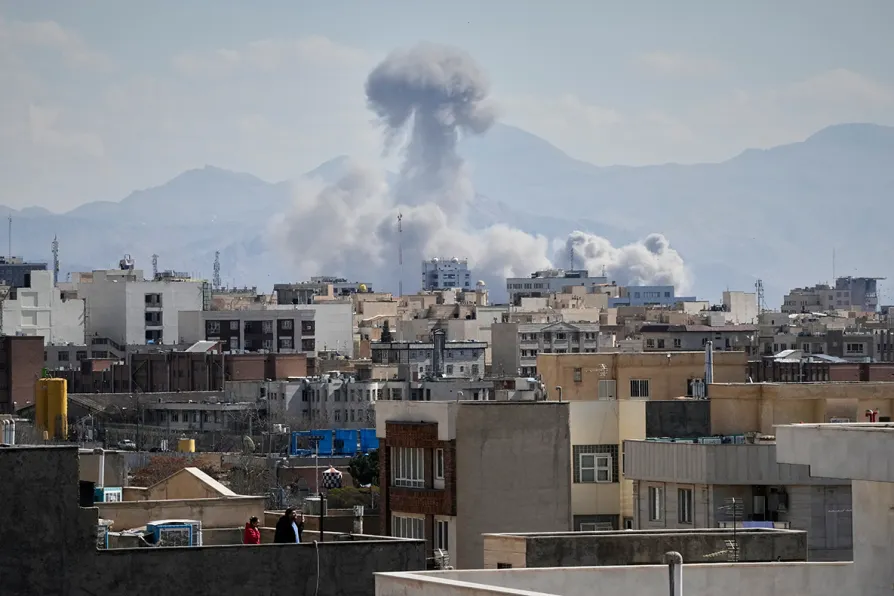 A plume of smoke rises after a strike in Tehran, Iran, March 2, 2026






WAR spread across the Middle East today as the United States and Israel continued to pound Iran while Tehran and allied groups retaliated with missiles at targets across the region.
Iran has long threatened to drag the region into total war if attacked, including targeting Israel, Gulf Arab states and crude oil flows, all of which came under attack today.
Britain, France and Germany said they would work with the US to help stop Iran’s attacks on military bases in neighbouring countries, while refusing to directly join the war.
“We will take steps to defend our interests and those of our allies in the region, potentially through enabling necessary and proportionate defensive action to destroy Iran’s capability to fire missiles and drones at their source,” they said in a statement.
“We have agreed to work together with the US and allies in the region on this matter.”
British Prime Minister Sir Keir Starmer said today he will allow US forces to use British bases to attack Iran’s missiles and launch sites in later comments.
But he reaffirmed that Britain is not joining the US and Israel in their attacks.
And French President Emmanuel Macron announced that France would allow the temporary deployment of its nuclear-armed aircraft to allied countries.
Mr Macron said there would be no sharing of decision-making with any other nation regarding the use of the weapons.
Talks about such arrangements have started with Britain, Germany, Poland, the Netherlands, Belgium, Greece, Sweden and Denmark, Mr Macron said.
Earlier, he said that France will increase its number of nuclear warheads from the current level of below 300, but did not give a figure for the increase.
It will be the first time France, the only nuclear power in the European Union, increases its nuclear arsenal since at least 1992.
Britain is the only other European country with a nuclear “deterrent” and is a Nato ally.
An emergency rally has been called by Britain’s anti-war campaigns for Saturday March 7 in central London to say: “Hands off Iran.”
Campaign for Nuclear Disarmament said on X: “US and Israeli illegal strikes on Iran have nothing to do with nuclear threats and everything to do with regime change.
“With grave risks of a devastating war across the Middle East, join this critical protest.”
Separate actions are planned across the nation, including a demonstration and peace vigil at Fairford US air base in Oxfordshire.
Protests were also expected to take place in Manchester, Bristol and Glasgow this evening after the Morning Star went to print.
Leaders of Britain’s top trade unions have signed a joint statement opposing the “illegal war” against Iran, including general secretaries Maryam Eslamdoust of the TSSA, Jo Grady of UCU, Steve Gillan of the POA and Daniel Kebede of NEU.
“Reports of Iranian civilian casualties, including students and schoolchildren, are deeply disturbing and require urgent, independent investigation,” the statement said.
“We oppose any attacks on civilians and stand against all unlawful wars.
“We fear that an attack on Iran will have devastating global consequences, from regional instability to surging oil prices that will hurt working people everywhere.
“We oppose any direct or indirect participation by the UK in this conflict and call for an immediate return to diplomacy.”
Your Party’s Jeremy Corbyn highlighted concerns of a Western intervention, posting on X: “In 2003, we warned against the catastrophic consequences of US-led regime change in Iraq.
“We were ignored — and hundreds of thousands of people lost their lives.
“Political leaders should learn the lessons of history, and stand up for international law, sovereignty and peace.”
The Islington North MP also hit out at the PM’s announcement of allowing British bases to be used in attacks on Iran, saying: “War is not a game.”
Meanwhile, Foreign Secretary Yvette Cooper indicated that 102,000 British nationals have registered their presence in the Middle East, 300,000 of whom are in Gulf countries targeted by Iran, and officials are working on potential evacuation plans.
Spain was one of the few dissenting voices to attacks on Iran, with Prime Minister Pedro Sanchez saying: “One can be against a hateful regime, and at the same time, be against a military intervention that is unjustifiable, dangerous and outside of international law.”
Russia’s Foreign Ministry accused the US and Israel of “hiding behind” concerns about Iran’s nuclear programme while actually pursuing regime change.
China said it was “highly concerned” about the strikes and called for an immediate halt to the military action and return to negotiations.
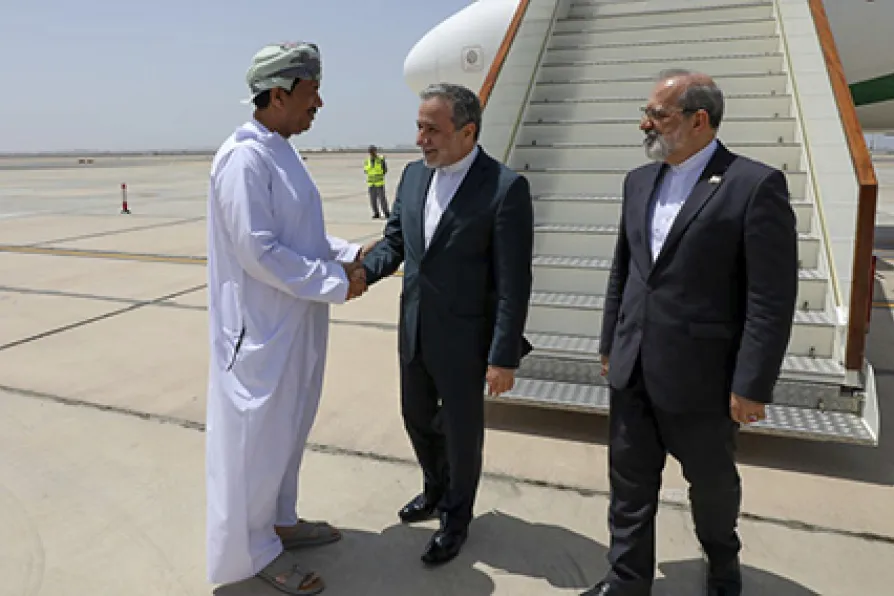
Oman, which was facilitating nuclear talks before tensions soared, said the US action “constitutes a violation of the rules of international law and the principle of settling disputes through peaceful means.”
Like other Gulf nations, Oman reported attacks from Iran, but Foreign Minister Badr al-Busaidi said that “the door to diplomacy remains open.”
Amid the chaos, the US military said Kuwait had “mistakenly shot down” three US F-15E Strike Eagles, with all six pilots ejecting safely.
Qatar said its air force had shot down two Iranian Su-24 bombers, and Bahrain said its air defence systems intercepted Iranian missile and drone attacks.
Several international airlines resumed limited flights from the United Arab Emirates after airports in Dubai and Abu Dhabi temporarily closed after being hit by Iranian strikes.
Israel and the US bombed Iranian missile sites and targeted its navy, claiming to have destroyed its headquarters and multiple warships.
As several airstrikes hit Iran’s capital of Tehran, the top security official Ali Larijani vowed on X: “We will not negotiate with the United States.”
Iranian MP Fatemeh Mohammed Beigi said that nine hospitals have been attacked by US-Israel, five of which are in Tehran.
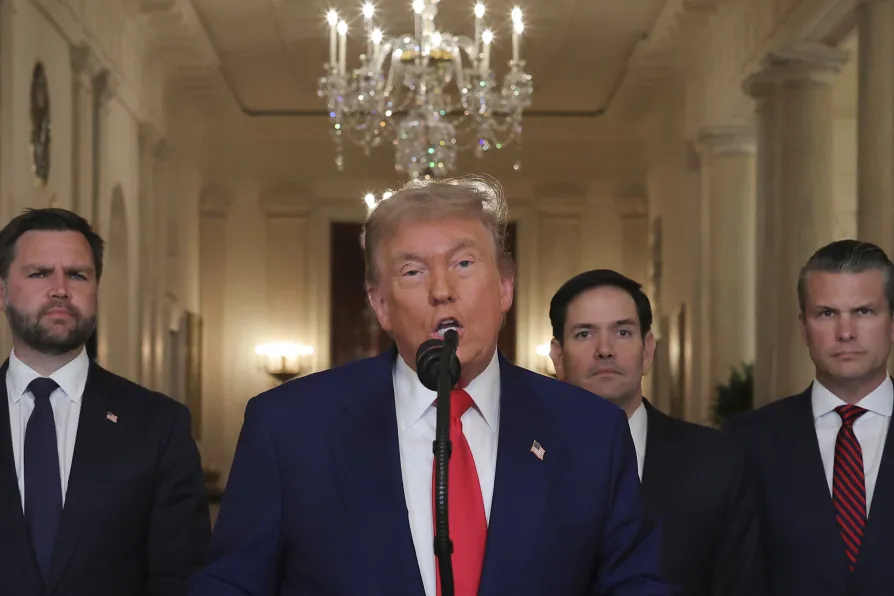
Before launching strikes on Iran, US President Donald Trump received private warnings from senior aides that escalation could be difficult to contain, according to Whitehall officials.
Administration officials also acknowledged in closed-door briefings that there was no intelligence suggesting Iran planned to attack US forces first.
Mr Trump had argued, without presenting evidence, that Iran was on track to be able to strike the US with a ballistic missile.
He said today that a “big wave” of US military action is still to come, describing the current campaign as only the beginning of a broader assault.
“We haven’t even started hitting them hard. The big wave hasn’t even happened. The big one is coming soon,” Mr Trump told CNN.
The US president was expected to make further statements after the Morning Star went to print.

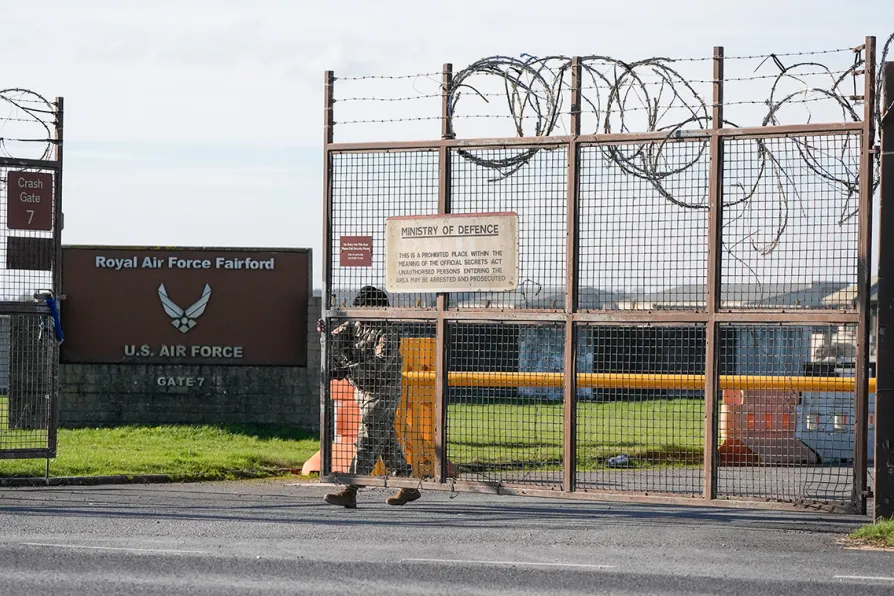
History shows from Iraq to Libya, and now Iran, that regime-change fantasies rarely deliver stability — but they always deliver human and economic cost, says MARYAM ESLAMDOUST