To rescue Kahlo from the clutches of the corporate art market, we need to acknowledge the overt and covert political dimensions of the work, demands GAVIN O’TOOLE


 Latest editorial
Flawed analysis leads to oversimplification of Hitler’s rise to power
Antipathy for communists mars the authors’ ability to see the wood for the trees, believes JOHN GREEN
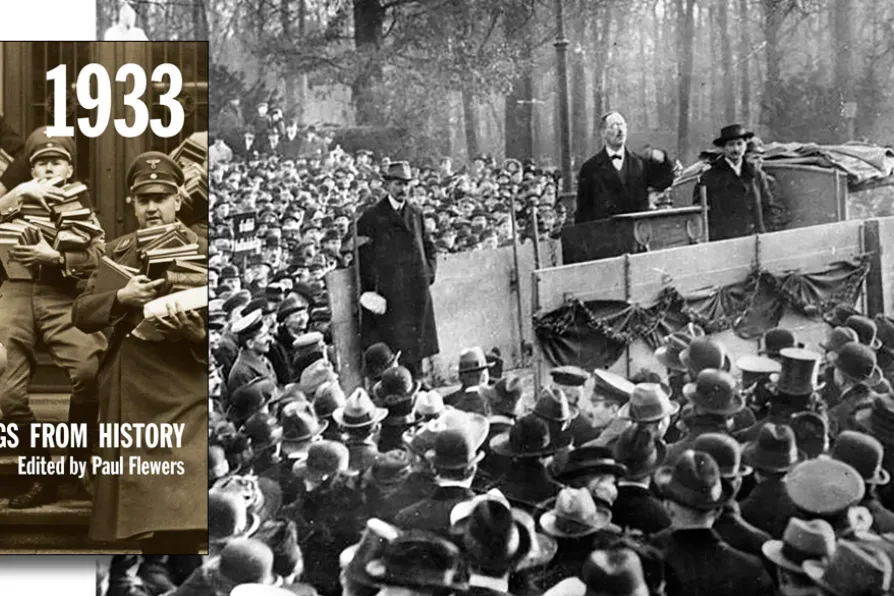 Karl Liebknecht addresses a rally in Tiergarten, Berlin in 1918
[Bundesarchiv/Creative Commons]
Karl Liebknecht addresses a rally in Tiergarten, Berlin in 1918
[Bundesarchiv/Creative Commons]
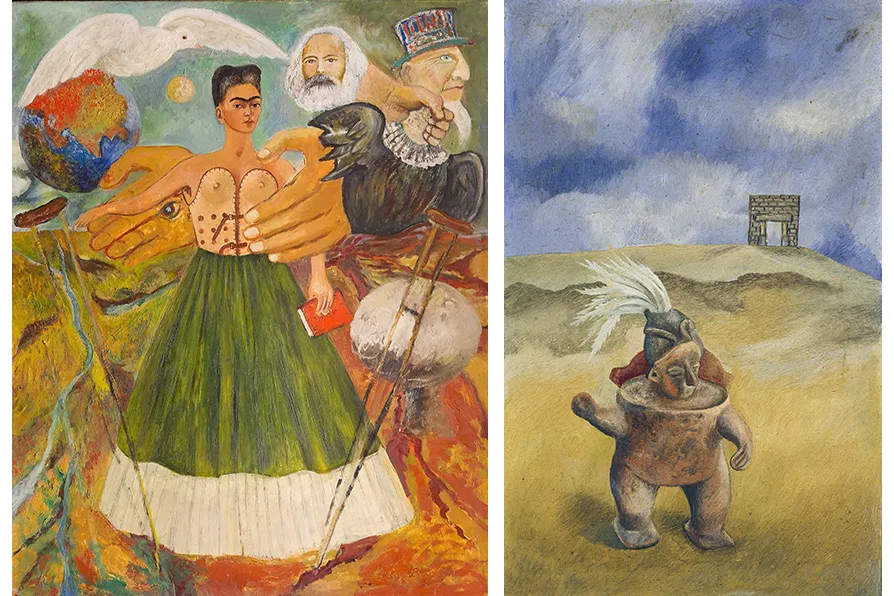
If you can see past the relentless commodification you will be rewarded by enormously powerful work, suggests JENNY MITCHELL
CHRIS SEARLE revels in the one-off collaboration between an American polymath and a British Muslim, and detects the presence of their revolutionary forebear
GORDON PARSONS revels in an ebullient production of Shakespeare’s magical comedy
BRENT CUTLER welcomes a thoughtful analysis of the Erdogan regime, viewed through the evolving history of a neighbourhood in Istanbul
GORDON PARSONS regrets the price, but is dazzled by an outstandingly ambitious study of the way art restoration in particular, and culture in general was weaponised by the Nazis





1933 Warnings from History
edited by Paul Flewers
Merlin Press £14.99
FIRST published in 1934 as Secrets of Hitler’s Victory, this historical analysis of Hitler’s rise to power by Peter and Irma Petroff is here republished by Merlin with the rather incongruous addition of essays by the Trotskyist Hippolyte Etchebehere, anarcho-communist Daniel Guerin, syndicalist Paul Strehl and an “Appeal to workers” by an anonymous group of syndicalists.
Peter Petroff was born into a Ukranian Jewish family in 1884, became a Menshevik and took part in the 1905 revolution. He later spent time in Britain and with his activist wife Irma, whom he met at a Socialist Sunday School in Hampstead, left for the Soviet Union in 1918.
There Peter became a close collaborator off Lenin’s but he and Irma became rapidly disillusioned with the Bolsheviks and in 1921 moved to Germany, where they witnessed Hitler’s rise to power, eventually escaping back to Britain in 1933. This book is based on their experiences.
We certainly need to study history if we are to avoid repeating the mistakes of the past, and Hitler’s “resistible rise” provides valuable lessons. The tragic animosity between Germany’s two big left parties – the Communists and Social Democrats – undoubtedly facilitated the Nazis’ rise.
The traditional hostility of the Social Democratic leadership to the communists became mirrored by the communists’ hatred of the Social Democrats, even if with rather more justification.
This became cemented with the calamitous imposition of the Comintern line labelling Social Democrats “Social Fascists.”
In Britain today, with Starmer leading a witch hunt against the left-wing of the Labour Party, we certainly do need reminding of the lessons from history about the vital necessity of left-wing unity.
While in pre-Hitler Germany the Social Democrats and Communists often did co-operate at grassroots level, the party leaderships remained at odds, allowing Hitler fill the political vacuum.
The liberal journalist and historian Sebastian Haffner wrote that “in November 1918, after a century of waiting, it seemed that German social democracy had achieved its goal at last, and then the unbelievable happened ... the German revolution of 1918 as a social democratic revolution was suppressed by the Social Democratic leadership: a process that has no parallel in world history.”
That leadership went on to facilitate the murder of Rosa Luxemburg and Karl Liebknecht and in alliance with proto-fascist military forces to massacre thousands of workers in the streets of Germany.
The Communist Party never forgave the Social Democrats for that.
While the Petroffs rightly pinpoint the disagreement between the two big left-wing parties as the main cause, they underplay the role played by the ruling elite, the big industrialists and right-wing press in supporting Hitler.
The last truly free election in November 1932 saw the Nazis as well as the Social Democrats lose votes but the Communist Party gained votes, making it the third most powerful party in the Reichstag.
The ruling class was not prepared to risk waiting any longer and propelled Hitler into power to prevent revolution.
While certainly of historical interest, this book tends to place most blame on the Communist Party and the Soviet Union for Hitler’s rise and oversimplifies what was a much more complex political situation.
Similar stories

JOHN REES replies to Claudia Webbe
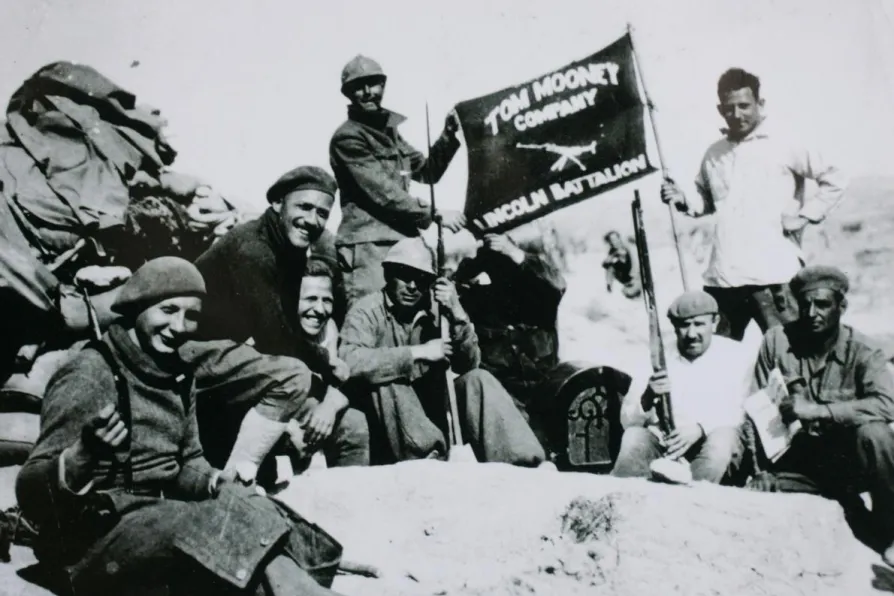
CJ ATKINS commemorates one of the most dramatic moments in working-class history
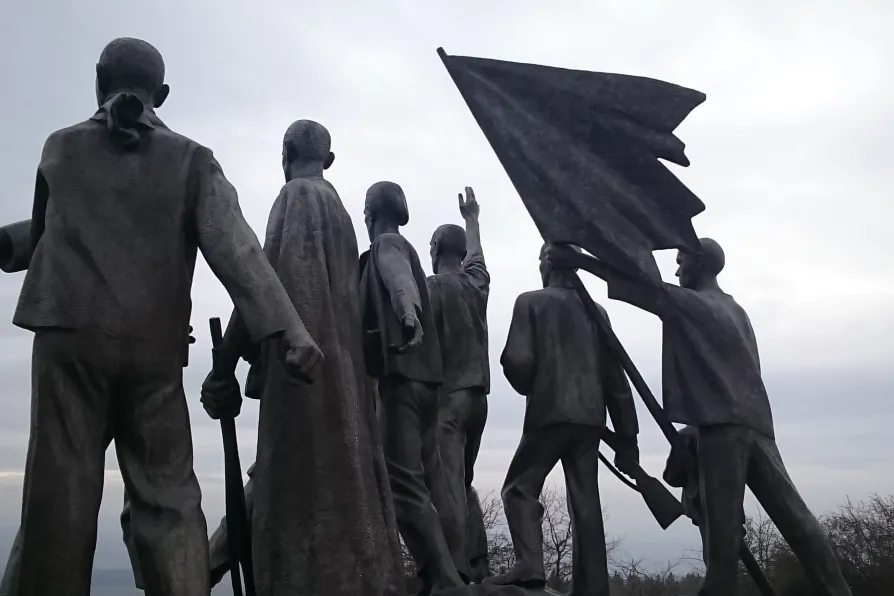
The decision highlights the tension between freedom of expression and the state’s role in shaping historical memory at former concentration camps, reports LEON WYSTRYCHOWSKI

Corbyn and Sultana’s ‘Your Party’ represents the first attempt at mass socialist organisation since the CPGB’s formation in 1921, argues DYLAN MURPHY