All the evidence shows voters want Labour to shift to the left — but initial signs from Andy Burnham are worrying on that front, cautions DIANE ABBOTT


 Latest editorial
Error message
An error occurred while searching, try again later.A new PM’s first decisions are crucial — and Burnham’s must centre the working class
IAN LAVERY MP says an immediate focus on raising wages and reducing costs must be part of a strategy to show Labour can deliver for workers again
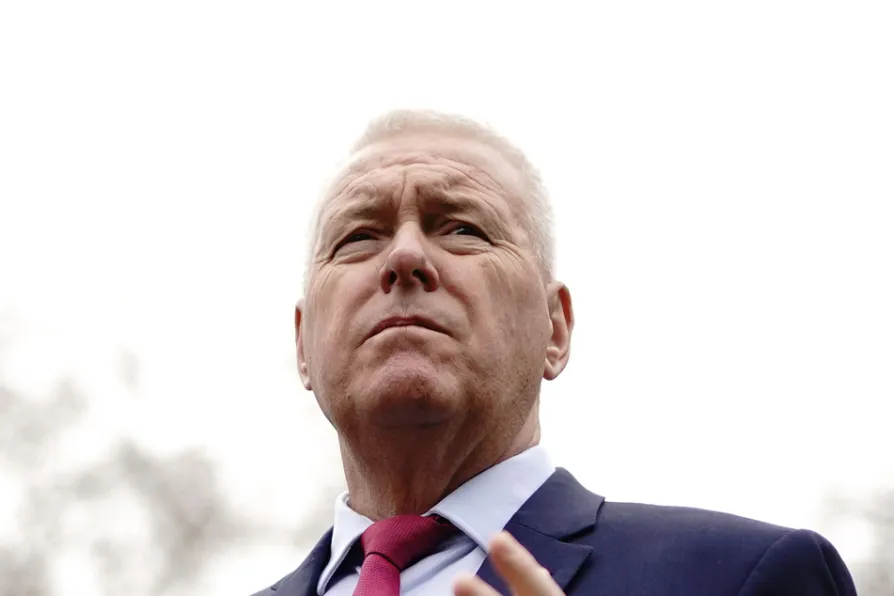 Blyth and Ashington MP Ian Lavery
ANDY McDONALD MP says Labour must show it is capable of delivering real improvements in people’s lives — bold action is required
ANGUS REID and ANDREW JOHNSTONE report on an initiative that we must take this summer
ALLISON FEWTRELL on what Plaid Cymru's historic election victory means for the communities being failed by Wales’s housing crisis, and four things the new government can do right now
France Insoumise MP JEROME LEGAVRE speaks to Christophe Domec on building the Europe-wide peace movement that came together in the International Conference Against War last weekend
At last weekend’s International Conference Against War, LINDA PENTZ GUNTER talks to the Palestinian physician and politician about the struggles ahead to achieve a truly free Palestine





IN 2024, Labour secured a landslide majority on just 33.7 per cent of the vote. It is fair to say this was an underwhelming mandate, won with fewer votes than the party achieved under Jeremy Corbyn in either 2017 or 2019. It is also true that the scale of Labour’s victory owed much to the collapse of the Conservative Party.
However, one aspect of Labour’s success that many people, myself included, underestimated was its willingness to embrace caution. The Ming vase strategy did not inspire voters to flock to Labour, but its strength was that it did not give former Conservative voters much reason to mobilise against it. A manifesto built around the word “change” and constrained only by the fiscal rules was deliberately broad and non-committal.
After dropping the vase almost as soon as it entered Downing Street by scrapping the Winter Fuel Allowance, the leadership spent the next two years trying, and failing, to repair the damage.
Further missteps, scandal and a second round of disastrous local election results, combined with Andy Burnham’s emphatic victory in the Makerfield by-election, finally sealed Keir Starmer’s fate. Events moved quickly thereafter, leading to his resignation and leaving the former mayor of Greater Manchester as the overwhelming favourite to succeed him.
As we look towards a new premiership, voices across politics and the media are already questioning the mandate of any incoming leader. Must a new prime minister adhere rigidly to the manifesto? If the country voted for one prime minister, should there not be a fresh general election to choose another? These are not, in my view, reasonable questions.
The answer to why, lies in how Britain’s parliamentary system works. General elections are fought across 650 constituencies, with voters choosing local representatives on a range of issues. Party affiliation matters, but so do individual candidates. Every MP therefore holds a personal mandate from their constituents.
Government is then formed through parliamentary arithmetic, party management and the ability to command a majority in the House of Commons. Prime ministers are not elected directly by the public; they emerge from Parliament. The mandate that matters is the confidence of the Commons, not a personal endorsement from the electorate.
Andy Burnham is now the Labour MP with the freshest mandate of all following that spectacular victory in Makerfield — incidentally, having received more votes than Keir Starmer did in his Holborn and St Pancras seat in 2024.
The manifesto, however, carries greater political weight, but even here the argument is less clear-cut than critics suggest.
The challenges identified in Labour’s 2024 manifesto remain the challenges facing any future prime minister. Yet the document itself was deliberately vague.
Significant changes to people’s lives can be delivered while remaining within its broad framework. Even the fiscal rules can be interpreted differently, as Rachel Reeves demonstrated in government.
What an Andy Burnham premiership would look like remains open to debate. Taking his stated positions at face value is encouraging, while concerns about some of those around him are not without merit.
What is beyond dispute is that his analysis of Labour’s failure to speak to and act on behalf of working-class communities is correct. It echoes arguments made by Jon Trickett, Laura Smith and myself in Northern Discomfort before the 2019 general election.
It is tiresome to read commentators presenting this analysis as anti-southern or anti-London. The reality is that working-class communities across Britain have been let down.
Many of the worst affected areas happen to be in the Midlands and the north, but that does not mean working-class communities elsewhere should be ignored.
If the Starmer project teaches us anything, it is that a new prime minister’s first decisions are crucial. The atmosphere of managed gloom that greeted Labour’s arrival in government, culminating in the removal of Winter Fuel Payments, shaped how every subsequent decision was viewed.
Burnham must start differently. Amid immense economic and geopolitical pressures, he needs a relentless focus on improving people’s daily lives.
That means tackling the cost of living, reducing the price of essentials and making work pay.
It means investing in public spaces to reverse the decline of our high streets, town centres and community assets. It means strengthening public services, so people receive the education, care and support they deserve.
There is also an urgent need to rebuild the fabric of the Labour Party. Too many members whose only ambition was to create a better future for themselves, their families and their communities were expelled, suspended or marginalised. They should be encouraged to return and welcomed back into the movement.
I understand the scepticism surrounding the new leadership and the fear that little will really change. The forces that shaped the Labour Together era have not disappeared. They may have lost a battle, but they will be preparing for the next one.
If Burnham wants to secure a legacy, he must restore trust in the party’s democratic processes and end the toxic culture that has alienated so many members. Those of us on the left should remain inside the party or get back in, holding the leadership to account and pushing Labour to rediscover its radical purpose.
The next election will be a battle for the soul of the country. It will pit reactionary forces, led by figures such as Nigel Farage, against the Labour Party. If Labour can once again speak confidently for the people it was created to represent and show that it is willing to act on their behalf, we will win.
Ian Lavery is Labour MP for Blyth and Ashington.