To rescue Kahlo from the clutches of the corporate art market, we need to acknowledge the overt and covert political dimensions of the work, demands GAVIN O’TOOLE


 Latest editorial
Error message
An error occurred while searching, try again later.Having fun with slippery and elusive notions
ANDY HEDGECOCK is entertained by a playful novel that embeds a fictional game at its heart
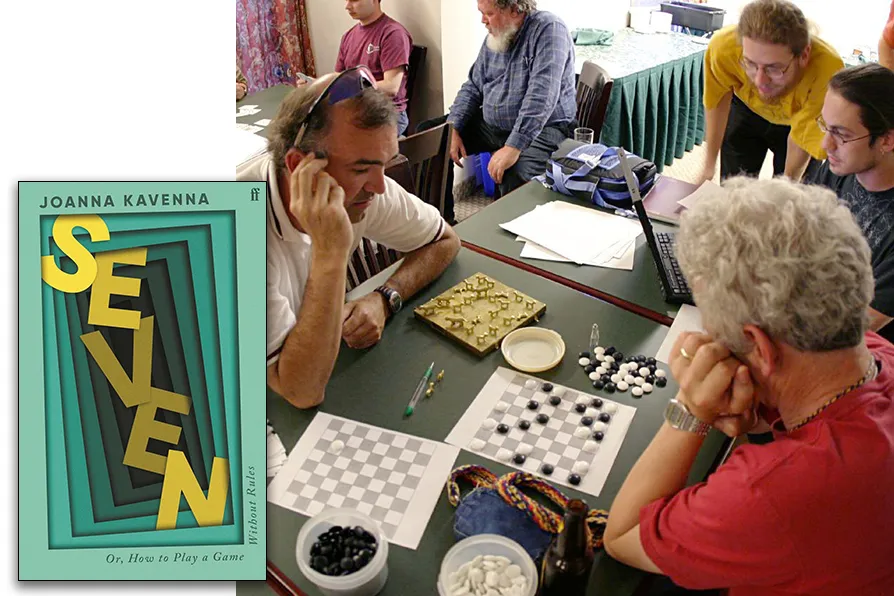 Mathematicians playing Konane at a conference on Combinatorial Game Theory [Pic: Thane Plambeck/CC]
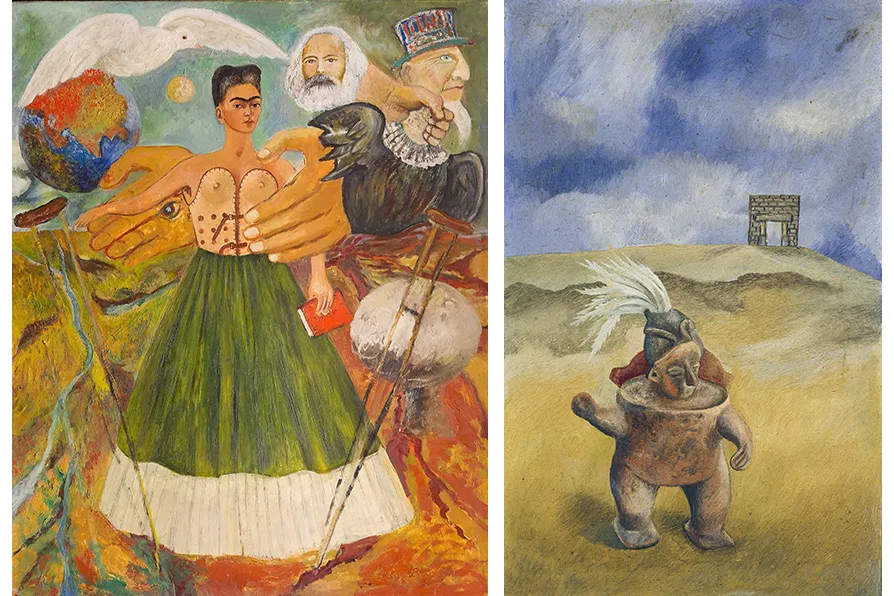
If you can see past the relentless commodification you will be rewarded by enormously powerful work, suggests JENNY MITCHELL
CHRIS SEARLE revels in the one-off collaboration between an American polymath and a British Muslim, and detects the presence of their revolutionary forebear
GORDON PARSONS revels in an ebullient production of Shakespeare’s magical comedy
BRENT CUTLER welcomes a thoughtful analysis of the Erdogan regime, viewed through the evolving history of a neighbourhood in Istanbul
GORDON PARSONS regrets the price, but is dazzled by an outstandingly ambitious study of the way art restoration in particular, and culture in general was weaponised by the Nazis





Seven
by Joanna Kavenna
Faber & Faber, £16.99
FIZZING with wit, tricks and big ideas, Joanna Kavenna’s latest novel carries a hefty cargo. There are quests (for lost objects and spiritual enlightenment); boxes (both literal and metaphorical); and games (strategic, philosophical and metafictional).
It’s also freighted with reflections on epistemology (knowledge and truth) and ontology (reality and being).
The structure is complex and the concepts challenging, but Kavenna’s intellectual ambition is complemented by her playfulness: the result is a ludic novel in the tradition of Helen Oyeyemi, Peter Ackroyd and Italo Calvino. In fact, the idea that culture is critically dependent on play, originally proposed by historian Johan Huizinga, is the story’s unifying theme.
From the outset it’s clear the reader needs to relish ambiguity or, at least, accept it. First, we’re introduced to an anonymous and ungendered narrator working as an assistant to Alda Jonsdottir, an Icelandic professor of philosophy whose research project has the snappy title “Thinking outside the Box about Thinking outside the Box” (aka TOTBATOTB).
Then, the narrator talks us through a 100-year-old puzzle used by gestalt psychologists to demonstrate the principle of insight and the way thought is limited by language, rules and experience.
Our thinking about these issues, and TOTBATOTB in general, is sharpened when the narrator is asked to meet Theodoros Apostolakis — dentist, poet, box maker and cataloguer of lost things — on the Greek island of Hydra. Apostolakis, like the narrator, is a devotee of an ancient board game called Seven.
A game for two players, Seven is played on a circular board with a single pathway from its periphery to its centre, in the form of a seven-ringed labyrinth. It is played with six-sided dice, seven pebbles per player and pieces representing angels and dragons. The rules are simple but allow for intricate variations of strategy.
The most important aspect of the game is that it springs entirely from the imagination of Joanna Kavenna. It’s a tribute to the subtle power of the author’s writing that her reports of international championship matches created a moment or two of doubt: it took an online search to prove I hadn’t failed to hear of this fascinating form of cerebral contest.
More than a mere MacGuffin to drive the narrative, the game is central to Kavenna’s satire, her reflections on the theme of loss, and her explorations of epistemology and ontology. There are multiple and subtly different versions of the game, each accompanied by an illustration and set of rules, and each symbolic of a shift in mood or theme.
Apostolakis, a character preoccupied by personal and cultural erasures, grieves for a missing Seven box, originally gifted to his grandfather during the Battle of Crete in 1941. In searching for this, and striving to understand “box theory” in the broadest sense, the narrator travels to some of Europe’s most beautiful locations and meets the world’s most accomplished players of Seven.
When the current, allegedly unbeatable, World Champion is persuaded to play an AI, scandal ensues and people begin to lose their passion for the game. Another erasure. It’s an absurd and entertaining proposition, but a powerful and provocative way of posing profound questions about the function of play, the intervention of algorithms in human activity and the provisional nature of the way we label and construct reality.
Kavenna is an accomplished satirist. Her exploration of the thin line between academic rigour and preciousness is even-handed but amusing, while her deft portrayals of the destructive and ignorant super-rich are reminiscent of the “careless people” in Fitzgerald’s The Great Gatsby.
That wasn’t the only literary memory prompted by Seven: there are subtle echoes of Michael Frayn’s philosophical comedies, Borges’ fascination with labyrinths and the psychological games of John Fowes’ The Magus.
The narrative is chaotic and demands careful reading, but Kavenna’s writing is elegant, thought-provoking and witty. Who knew you would have this much fun with the slippery and elusive notions of knowledge and existence?