To rescue Kahlo from the clutches of the corporate art market, we need to acknowledge the overt and covert political dimensions of the work, demands GAVIN O’TOOLE


 Latest editorial
Error message
An error occurred while searching, try again later.Singing the news: the legacy of Phil Ochs
JORDAN PHIZACKLEA-CULLEN reminds us of a sometimes overlooked political singer-songwriter, on the 50th anniversary of his untimely death
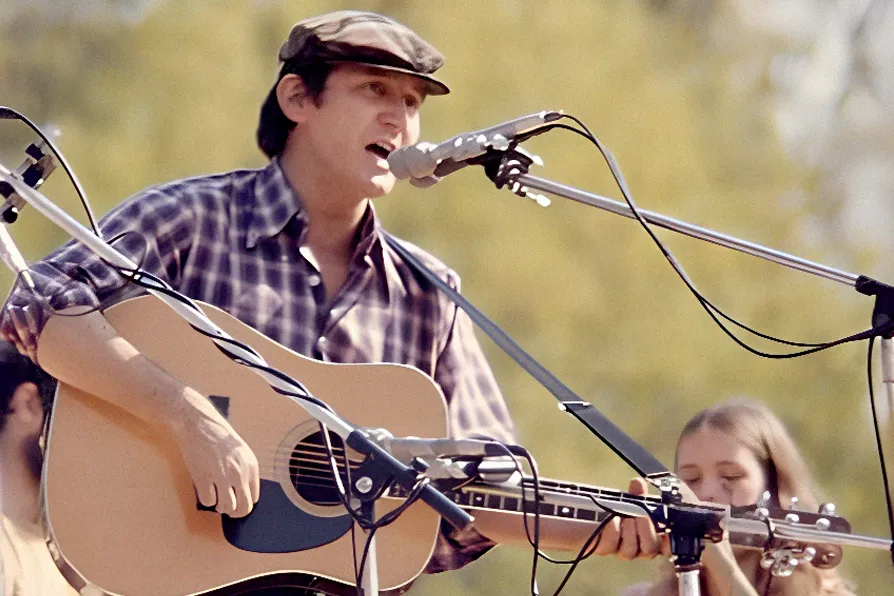 Phil Ochs singing his song from 1968, The War Is Over, at the Central Park event celebrating the Vietnam war’s end, May 11, 1975. [Pic: Sarfatims/CC]
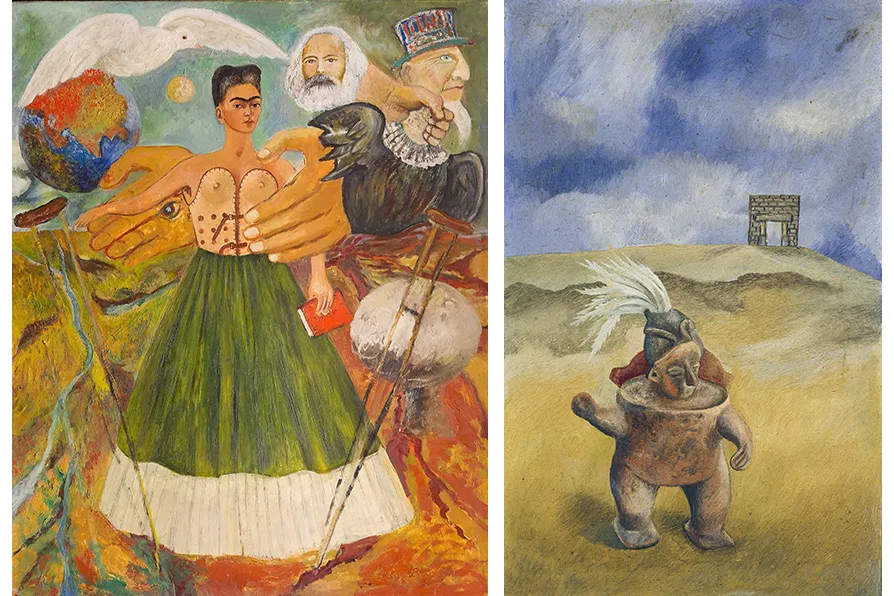
If you can see past the relentless commodification you will be rewarded by enormously powerful work, suggests JENNY MITCHELL
CHRIS SEARLE revels in the one-off collaboration between an American polymath and a British Muslim, and detects the presence of their revolutionary forebear
GORDON PARSONS revels in an ebullient production of Shakespeare’s magical comedy
BRENT CUTLER welcomes a thoughtful analysis of the Erdogan regime, viewed through the evolving history of a neighbourhood in Istanbul
GORDON PARSONS regrets the price, but is dazzled by an outstandingly ambitious study of the way art restoration in particular, and culture in general was weaponised by the Nazis





ONE of the saddest stories of the 1960s counterculture movement came to an end 50 years ago today. Phil Ochs, a songwriter whose acerbic wit combined with an earnest humanism perfectly captured the spirit of the anti-war movement, died by suicide on April 9 1976.
The weight of his alcoholism and bipolar disorder, combined with numerous political heartbreaks he had witnessed, finally culminated at the age of 35.
The silencing of that plaintive, tremulous yet powerful voice and the pen behind I Ain’t Marching Anymore, Too Many Martyrs, Love Me, I’m A Liberal, The War Is Over, The Crucifixion and many more peerless anthems robbed a generation of a figure frequently spoken of with the same admiration as his contemporary Bob Dylan.
Yet Ochs’s early death and his body of work have not ensured him Dylan’s level of recognition; despite their proximity, there was no mention of Ochs in the 2024 Dylan biopic A Complete Unknown and his albums remain largely out of print.
Why might this be?
Ochs certainly achieved a level of success during his lifetime comparable to his contemporaries Dylan, Joan Baez and Judy Collins, playing New York’s Carnegie Hall and proving there was a public appetite for his intention to be “a cross between Che Guevara and Elvis Presley.”
Initially training as a journalist, he dropped out of college to pursue a music career after being introduced to folk music and leftist politics, venerating giants of the period like Woody Guthrie and Pete Seeger.
An admirer of John F Kennedy, like many Ochs was devastated by the US president’s assassination but drove his heartbreak into supporting the civil rights movement, labour struggles and the anti-Vietnam war campaign.
He recognised the power that a song could have, conveying complex topical issues into an accessible three minutes; not for nothing did Ochs call himself a “singing journalist” rather than a protest singer, echoed in the title of his debut album, All The News That’s Fit To Sing.
Ochs’s talent for encapsulating current events, however, meant that many of his songs quickly became dated, a case of “you had to be there” to truly appreciate the message; see Hazard, Kentucky, Talking Cuban Crisis etc. And while there continue to be modern updated cover versions of Love Me, I’m A Liberal and Here’s To The State Of Missisippi all over YouTube, Ochs remains firmly a figure of his time, his songwriting concerned with the injustices he saw around him.
It was also his talent for putting unpalatable subjects into song format that put Ochs’s music outside more mainstream acceptance. Take his sarcastic honky-tonk ditty on the murder of Kitty Genovese, Outside Of A Small Circle Of Friends; it is hard to imagine polished acts like The Kingston Trio or Peter, Paul & Mary taking a risk warbling something like this to their cosily liberal faithful.
Phil Ochs lived fast in a flurry of fevered activity, touring the world and lending his support to solidarity movements wherever he went. The merciless beating of protesters by police he witnessed at the 1968 Democratic National Convention in Chicago, however, had a profound and damaging impact on him, as did the crushing of Salvador Allende’s government in Chile — including the murder of his friend Victor Jara — and an attack on him in Tanzania caused permanent damage to his vocal range.
He also hit a serious case of writer’s block after 1970 that left him struggling to provide new material; all the above, combined with his aforementioned health problems ensured a tragic decline.
In his 1990 biography Phil Ochs: Death of a Rebel (Omnibus Press, 1990), Marc Eliot ponders what Ochs would have made of the era of Reaganomics. It’s tempting, in 2026, to go further and imagine how he would have used his talents to respond to the break-up of the Soviet Union, September 11 2001 and the Iraq war, the 2008 financial crash and, of course, Donald Trump. Tempting but ultimately futile: Ochs’s flame burned brilliantly but briefly and it seems he realised too, in his own words, “that there [were] no more songs.”
For all that is tragic about Phil Ochs, there is still that extraordinary back catalogue to enjoy today, and the ideals he fought for and tried to bring to the public consciousness are still worthwhile. Perhaps his ultimate message to all of us today is to use our time here productively and save silence against injustices for the grave:
“Can’t say who’s to praise and who’s to blame when I’m gone/ So I guess I’ll have to do it while I’m here.”
RIP Phil Ochs, December 19 1940 – April 9 1976.