All the evidence shows voters want Labour to shift to the left — but initial signs from Andy Burnham are worrying on that front, cautions DIANE ABBOTT


 Latest editorial
Error message
An error occurred while searching, try again later.Strength in unity: Dave Pike sees opportunities for trade unionism across the north
As delegates from the north-east, Yorkshire & Humber meet this weekend in Durham, TUC regional secretary DAVE PIKE speaks to Ben Chacko about the challenges ahead
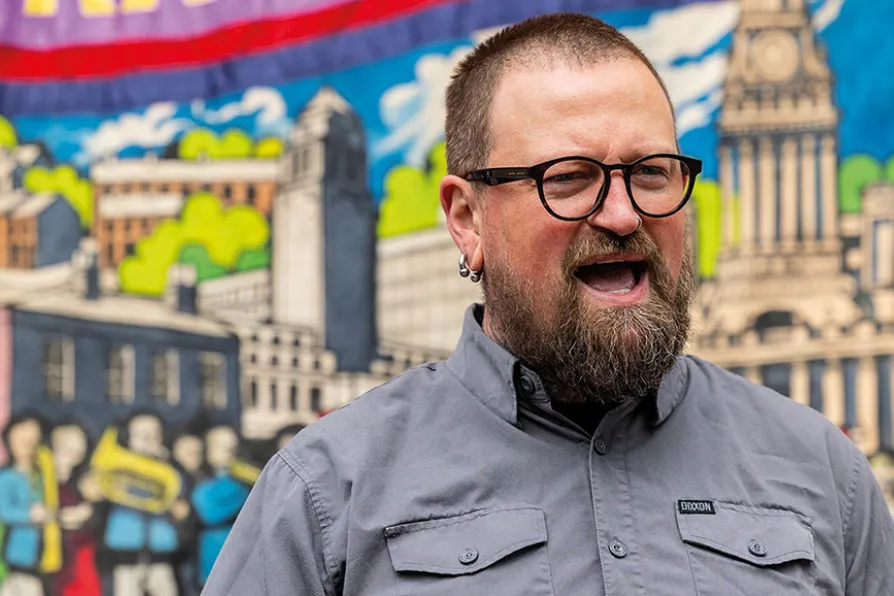 Dave Pike, North East, Yorkshire & Humber TUC regional secretary
ANDY McDONALD MP says Labour must show it is capable of delivering real improvements in people’s lives — bold action is required
ANGUS REID and ANDREW JOHNSTONE report on an initiative that we must take this summer
ALLISON FEWTRELL on what Plaid Cymru's historic election victory means for the communities being failed by Wales’s housing crisis, and four things the new government can do right now
France Insoumise MP JEROME LEGAVRE speaks to Christophe Domec on building the Europe-wide peace movement that came together in the International Conference Against War last weekend
At last weekend’s International Conference Against War, LINDA PENTZ GUNTER talks to the Palestinian physician and politician about the struggles ahead to achieve a truly free Palestine




THIS weekend, delegates from across the TUC’s North East, Yorkshire & Humber region gather in the famous — and only recently restored — Pitmen’s Parliament, the Redhills Miners’ Hall in Durham.
“There’s no getting away from the history of it,” regional secretary Dave Pike says. “We’re going to be taking decisions about the direction of our movement in a building where democratic decisions have been taken by trade unionists for over 100 years.”
The main hall at Redhills, with a brass plaque on each seat assigning it to a particular lodge of the Durham coalfield, reminds us of the power of our movement at its height.
But it’s also a reminder of how much we have lost — with the devastating closure of the pits and decades of underinvestment and neglect that followed.
“That does present challenges. It’s a big geographic area — we represent over 800,000 unionised workers — but I’m excited about what this region can achieve.
“You talk about that industrial history and the dark days that came after but what comes with that is a shared cultural and industrial experience that sits across the north-east, Yorkshire and Humber — the legacies of heavy industry and trade unionism are woven into our psyche in this part of the world.
“For far too long, government after government has turned a blind eye. They haven’t cared about economic growth here. Just look at the last government — despite all the talk of a Northern Powerhouse the concentration of wealth in London and the south-east increased, and wages across our region decreased.
“People feel disenfranchised and justifiably so. Wages have been dropping, public services cut to the bone. It’s not just about the money in people’s pockets. Look at the life expectancy of someone in Barnsley compared to London — there’s a massive difference.”
And a shadow looming over delegates is the party feeding off this disillusionment — Reform UK.
“People feel they aren’t being listened to. And Reform and their ilk are offering an easy answer.
“We need to make it clear what they’re really about. They’re about stripping workers of a voice. They’re about shredding equality legislation.
“We’ve seen that play out in real time in Durham” (where the county council has been Reform since last year).
“They attack the terms and conditions of public-sector workers. They threaten their pensions. They want to repeal the Equality Act, so you could sack someone for being pregnant.
“And — importantly for me as someone who previously led Sheffield Pride — I’ve seen what they’ve done to Pride in Durham.
“They’ve removed its funding, gone after it in national media.
“These are the people now running schools … I struggled very much at school when it came to coming out. I can’t even comprehend how difficult it must be for a kid who wants to come out in a school in Durham when they hear Reform councillors saying the kind of crap they’ve been saying in the media lately.
“But what I’m really proud of is that we’ve managed as a movement not only to raise funds for Durham Pride, we’ve outstripped the amount the council took off them in the first place!
“As a movement we can show what we’re about — and what they ain’t!
“We can combat the far right — if we build hope.
“Every single day reps up and down the country are building hope. Like at Airedale hospital where GMB rep Gemma got all her members organised around two-tier pay and conditions, and won life-changing improvements.
“Across our region workers have been under attack at university after university, whether that’s pensions at Northumbria, or redundancies at Durham, or attacks on our unions at Sheffield. Despite that, our unions have stood strong, with activists like David at the University of Sheffield, who has organised empowering industrial action.
“Union reps every single day are convincing people that they can stand on their own two feet, that they can change the world for the better.
“So yes, the Reform vote is a massive issue. Looking at the polling Reform would only lose a handful of contests in our region if a vote were held tomorrow.
“But I am still hopeful — aggressively hopeful — about what we can do, because we have a history of doing it.
“When the BNP tried to get a fascist elected in Kirklees, it was unions working together that kept him out. When the EDL marched through Bradford, it was working-class people standing together who showed them the door.”
Hope will be hard to find unless the region can turn a corner on decades of being failed by politicians. The stakes are high.
“With green industry, there are clearly opportunities — but real threats as well. We have to work constantly to ensure that when transition happens across our region — which it already is, there’s jobs coming to the region, like in Sunderland where they’re building [the electric car] Nissan Leaf — it’s essential that workers are at the forefront of that.
“The mistakes [that saw whole communities abandoned with the destruction of the coal industry] mustn’t happen again.
“With Labour, we have seen some good steps. Good things happening with investment — Northern Powerhouse Rail was a step in the right direction.
“As the TUC, our role is to hold the government’s feet to the fire — whatever colour government that is.
“I’m pleased with signs of investment in the north, but what gives me most hope is the relationships we’ve developed with our mayors across the region.”
Some say the established parties are all the same, but attitudes to working with the labour movement are still very different.
The TUC has been able to work “really closely with Labour mayors like [South Yorkshire’s] Oliver Coppard, [West Yorkshire’s] Tracy Brabin, [North East England’s] Kim McGuinness and [York and North Yorkshire’s] David Skaith.” The TUC is actually represented on McGuinness’s cabinet, and on Coppard’s management board.
It’s not always cosy — there are “difficult discussions” — but these mayors are keen to hear from workers and seek their input into transport and economic policy.
By contrast, in Teesside Tory Mayor Ben Houchen “avoids me like the plague” and while Pike says unions are determined to represent workers’ interests in talks with Reform administrations too, they’ve not found them willing to engage.
At national level, he stresses that the Employment Rights Act, despite flaws, is a huge step forward.
“This April, eight million people are going to be accessing sick pay for the first time. The individual rights are important — but the collective rights even more so: removing barriers to strike action, bringing in online balloting, access rights.
“I started out organising fast food workers, and if we’d had the access rights included in this Act it would have been a game-changer — instead of focusing on one particular workplace, we could have spread it over the whole country.
“Look at Australia [where the Anthony Albanese government brought in a string of reforms strengthening union access and collective bargaining rights from 2022-24]. They’ve increased collective bargaining by 25 per cent. There are over a million new union members, 300,000 of them young members.
“That’s our opportunity and we have to hit the ground running. This weekend there will be debate, disagreement. The politics of this space should not be undercut.” Fringe meetings will look at challenges from AI to a just transition and fighting the far right.
But Pike says success in all of these depends on growing the trade unions.
“How do we grow our movement? That’s the biggest focus. And whatever the disagreements we will see the unity, the incredible strength we get from recognising the things we have in common. I hope the history of the building we’re in helps project that unity.”
Which takes us back to the Pitmen’s Parliament.
“It’s an inspiring place to hold a conference. A place to inspire a new generation of activists with our history, and build up the energy for all the work that needs to be done today.”