To rescue Kahlo from the clutches of the corporate art market, we need to acknowledge the overt and covert political dimensions of the work, demands GAVIN O’TOOLE


 Latest editorial
Error message
An error occurred while searching, try again later.Poignant reminder
MICHAL BONCZA introduces a sculpture that celebrates the end of Franco’s fascist rule while commemorating some of the last victims of its proclivity for mass murder
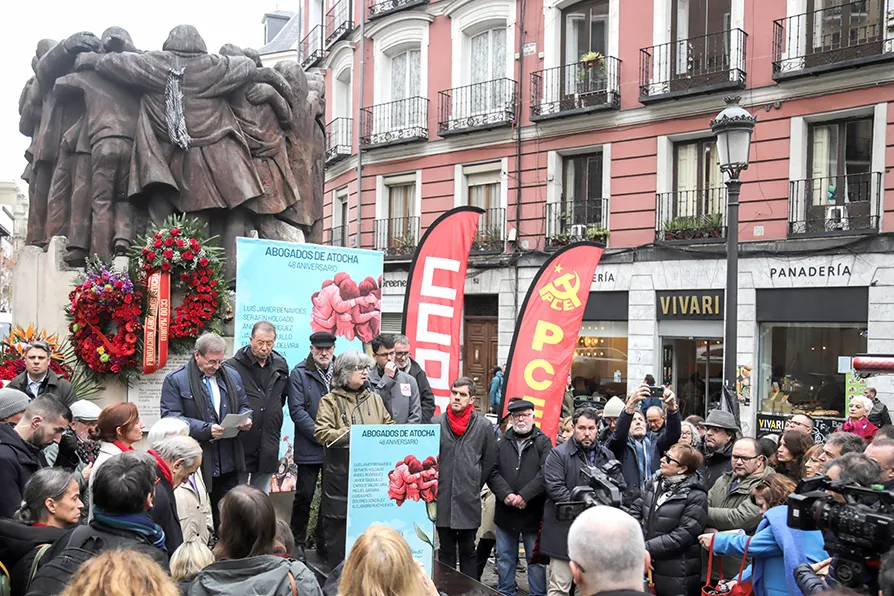 PRESENTES! Paloma Lopez Bermejo, general secretary of the Comisiones Obreras of Madrid, addresses the gathering on the 48th anniversary of the Atocha Lawyers - at Anton Martin Square - on January 24 2025 [Pic: Fran Lorente/CCOO Madrid]
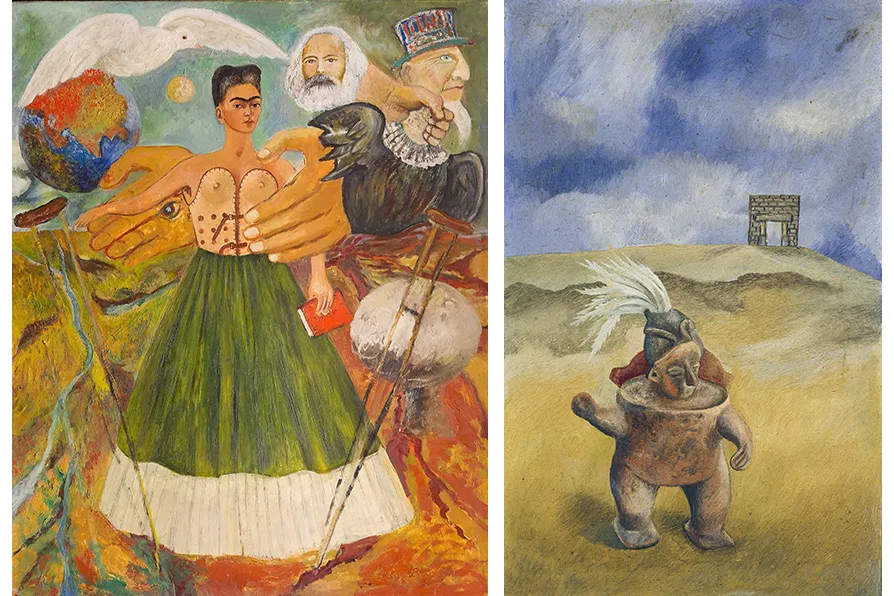
If you can see past the relentless commodification you will be rewarded by enormously powerful work, suggests JENNY MITCHELL
CHRIS SEARLE revels in the one-off collaboration between an American polymath and a British Muslim, and detects the presence of their revolutionary forebear
GORDON PARSONS revels in an ebullient production of Shakespeare’s magical comedy
BRENT CUTLER welcomes a thoughtful analysis of the Erdogan regime, viewed through the evolving history of a neighbourhood in Istanbul
GORDON PARSONS regrets the price, but is dazzled by an outstandingly ambitious study of the way art restoration in particular, and culture in general was weaponised by the Nazis





ON THE evening of January 24 1977 the third-floor offices of a Madrid law firm specialising in labour law was stormed by three assassins of the fascist New Force and Warriors of Christ the King.
The law firm, based at 55 Atocha Street, was affiliated with the Workers’ Commissions (CCOO) and the lawyer members of the Communist Party of Spain (PCE) — it offered advice to workers.
The gunmen murdered five (Enrique Valdelvira, Luis Javier Benavides, Javier Sauquillo, Serafin Holgado and Angel Rodriguez Leal) and gravely injured four.
The public funeral of the slain, on January 26, was attended by over 100,000 people, becoming one of the first major demonstrations after Franco’s death.
Amid widespread revulsion at the slaughter, the attackers and most of their co-conspirators were quickly caught and sentenced to decades in prison. In 1990 official disclosures about Operation Gladio, the clandestine anti-communist structure created during the Cold War, revealed that Italian neo-fascists were involved.
While the Atocha murders became the most infamous act during Spain’s transition to democracy, far-right organisations carried out more than 70 assassinations in that period.
To ensure that the tragedy would not be forgotten, a bronze sculpture by an artist from Valencia, Juan Genoves, was unveiled on June 10 2003 in the small Anton Martin Square next the metro station of the same name, a short distance from where the murder took place in the working-class neighbourhood of Lavapies.
The ingenious concept of the sculpture The Embrace/El Abrazo mimics the sculptor’s iconic painting which is gently “rolled up” and fused into a pedestal where the figures embrace in a huddle not dissimilar from those you’d see at football game.
Genoves said: “For me, that painting no longer belongs to me; its image now belongs to everyone. What is clear is that the painting in question has become a symbol for the whole of Spain.”
The painting — after decades in storage at the Museo Reina Sofia and requests by deputies from the United Left (Izquierda Unida) parliamentary group — was finally transferred to the entrance hall of Congress of Deputies (lower house of the Spanish Parliament) on January 7 2016.
Every year on January 24 delegates from the Communist Party of Spain (PCE) and Workers’ Commissions (CCOO) organise a wreath-laying ceremony at the graves of the martyrs in the Carabanchel y San Isidro cemeteries and attend a hundreds-strong gathering in the Anton Martin square at the foot of The Embrace monument.
The legacy of the Atocha lawyers is sustained and honoured by CCOO Madrid which established in 2005 the Atocha Lawyers’ Foundation (ALF), tasked with bestowing the annual Atocha Lawyers’ Awards and Honours.
The 2026 award went to the Grandmothers and Mothers of Plaza de Mayo, who have been campaigning since 1977 for human rights and to restore the identities of the children who were abducted during the military dictatorship in Argentina, and now under increased duress from the Milei government.
At the same ceremony, the Union of Sahrawi Women, an affiliate of the Hope and Freedom for Afghan Women’s association, received a special award in recognition of its resilience and courage in the face of oppression.
According to a poll taken in late 2025 by the state-run Centre for Sociological Research (CIS) 21.3 per cent of Spaniards regard the Franco dictatorship as “good” or “very good.”