Andy Burnham’s growing stature has fuelled hopes of a Labour revival – but ALAN SIMPSON warns that Britain’s crisis runs far deeper than just its leadership and traces its roots to decades of financialised capitalism


 Latest editorial
On women, childbirth and the reality of the ‘unregulated sexual economy’
Comments from Matt Goodwin and Danny Kruger expose a reactionary vision in which falling birth rates are blamed on women, says JUDITH CAZORLA
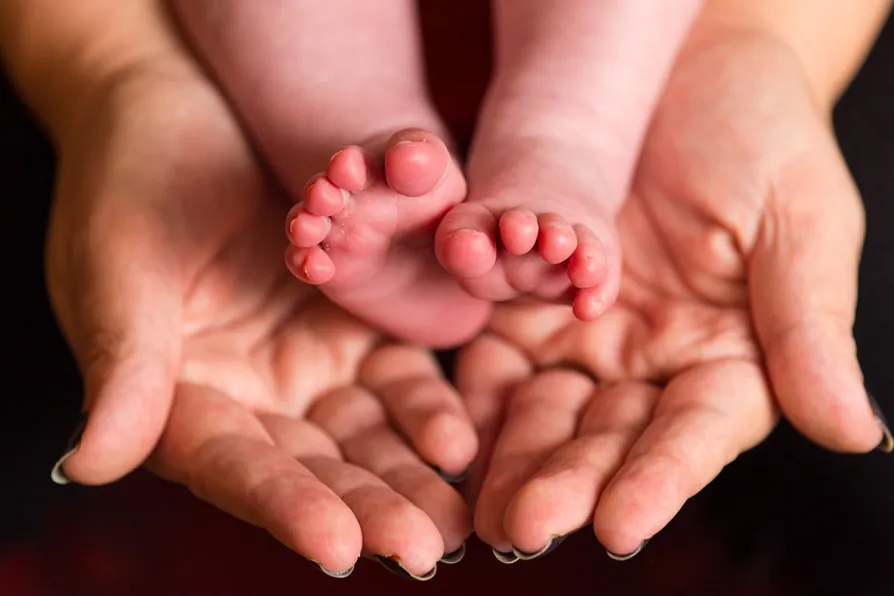 A woman holding the feet of a new baby

Editor BEN CHACKO looks at the invaluable contribution the paper makes, and the headwinds it has to struggle against to get by, following the Morning Star’s 80th AGM this month
Recent violence in Belfast was not spontaneous — it was built on years of failure and political neglect, argues STIOFAN O NUALLAIN
The nationalisation move to Great British Railways (GBR) must be about more than just changing the livery, writes MARYAM ESLAMDOUST
Activists will urge MPs to protect the five-year settlement route and cut visa costs, warning reforms risk deepening inequality and labour shortages, says HARSEV BAINS
ANSELM ELDERGILL examines the issues of liberty, safety and risk in relation to people receiving psychiatric treatment





MATT GOODWIN’S suggestion that childless people should face a “negative child benefit tax” reveals more than a controversial approach to Britain’s falling birth rate.
Danny Kruger, a former Tory who defected to Reform, has also expressed how the party aims to “make it easier to have babies for women” in the “unregulated sexual economy.”
This is the result of years where social media algorithms and political opinion have been led by the far right. Women’s voices challenging their political and social status have been silenced, while the state repeatedly fails to protect them from violence, exploitation and poverty.
Reform’s proposal frames reproduction as a societal responsibility without considering the childbearing responsibility and further economic implications. Although Goodwin’s framing was supposedly gender-neutral, such a tax would inevitably fall harder on women, who already bear the physical, social and economic burdens of childbearing.
Policies like this reinforce gender norms by treating women’s bodies as tools for social stability. Furthermore, it shows how reproduction is essential to the system itself: women’s unpaid reproductive labour produces the future workforce, sustaining the economic system without adequate compensation or protection.
Surrogacy for commercial purposes is legal, prostitution is legal and women have the automatic legal burden of parental responsibility. Women’s bodies have been traded as commodities for centuries and neoliberalism has been able to be found more markets for that commodification, which we shall fight against.
What is framed as personal choice is in fact structured by economic pressure. When wages are low, housing is insecure and public services are cut, “choice” becomes survival. The same system that romanticises motherhood and femininity also relies on women’s unpaid and underpaid labour to sustain families, communities and the future workforce.
Poverty and precarity still affects the women disproportionately. A recent report from Women’s Budget Group found UK female employment reached record highs in late 2025, with 16.7 million women in work, a rate of 72.4 per cent. However, 60 per cent of low-paid, part-time and insecure jobs are held by women.
Among the reasons given for those statistics is the fact that caring responsibilities still fall mainly onto women. The NEU’s report in 2023 titled “Women and Poverty” further found that black and ethnic minority women were more likely to suffer from poor work and living conditions.
So-called “pro-family” politics masks this failure. There are calls for “national days” celebrating parenthood while they want us in the kitchen, caring for our kids or the elderly.
Meanwhile, rape conviction rates remain appallingly low, domestic violence services are underfunded and childcare and housing are increasingly unaffordable.
The ruling class tries to romanticise motherhood on social media and elsewhere, promoting the lives of “tradwives,” and encouraging us to embrace being a “high-value woman” or finding your “feminine side.” At the same time, it withdraws the material conditions that make family life safe or viable.
Instead of addressing why people are not having children, blame is once again displaced onto women’s bodies.
The nationalist undertones of Reform proposals deepen the problem. Prioritising “British families” for housing and incentivising higher birth rates treats women as a demographic weapon at a time of population number decline.
The proposals to scrap the Equality Act 2010 and exit the European Court of Human Rights will not only affect immigrants. We will lose also protections on maternity as protected status, the gender pay gap would get bigger, and the discrimination would be legal, just to name some examples. The ruling class wants children for the economy, not justice for women — and it is prepared to increase exploitation and discrimination to secure the form.
Ultimately, this is a pattern; one where women are again in the forefront of exploitation. When the ruling class fears population decline, it turns to policing women instead of improving living and working conditions.
It is a pattern we must organise against — one that threatens to harm women and jeopardise the rights the labour and feminist movement have fought for centuries.
From maternity to equal pay, none of these gains were gifted, but won through collective struggle. Victory against the far right and ruling class can only be achieved by fighting united within trade unions, the anti-racist movement, women’s organisations and the peace movement.
On March 28, the Together alliance demonstration is a good opportunity to put our demands in the forefront, where we can show that the labour movement is organised against the far right and any other threats from the ruling class who wants us divided and weakened.
Our rights were won in struggle — and we will do it again.
Judith Cazorla is Communist Party of Britain women’s organiser.

Similar stories

Women’s fight against violence and legal erosion is central to building a democratic and just Iraq, says Dr SALMA SAADAWI

Afghan women living under the Taliban are navigating a system that makes their public existence conditional on male approval, writes SHUKRIA RAHIMI
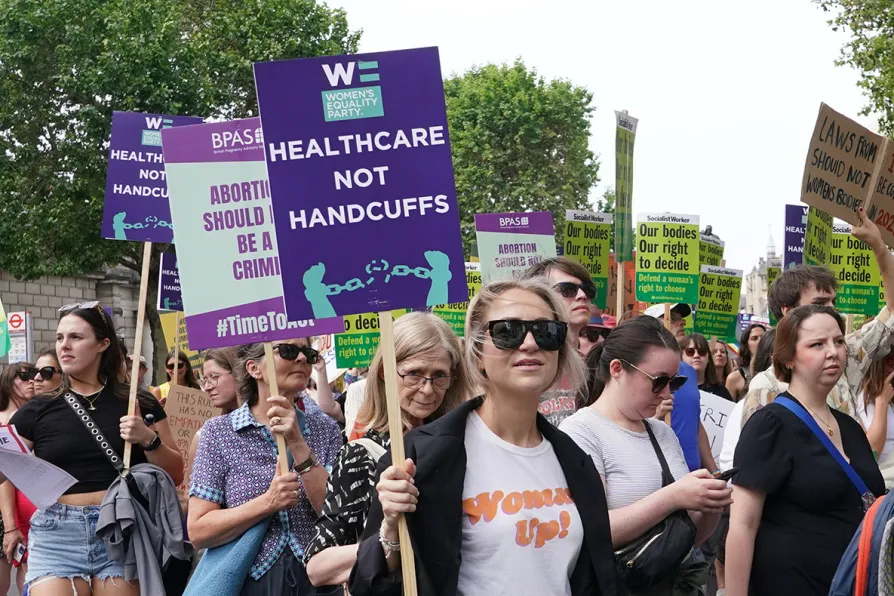
Professor MARY DAVIS argues that feminism has been hollowed out by liberal co-option – and only a revival of socialist, class-based politics can restore International Working Women’s Day’s original, radical purpose
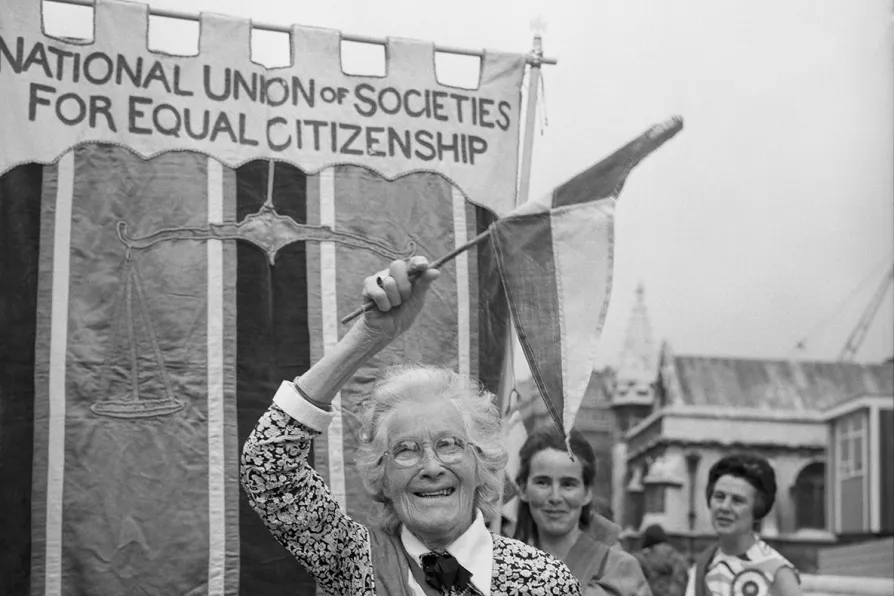
Half a century after transformative laws reshaped Britain, women’s rights are again contested. This International Women’s Day is a call to remember how change was won, and to organise to defend it, says KATE RAMSDEN