All the evidence shows voters want Labour to shift to the left — but initial signs from Andy Burnham are worrying on that front, cautions DIANE ABBOTT


 Latest editorial
Error message
An error occurred while searching, try again later.Earthquakes from Gorton to the Middle East are reshaping British politics
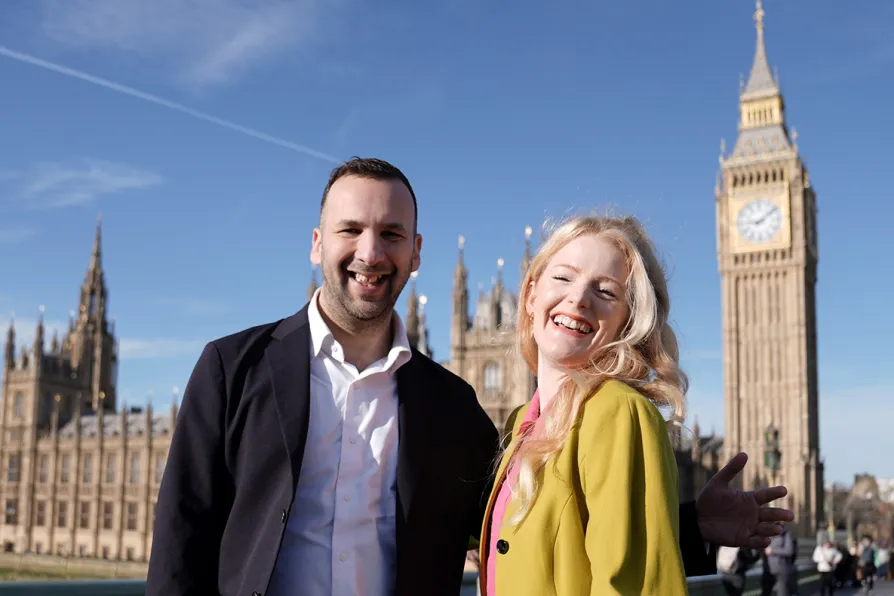 Newly-elected Green MP for Gorton and Denton, Hannah Spencer, poses for photos at Westminster Bridge, London, with Green Party leader Zack Polanski, ahead of her entering Parliament for the first time, March 2, 2026

ANDY McDONALD MP says Labour must show it is capable of delivering real improvements in people’s lives — bold action is required
ANGUS REID and ANDREW JOHNSTONE report on an initiative that we must take this summer
ALLISON FEWTRELL on what Plaid Cymru's historic election victory means for the communities being failed by Wales’s housing crisis, and four things the new government can do right now
France Insoumise MP JEROME LEGAVRE speaks to Christophe Domec on building the Europe-wide peace movement that came together in the International Conference Against War last weekend
At last weekend’s International Conference Against War, LINDA PENTZ GUNTER talks to the Palestinian physician and politician about the struggles ahead to achieve a truly free Palestine





POLITICS is invariably presented as performance underpinned by a dash of psephology.
Thus in Gorton and Denton the personable progressive plumber beat Reform’s divisive demagogue and Labour’s anyone-but-Burnham placeholder.
For analysis which, while somewhat deeper, still barely comes up past the ankle turn to any broadsheet sage pronouncing the death of the two-party system.
None address the truth leaping out from the by-election campaign just concluded — results like this express the crisis in class relations in Britain today.
They also reflect the widening disorder in the world as feral aggression without regard to law or consequence becomes the governing norm. That the global is now local is not “sectarianism” as per the Islamophobes, but progress, and inevitable to boot.
Hannah Spencer took the Manchester crown as the candidate of the Greens, but also as the expression of new, rising forces, superseding the old forms of class politics to which we are long accustomed.
She also articulated still-forming coalitions rooted in anti-imperialism as well as the multiple social depredations and dislocations scarring the working-class districts of the country.
She has called for more working people to enter Parliament at the expense of interchangeable Oxbridge graduates. That is the cause Labour was originally established for, before it became a career conveyor belt for business lobbyists and “think-tankers” like the disgraced Josh Simons.
Today, her party leads Labour in the polls. It may have a larger membership soon too.
It is sometimes forgotten that the conclusion of the story of the boy who cried “wolf” was the actual, and unfortunate, appearance of a real live wolf.
Thus the fact that obituaries have been written for the Labour Party down the decades, and as often refuted, is no warranty for its indefinite survival.
That it is now losing a seat it first won in 1906, and has held for 116 of the years since, is certainly an indicator that wolfish history is licking its lips.
Perhaps its arrival is overdue. That Labour victor in Gorton in 1906 was one John Hodge, who later served as Britain’s first-ever Minister of Labour.
An unabashed social-imperialist and opponent of strikes, he was described by a contemporary as a “fat, rampaging and most patriotic Tory working man.”
Labour’s Gorton candidate, Angeliki Stogia, seems to be few of those things. She is instead… well, let her Linkedin page speak for her:
“I am a strategic stakeholder engagement leader with extensive experience across infrastructure…working at the intersection of policy, politics and communities. I help organisations navigate complexity, rebuild trust and deliver outcomes in highly scrutinised and politically sensitive environments.”
In Gorton and Denton she was not so much an “engagement leader” as runner-up to the reactionary runner-up, malevolent Matthew Goodwin.
For Keir Starmer it is good enough that she was, and remains, not Andy Burnham, the menacing Mayor of Manchester.
But not good enough for the working-class constituency she aspired to represent. In its demography it stood as representative of a type — urban, multiethnic, with a fair smattering of students and young downwardly-mobile.
With Scotland and the “red wall” of old industrial districts having taken their leave already and south Wales about to, this was the last group of constituencies — and the largest — for whom the Labour Party could reliably speak.
There is more than a little policy continuity between Starmer and Stogia and their rampaging imperial predecessors. David Lammy’s blandly offensive claim that Muslim voters would “forget” about the Palestinians has had its merited refutation.
The 70,000-plus slaughtered in Gaza stalked the streets of Gorton, as they do across the world. They are now joined by the 150 Iranian schoolgirls incinerated by the Trump-Netanyahu bombs.
The world chaos shapes our domestic politics, and neither of the historically formed expressions of British class politics can find the language to speak to the new alignments.
Overlooked in the excitement, the Tories polled less than 2 per cent of the vote in a seat that was once marginal and that they nearly won in the 1960s. Neoliberal globalisation has eroded solid political foundations without discrimination.
On the right, witness the supersession of the broad-based bourgeois Tory party by the rancorous racist authoritarianism of Reform, now ever-more obviously peddling the same old neoliberal snake-oil but with added xenophobia — plutocratic populism with a vengeance.
And Nigel Farage now looks over his shoulder at the coalescence of even more aggressively right-wing forces, assembling under the banner of Rupert Lowe’s Restore Britain. There is no longer a stable middle-class politics.
The corrosive process may be ineluctable, but there is no unavoidable read-over into party politics. Even in bleak 2019 Jeremy Corbyn’s Labour secured over 77 per cent of the vote in Gorton.
Corbyn’s class framing was congruent with the times. So may Hannah Spencer’s prove to be, however reluctant socialists will be to give the Greens unqualified endorsement.
Whether the Green formula would work as well in Burnley or Barnsley or Blackburn is another issue. But it seems better placed than the government’s strategy, even when the latter nods towards its own warped understanding of class.
An anonymous Labour savant, speaking after the Manchester result, doubled down on the government’s intention to be tough on migrants even if it means “deliberately sacrificing some bourgeois support.”
As if. The speaker presumably meant liberal metropolitan voters. There is certainly no evidence of Labour risking imperilling its support from the bourgeoisie.
Rather, Keir Starmer remains determined to prove that the “forget nothing, learn nothing” Bourbons were far-sighted visionaries compared to the Downing Street incumbent.
In the wake of defeat he sought to position himself as man in the middle between “two extremes” — Reform on the right and the triumphant Greens on the left.
Hardly a single sentient soul could be found who thinks the authentic, relatable and democratic Spencer bears any resemblance to the embittered, entitled and misanthropic Goodwin.
There is no room Keir Starmer cannot misread, no note so false he cannot strike it.
He is not up for a rethink. In spite of all evidence that millions of voters have not only not forgotten about Gaza, and Starmer’s support for genocide, they have not forgotten about the Iraq War either, another foreign policy disaster on Labour’s account, Starmer has gone for more of the bloody same.
He claims that Britain will intervene “defensively” in the Iran war on the side of the brazen aggressors. All of a piece with the logic of presenting Hannah Spencer as a drug-pushing Islamist.
Starmer is a state servant, committed only to status quo rule by capital and war. The loves of his life remain Nato, nuclear weapons, fiscal rules and strong policing.
Hopes that a renewed prime minister would emerge once the carapace of Morgan McSweeney and the corrupt Labour Together gang were removed were always illusions.
“Let Keir be Keir?” We’ve got it. Much of the Labour left and the labour movement has yet to move beyond critiquing the evident disaster of the government.
The moment for decisive action is always impending but never quite arrived. Why wait for the fish to start rotting at the tail before addressing the decomposed head?
Anyway, the consequence of passivity is that the new class politics is presently strung between two negative imperatives — defeating the far right as the priority or ousting a broken and inept Labour government.
The Gorton and Denton result thus could not answer the supervening question, the positive synthesis — what sort of government do the British people want?
Absent an answer, myriad political computations, differing from one type of seat or part of the country to another, will determine outcomes in a most unpredictable way as the anti-Reform and anti-Labour forces mobilise under sundry banners.
Of course “the people” have no consolidated position on the issue. A large majority across classes desperately want change, but dispute ferociously the nature of it.
One alternative is a government that breaks with neoliberalism, Trump and the drive to war. That might coalesce around the Greens, but other forces are surely essential too, political heterogeneity being the norm for a class in recomposition.
And the organised working-class forces need to get back onto the field. The powerful statement against the Iran aggression backed by most major unions is a good start but needs to be imposed on the party many are affiliated to.
Fresh in from Manchester: the twentieth century is definitely over. A new map was sketched in Gorton and Denton.