All the evidence shows voters want Labour to shift to the left — but initial signs from Andy Burnham are worrying on that front, cautions DIANE ABBOTT


 Latest editorial
Error message
An error occurred while searching, try again later.From landslide to meltdown: Labour, Reform UK and the coming reckoning
Opinion polls point to electoral collapse, parliamentary rebellion and a looming leadership challenge as Starmer’s Labour haemorrhages working-class support and the far right exploits the vacuum left by a hollowed-out party, says NICK WRIGHT
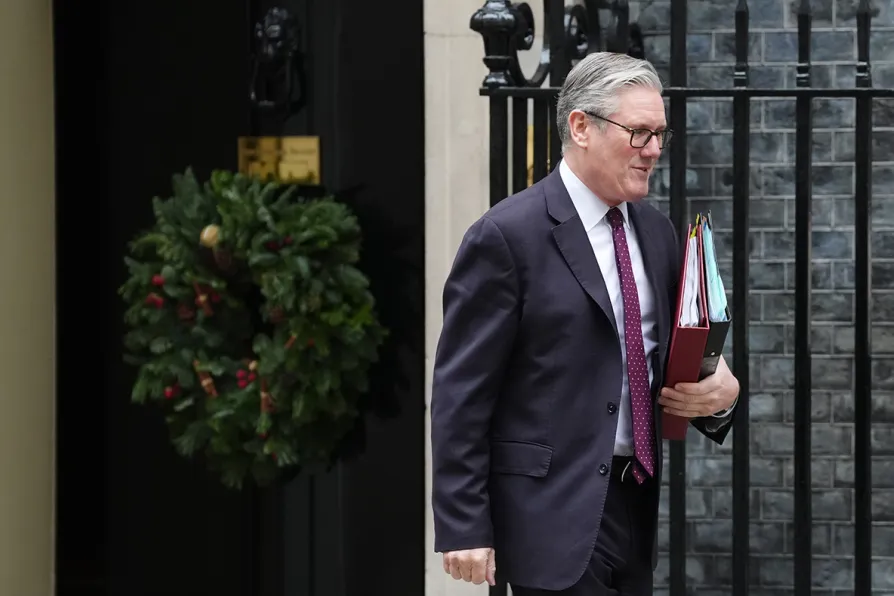 Prime Minister Sir Keir Starmer departs 10 Downing Street, London, to attend Prime Minister's Questions at the Houses of Parliament, December 17, 2025

ANDY McDONALD MP says Labour must show it is capable of delivering real improvements in people’s lives — bold action is required
ANGUS REID and ANDREW JOHNSTONE report on an initiative that we must take this summer
ALLISON FEWTRELL on what Plaid Cymru's historic election victory means for the communities being failed by Wales’s housing crisis, and four things the new government can do right now
France Insoumise MP JEROME LEGAVRE speaks to Christophe Domec on building the Europe-wide peace movement that came together in the International Conference Against War last weekend
At last weekend’s International Conference Against War, LINDA PENTZ GUNTER talks to the Palestinian physician and politician about the struggles ahead to achieve a truly free Palestine





THE mid-December polls have it that Labour commands just one in five voters, the Conservatives a couple of percentage points less, with Reform UK a shade off one third of voters.
The Lib Dems and Greens are more or less neck and neck, around 12 per cent, with the SNP on 3 per cent and Plaid Cymru on 1 per cent. Your Party barely makes a showing.
Before its less than satisfactory launch conference, Your Party had one in 12 voters (down from one in 18) willing to vote for it, with most also open to voting for the Greens.
We are many years away from a general election unless something threatens beyond the usual problems that any neoliberal government faces in the midst of an economic crisis and pressure for a war against Russia.
With its massive majority, the government faces few parliamentary threats to its continuation in office. The one constituency which might easily threaten the present leadership is, of course, the Parliamentary Labour Party itself.
This is a body of men and women that — save for a few of the more resolute members of the Socialist Campaign Group — are an improbable regiment of rebels, but the remorseless electoral arithmetic is compelling Labour MPs to think outside their Westminster bubble.
The end of the binary, plus workings of the first-past-the post system — and the degeneration of the traditional two parties of government — make seat projections highly speculative, but a reasonable person might extrapolate from the opinion polls that Reform UK might win just under the number of seats to form a government on its own. But it could credibly exceed the 326 seats its needs.
It will take substantial change to get Labour above 100 seats with the potential to crash down to a few dozen.
If the Greens maintain their current trajectory, they might rival Labour’s best chances while the Lib Dems might just about match them but from a stronger existing Westminster base.
The SNP seems pretty solid to take around 50 seats, with Plaid Cymru possibly taking a few more than the handful they currently hold.
Parties unsympathetic to Tories and Reform UK will have a numerically small advantage over the most reactionary unionists in the Northern Ireland statelet.
There are 650 seats in Parliament. At the last general election, Labour won 411 of them.
Thus there are over 300 Labour MPs contemplating a crash or, to put it another way, there are at least three times as many Labour MPs with a powerful motive to strike down the Prime Minister than there are those with even a vestigial interest in defending him.
This might just be the time for Keir Starmer to go back on the tools.
In fact his value as an advocate in the courts might be so devalued that a vocational course in tool-making might offer more rewarding prospects and a measure of job security.
Whoever wields the knife may not win the crown but they will be popular in places way beyond the Commons tea room.
My colleague Andrew Murray is better positioned to read the parliamentary runes than I, but I find little to contest his suggestion that Angela Rayner may make a challenge for the leadership.
In a body of men and women so consumed with the sense of their own fitness for high office as the parliamentary Labour Party there may well be other challengers.
When Jeremy Corbyn won the party leadership it was because the party leadership — in the mistaken expectation that opening up the electorate beyond party members would diminish the appeal of the left — changed the rules to allow a US-style primary election.
Since this tactical error, the Starmer regime has acted with great resolution on its foundational belief that the popular will should never again be a factor in selecting the leader of the party.
The failure of the Corbyn leadership was to press home the long-standing demand for mandatory reselection of MPs. Instead we have had the forced exclusion of many former Labour MPs who failed to fit the mould cast by Morgan McSweeney.
Angela Rayner — despite the manoeuvres she made to win and hold the deputy leadership — has enough credibility as a genuine tribune of working people, with a working-class and trade union back-story, and she has enough human empathy to connect with a working-class audience in ways that very few Labour MPs possess.
In this she sets the standard which other candidates must match. It is precisely because Your Party has diminished its own appeal that serious-minded people in the labour and trade union movement are thinking of ways to construct a working-class appeal to disaggregate the Reform UK voting block.
As Nigel Farage speculates on a tie-up with the Tories; doubles down on his policy to privatise the NHS even faster than Wes Streeting; and delights in his connection with the wilder elements in the US billionaire right wing, his appeal to working-class people attracted to Reform on the immigration question might well be diminished by an active campaign to expose him.
His appeal is made most vulnerable by evidence suggesting that Reform UK voters tend to favour redistributive tax policies, dislike the rich to the point of favouring a wealth tax and are generally in favour of the public ownership of precisely those utilities and public assets which Farage wants retained in private ownership as cash cows for his class of City spivs and corporate crooks.
Short of an extra-parliamentary working-class challenge to neoliberal Labour — and whatever we think of the Greens this is not their shtick — the main instrument for compelling progressive change on the main issues which affect workers hangs on the power trade unions exercise in both Labour and in society.
Where the loyalty working-class communities offered to the Labour Party has been much weakened trade union affiliation to the party has become a bone of contention.
New life can be breathed into the trade union link if — and only if — the unions make support for any leadership candidate conditional on radical change.
This must not only include the reinstatement of the many sections of the employment Bill that have been watered down since the unions shaped it before the last election.
This government is committed to the EU’s war drive that entails shifting public expenditure on to arms purchases — principally of US military supplies — and away from welfare, housing, education and the NHS.
Donald Trump’s twin-track Ukraine policy has produced a situation where Nato states have been compelled to raid the coffers for €50 billion in arms for Ukraine. The EU states and Britain are now pledged to ramp up their purchases of US arms through Nato’s Prioritised Ukraine Requirements List — the so-called PURL initiative.
Last week a leading Nato military figure said Europeans must be prepared to sacrifice their next generation and the gung-ho German government began the registration of young adults for future conscription. Starmer’s pledge to raise military spending to satisfy Trump is in the service of US arms corporations to which so much of British capital is tied.
The price Britain is paying for Starmer’s submission to Trump is measured in cuts to our “social wage” and for those union members who see an expanded arms industry as a cast iron guarantee of job security bear in mind that this comes immediately at the expense of social spending and, in the indeterminate future, at the cost of their children’s lives.