Extreme heat is now one of the defining public health challenges of a warming world, explains Prof IAN WILLIAMS


 Latest editorial
Munich terror: why the workers were marching
DAVID CONWAY explains the crisis in the German childcare sector that had driven workers to the streets — a cause that is not being reported alongside the deadly ramming attack on their march
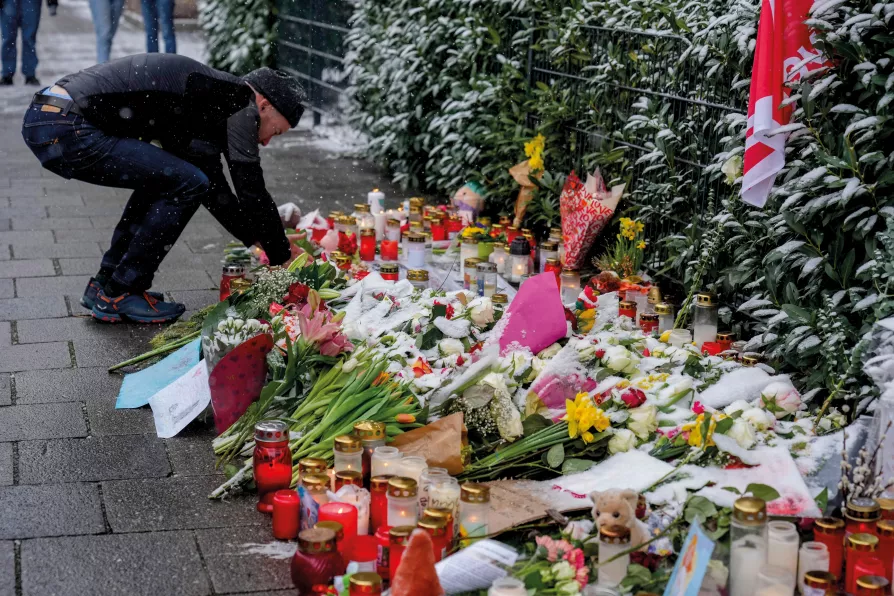 TRAGEDY: A man lays flowers
at a memorial marking the spot
where a car drove into a
workers’ demonstration — the
flag of the union Ver.di can be
seen on the right, February 16
TRAGEDY: A man lays flowers
at a memorial marking the spot
where a car drove into a
workers’ demonstration — the
flag of the union Ver.di can be
seen on the right, February 16
19.01.1930-23.04.2026
Kate Clark pays tribute to Ricardo, whose life spanned the hopes of Allende’s Chile, the horrors of military dictatorship and decades of campaigning for justice in exile
The electoral cost of Labour’s stance on Gaza is impossible to ignore – the new leadership must take heed, argues PETER LEARY
After the dismissal of union representatives and years of precarious working conditions, Kimpton Clocktower workers are drawing a line, writes THOMAS BELL
Burnham’s Makerfield triumph offers the party the opportunity to reconnect with working people, but only if it rejects business as usual, says CAROL MOCHAN MSP
KIERA MARSHALL says there is a gulf between the privileged circles in which most politicians move and the lives of working-class youth in left-behind estates – and as a newly elected Senedd member she’s determined to do something about it





ON February 13, a car tragically ploughed into a peaceful demonstration by public-sector workers in Munich. Among the 39 injured, a woman and her two-year-old daughter unfortunately lost their lives.
The demonstration, organised by the Ver.di trade union, was aimed at highlighting the growing crisis in Germany’s public sector. But as the story unfolded, British media’s focus shifted away from the issues it was protesting, towards the background of the perpetrator, an Afghan national with a valid German residence and work permit, as well as to whether the attack was an act of religious terrorism, despite no evidence linking the offender to a jihadist group.
By the end of February 13, reference to Ver.di was often forgotten by much of British media and in some news items there was no reference to how the attack was on trade union activists altogether.

Similar stories

As Unison launches its Year of Women Workers, ANNIE COGAN-THOMAS argues that stronger organisation and collective bargaining are essential to winning equality

Comments from Matt Goodwin and Danny Kruger expose a reactionary vision in which falling birth rates are blamed on women, says JUDITH CAZORLA

If the government really wanted to address public finances, improve living standards and begin economic recovery, it would increase its borrowing for investment, argues MICHAEL BURKE