ROGER D HARRIS and SARA FLOUNDERS challenge propaganda against the blockaded socialist island


 Latest editorial

What’s the difference between Marxist and ‘orthodox’ economics?
Economists have only excused the economic instability of capitalism - the point is to change it, writes the MARX MEMORIAL LIBRARY
 In reality, workers do not ‘choose’ to work and make bosses like Amazon’s Jeff Bezos (right) obscenely rich - we must work or starve

Marx and Engels incorporated in their writings a critique of the way that capitalism destroys the environment but it is only in the last half century that environmental concerns have become an integral part of the fight for socialism, writes the Marx Memorial Library and Workers’ School
The racist Republican tactic of redistricting to keep Trump and his base in power is turning the clock back to the 1950s, writes LINDA PENTZ GUNTER
With a political crisis engulfing the Labour Party, the case for PR is back on the agenda. TONY BURKE argues trade unions must now engage on changes to our voting system
YVETTE WILLIAMS and JOE DELANEY dissect the institutional dawdling that rubbed salt into the Grenfell open wounds prolonging the agony of survivors
The HS2 debacle exposes what happens when public infrastructure is handed to private contractors – especially when set against China’s state-led high-speed rail success, says CARLOS MARTINEZ





CAPITALISM is based on the supposed supremacy of the market — of free transactions where buyer and seller are at liberty to decide what they want to buy and sell, to whom, and for how much.
Profit is the just reward for effort and provides the essential motive for investment and innovation. The myth is fundamental to orthodox or “mainstream” economics (rehearsed endlessly in popular media and taught in schools and universities).
One of those orthodoxies is that price of any commodity is determined merely by supply and demand — that prices fall when supply goes up or when demand drops, and vice versa. Another orthodoxy is that profit is solely the difference between expenditure and income — buying below something’s “real”value or selling above it.
This fiction of a free market is carried through into employment. The worker is “free” to choose who to work for and for what wage; and the employer, free also to select the worker and what to pay. The wage paid is essentially a function of supply and demand.
Socialists have always challenged this fairy tale of a “fair exchange” between buyer and seller — including the process whereby working people get paid for doing a job. They point out that power ultimately lies with the owner of capital — the “means of production.”
Working people have no alternative but to sell their capacity to work because they have no other means of subsistence. Employers then seek to extract the maximum value from this labour power and they do so within a legal framework established by the capitalist state.
Collectively, workers produce more value than they receive in wages. The difference is called “surplus value” and it’s appropriated by different sections of the owning class in different forms. Part of it may be taken in rent by the owners of land, buildings or machinery. Part is taken as interest by banks. The majority goes in profit to the owners of capital, to be reinvested to make more profit, or taken for their own consumption. In Britain today around 46 per cent of total national production is taken as rent, interest or profit. This represents the “rate of exploitation” and it has increased sharply since the 1970s.
Marxist economics can help us analyse why capitalism is inherently exploitative (not just of people but of the environment — but that’s another answer). It can also help explain why capitalism is so prone to crisis.
When the latest economic crash hit in 2008, the Queen asked assembled “experts” at the London School of Economics to ask why nobody had seen it coming.
They thought for a while and then argued among themselves. The crash was due to the irresponsible behaviour of individuals — ignorance, arrogance, speculative greed. Or it was institutional failure: lax (or over-) regulation — “we” need global regulation of money markets to stop it happening again. Some said it was due to theoretical shortcomings — an over (Keynesians) or insufficient (neoliberals) reliance on the market.
Others put the blame on the cultural “other” — US home ownership and an overblown mortgage market; irresponsible Greek public spending; Anglo-Saxon arrogance. Then they got together again and came up with a better answer; “systemic failure.”
The problem is — surprise — not capitalism as a system, but the workings of the financial sector and in particular the regulatory mechanisms put in place to ensure its “smooth working.”
In some ways this was a big advance for “orthodox” economists. Samantha and David Cameron (remember him?) reportedly had a sign in their country home which reads: “Calm down dear, it’s only a recession.”
Similar stories
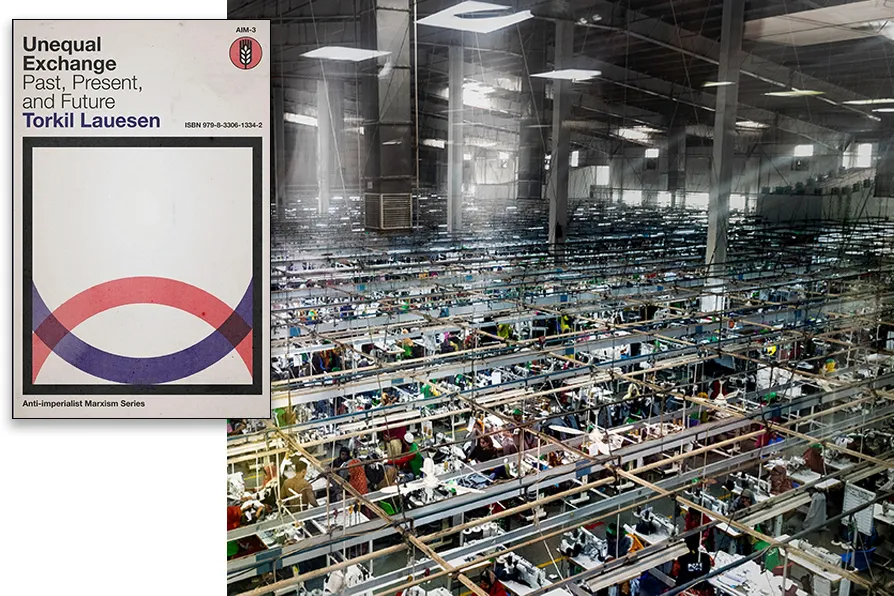
MARTIN GRAHAM welcomes, with reservations, a scholarly addition to the unfinished business of understanding how capital works on a world scale

PHILIP ENGLISH says military spending will not create the jobs young people need — instead, build an economy based around needs, not profit
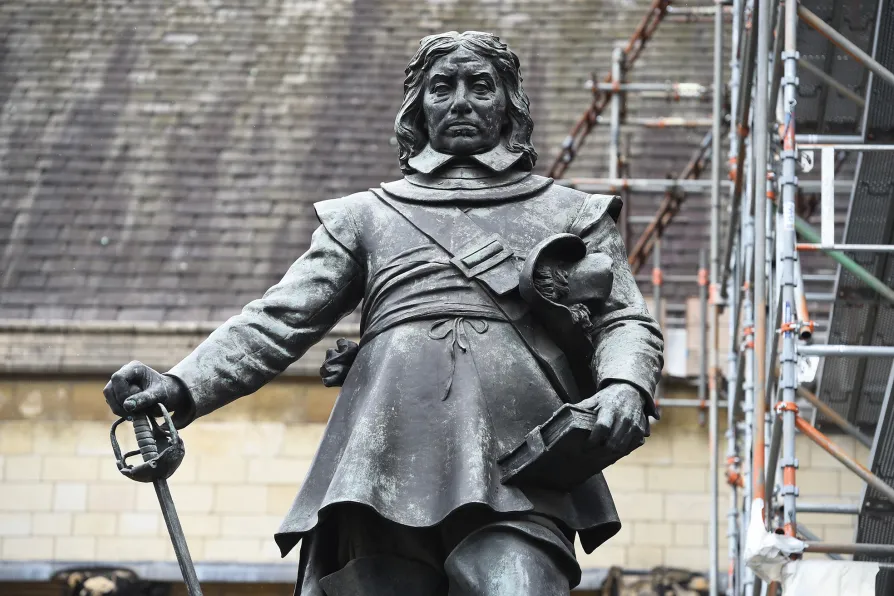
The selection, analysis and interpretation of historical ‘facts’ always takes place within a paradigm, a model of how the world works. That’s why history is always a battleground, declares the Marx Memorial Library
CAROL WILCOX argues for the proper implementation of the land value tax, which could see unused plots sold off and landlords priced out of landlordism, potentially resolving the housing and planning crises