ROGER D HARRIS and SARA FLOUNDERS challenge propaganda against the blockaded socialist island


 Latest editorial

Just how does Facebook make its profit?
Despite its tiny staff, the company has enormous wealth. This has as much to do with data-scraping its users as it has to do with another concept Marx detailed: religion



Marx and Engels incorporated in their writings a critique of the way that capitalism destroys the environment but it is only in the last half century that environmental concerns have become an integral part of the fight for socialism, writes the Marx Memorial Library and Workers’ School
The racist Republican tactic of redistricting to keep Trump and his base in power is turning the clock back to the 1950s, writes LINDA PENTZ GUNTER
With a political crisis engulfing the Labour Party, the case for PR is back on the agenda. TONY BURKE argues trade unions must now engage on changes to our voting system
YVETTE WILLIAMS and JOE DELANEY dissect the institutional dawdling that rubbed salt into the Grenfell open wounds prolonging the agony of survivors
The HS2 debacle exposes what happens when public infrastructure is handed to private contractors – especially when set against China’s state-led high-speed rail success, says CARLOS MARTINEZ





ONE of the consequences of the Covid-19 pandemic has been a huge increase in social-media use. Facebook alone has seen an increase in total messaging of over 50 per cent in countries most affected by the virus, and use of WhatsApp, owned by Facebook, has grown by 40 per cent.
Facebook isn’t a big employer. It has just under 45,000 employees in total — up from just seven individuals when it was launched 15 years ago. But its profits are vast — about $22 billion (£17bn) last year.
And that’s despite its $5bn (£3.8bn) fine for allowing Cambridge Analytica, consultants to President Trump’s electoral campaign, to harvest the data of its users.
That’s about £½ million profit per employee (PPE).
Similar stories
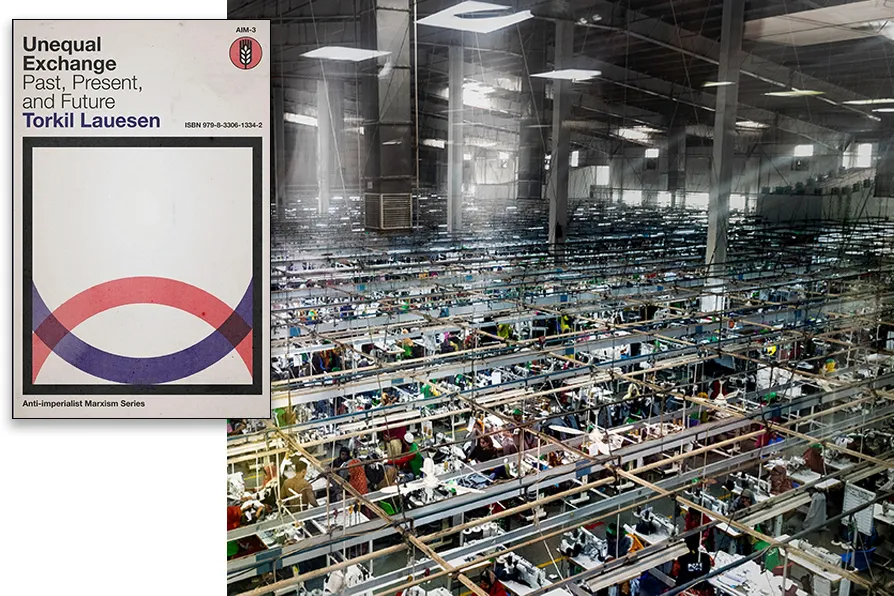
MARTIN GRAHAM welcomes, with reservations, a scholarly addition to the unfinished business of understanding how capital works on a world scale

PHILIP ENGLISH says military spending will not create the jobs young people need — instead, build an economy based around needs, not profit

PAUL W FLEMING is unequivocal that Labour’s unpreparedness and resulting ambiguity on copyright in the creative industries has to be reined in with policies that will reverse the growing abuse by Big Tech AI

The creative imagination is a weapon against barbarism, writes KENNY COYLE, who is a keynote speaker at the Manifesto Press conference, Art in the Age of Degenerative Capitalism, tomorrow at the Marx Memorial Library & Workers School in London