All the evidence shows voters want Labour to shift to the left — but initial signs from Andy Burnham are worrying on that front, cautions DIANE ABBOTT


 Latest editorial
Only skin deep?
New research shows how alpha particles form in the ‘skin’ of an atom’s nucleus, write ROX MIDDLETON, JOEL HELLEWELL and LIAM SHAW
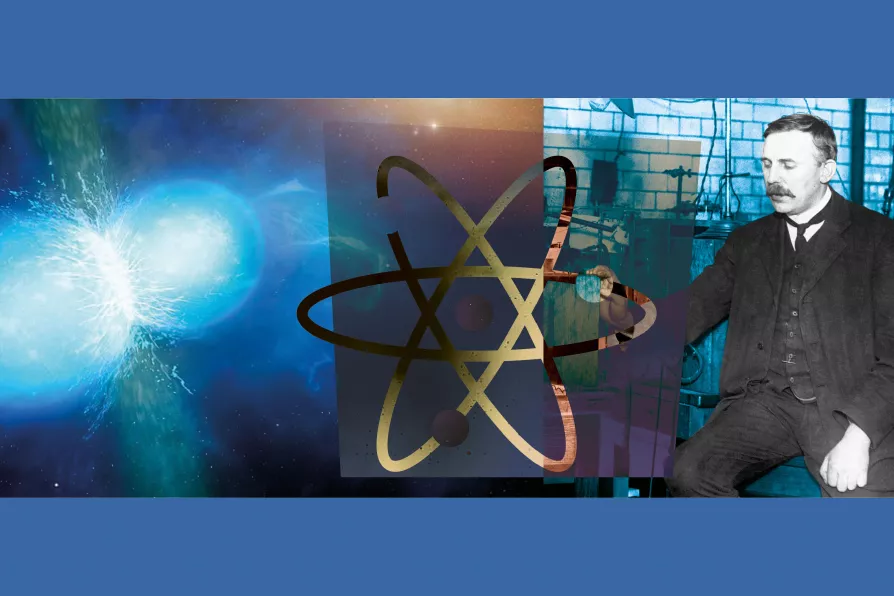 Sir Ernest Rutherford, Langworth Professor of Physics at Manchester University, with an ‘atom counting’ apparatus; and (far left) an artist’s impression of two neutron stars merging
[University of Warwick/Mark Garlick / Creative Commons]
Sir Ernest Rutherford, Langworth Professor of Physics at Manchester University, with an ‘atom counting’ apparatus; and (far left) an artist’s impression of two neutron stars merging
[University of Warwick/Mark Garlick / Creative Commons]

ANDY McDONALD MP says Labour must show it is capable of delivering real improvements in people’s lives — bold action is required
ANGUS REID and ANDREW JOHNSTONE report on an initiative that we must take this summer
ALLISON FEWTRELL on what Plaid Cymru's historic election victory means for the communities being failed by Wales’s housing crisis, and four things the new government can do right now
France Insoumise MP JEROME LEGAVRE speaks to Christophe Domec on building the Europe-wide peace movement that came together in the International Conference Against War last weekend
At last weekend’s International Conference Against War, LINDA PENTZ GUNTER talks to the Palestinian physician and politician about the struggles ahead to achieve a truly free Palestine





IMAGINE an atom: like a miniature solar system with the nucleus in the centre and electrons orbiting around like planets.
Although the picture is familiar, analogies like this can mislead. New research published in Science last week by a team largely based in Darmstadt, Germany, emphasises that the atom is far stranger than our simple images. We still have much to learn about its inner citadel: the nucleus.
The discovery of the atomic nucleus is a little over a century old. Earlier ideas about the atoms imagined them like tiny billiard balls.

Similar stories

BRENT CUTLER welcomes a valuable contribution to discussions around the need to de-carbonise energy production
JOHN GREEN’s palate is tickled by useful information leavened by amusing and unusual anecdotes, incidental gossip and scare stories

The Communist Party of Britain’s Congress last month debated a resolution on ending opposition to all nuclear power in light of technological advances and the climate crisis. RICHARD HEBBERT explains why
Neutrinos are so abundant that 400 trillion pass through your body every second. ROX MIDDLETON, LIAM SHAW and MIRIAM GAUNTLETT explain how scientists are seeking to know more about them