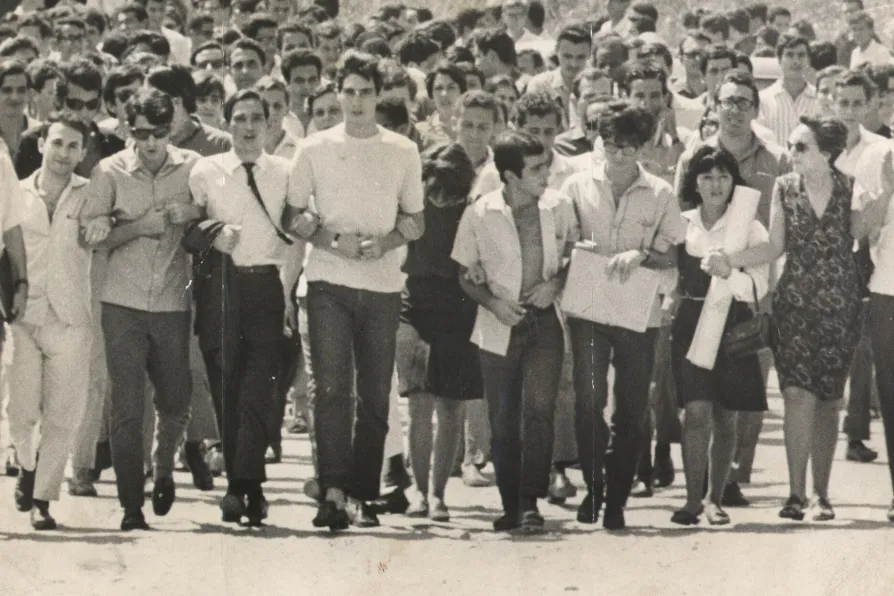
Newly revealed documents reveal that MI5 taught Brazilian secret police the techniques deployed by the 1964-85 military dictatorship in horrific prisons like Rio de Janeiro’s House of Death. SARA VIVACQUA reports


 Latest editorial

Inflation: refusing to pay for it
In the past, the Western ruling class has sought to manage inflation by ensuring that rising prices are not matched by growing salaries — but the global environment and domestic resistance from the organised working class are making this difficult, writes PRABHAT PATNAIK
 The fact that inflation is sought to be controlled by squeezing the share of the working class does not mean that the working class was responsible for starting the inflationary process. In fact, the two phenomena have nothing to do with one another.
CHRISTOPHE DOMEC speaks to the France Insoumise politician facing constant persecution from French authorities
It can be hard to discern conspiracy theory from reality and under the Trump regime the two might just be the same thing, writes Linda Pentz Gunter
ALAN SIMPSON says responses to the Golders Green attacks risk deepening divides across our country
Capturing the general strikes history is a vital part of our struggles today, posits HENRY FOWLER
On a tumultuous day in Welsh politics DAVID NICHOLSON looks at the key issues for progressives in Wales to grapple with the rise of the far right





ECONOMISTS distinguish between two kinds of inflation: “demand-pull” and “cost-push.” Demand-pull inflation is said to occur when there is excess demand in a situation where supply cannot be augmented, because full capacity output has been reached in one or more crucial sectors. Wartime inflation is a classic example.
In India during the pre-neoliberal, dirigiste period, inflation was often the result of an insufficient grain output relative to demand, arising from a poor harvest.
Cost-push inflation on the other hand occurs when supplies can be augmented, as the economy is nowhere near full capacity in key sectors, but one of the classes tries to raise its share of output, by demanding a higher price for the input it provides, while other classes are unwilling to lower their shares, giving rise to a tug-of-war, which manifests itself through inflation.
Similar stories

PHILIP ENGLISH says military spending will not create the jobs young people need — instead, build an economy based around needs, not profit
If the government really wanted to address public finances, improve living standards and begin economic recovery, it would increase its borrowing for investment, argues MICHAEL BURKE
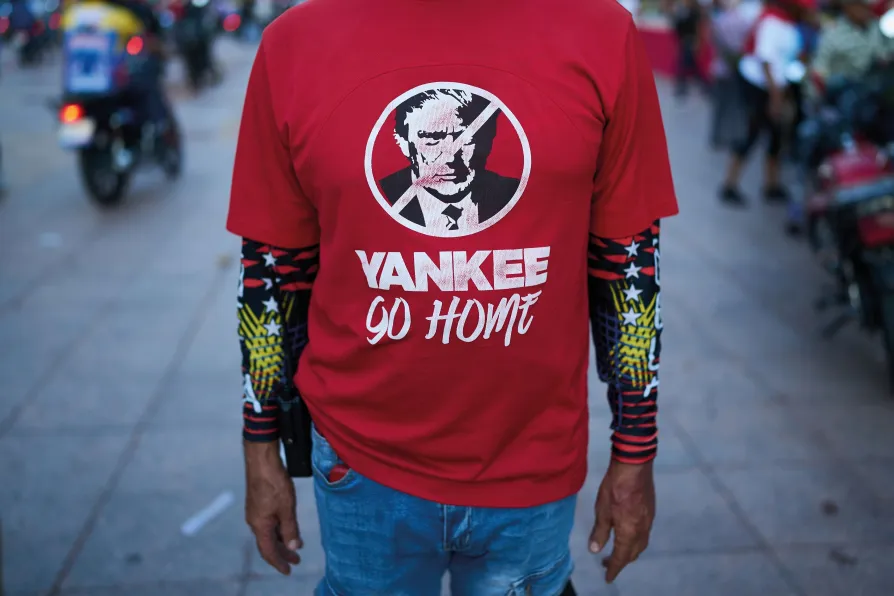
Western nations’ increasingly aggressive stance is not prompted by any increase in security threats against these countries — rather, it is caused by a desire to bring about regime changes against governments that pose a threat to the hegemony of imperialism, writes PRABHAT PATNAIK
PRABHAT PATNAIK details the epochal shift of political power from Western neocolonialists to the people