ROGER D HARRIS and SARA FLOUNDERS challenge propaganda against the blockaded socialist island


 Latest editorial

Are we facing limits to economic growth?
Capitalism depends on continued expansion — so does that mean that after a certain point, we will run out of resources and markets and face calamity? Only if we blindly follow the 'logic' of the market, explains the MARX MEMORIAL LIBRARY



Marx and Engels incorporated in their writings a critique of the way that capitalism destroys the environment but it is only in the last half century that environmental concerns have become an integral part of the fight for socialism, writes the Marx Memorial Library and Workers’ School
The racist Republican tactic of redistricting to keep Trump and his base in power is turning the clock back to the 1950s, writes LINDA PENTZ GUNTER
With a political crisis engulfing the Labour Party, the case for PR is back on the agenda. TONY BURKE argues trade unions must now engage on changes to our voting system
YVETTE WILLIAMS and JOE DELANEY dissect the institutional dawdling that rubbed salt into the Grenfell open wounds prolonging the agony of survivors
The HS2 debacle exposes what happens when public infrastructure is handed to private contractors – especially when set against China’s state-led high-speed rail success, says CARLOS MARTINEZ





TO answer the question, it depends what you mean by “growth” — what kind of growth, who controls and benefits from it and what its longer term consequences might be for our Earth. Capitalism is clearly in crisis; stagnating and destroying the environment as it does so — but what about the broader prospects for the wellbeing of our planet and its peoples?
Fifty years ago the “Club of Rome,” an “invisible college” of “notable scientists, economists, business executives, high level civil servants and former heads of state from around the (mainly capitalist) world, declared that “growth” (of all types) was unsustainable — and funded the Massachusetts Institute of Technology (MIT) to produce a computer model to “prove” it.
The Limits to Growth published in 1972 concluded that “if the present trends in world population, industrialisation, pollution, food production, and resource depletion continue unchanged, the limits to growth on this planet will be reached sometime within the next hundred years ... the most probable result will be a rather sudden and uncontrollable decline in both population and industrial capacity.”

Similar stories

The selection, analysis and interpretation of historical ‘facts’ always takes place within a paradigm, a model of how the world works. That’s why history is always a battleground, declares the Marx Memorial Library
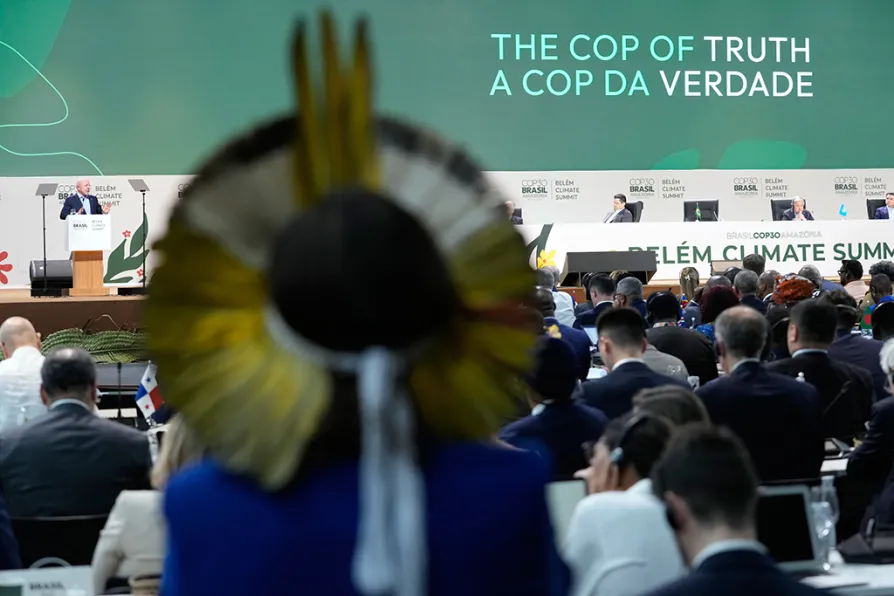
From summit to summit, imperialist companies and governments cut, delay or water down their commitments, warn the Communist Parties of Britain, France, Portugal and Spain and the Workers Party of Belgium in a joint statement on Cop30

JOHN GREEN asks how can we take decisive action on population levels with a world leader who is a destructive ignoramus

From hunting rare pamphlets at book sales to online panels and courses on trade unionism and class politics, the MML continues connecting archive treasures with the movements fighting for a better world, writes director MEIRIAN JUMP