Charles Windsor challenged to declare full income as he becomes first monarch to release tax payments


 Latest editorial
‘This is not one bad apple; this is a systemic problem across policing’
Campaigners dump 1,071 rotten apples — one for each officer investigated over allegations of violence against women and girls — outside Scotland Yard
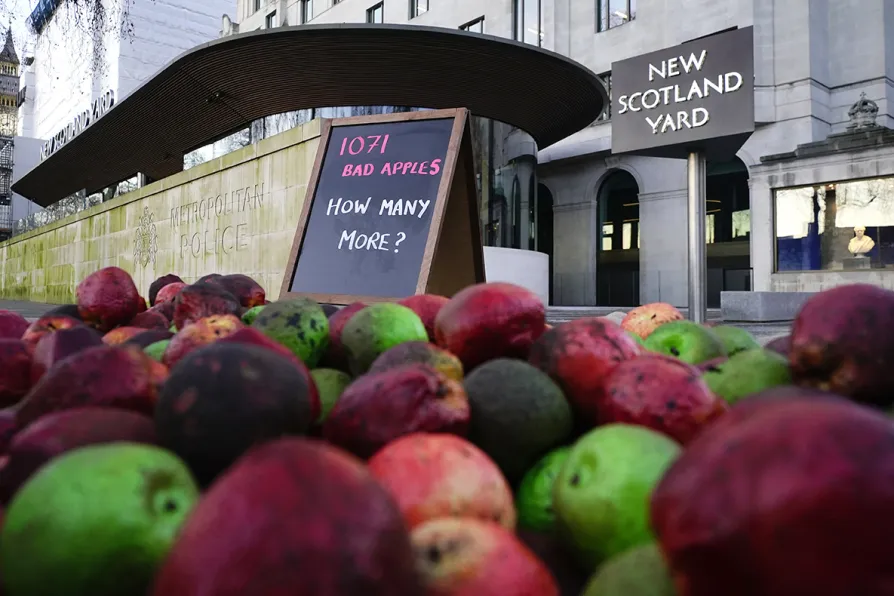 1,071 rotten apples outside New Scotland Yard, reflecting the number of Metropolitan Police officers who have been, or are currently, under investigation for allegations of domestic abuse or violence against women and girls






CAMPAIGNERS dumped 1,071 “bad apples” outside Scotland Yard this morning to highlight the scale of abuse allegations involving Metropolitan Police officers.
Charity Refuge said the apples reflect the number of officers who have been, or are currently, being investigated over allegations of domestic abuse or violence against women and girls.
The stunt comes in the wake of the conviction of former Met officer David Carrick after he pleaded guilty to dozens of rapes and sexual offences against 12 women this week.

Similar stories

ANNA FISHER explores what would it mean for women’s equality and public safety if Britain embraces full commercialisation of the sex trade

Legal frameworks designed to safeguard women are too often weaponised against them, reinforcing male power and entrenching injustice. The FiLiA Ending MVAWG Team highlight some of the issues

Sexual harassment on Britain’s railways is rising sharply, according to the British Transport Police, yet too many women still feel reporting is futile. LYNNE WALSH asks why the burden of safety all too often remains on women themselves

EDDIE DEMPSEY explains why the RMT is calling for urgent action against assaults on staff and passengers on our public transport system