Latest editorial
Error message
An error occurred while searching, try again later.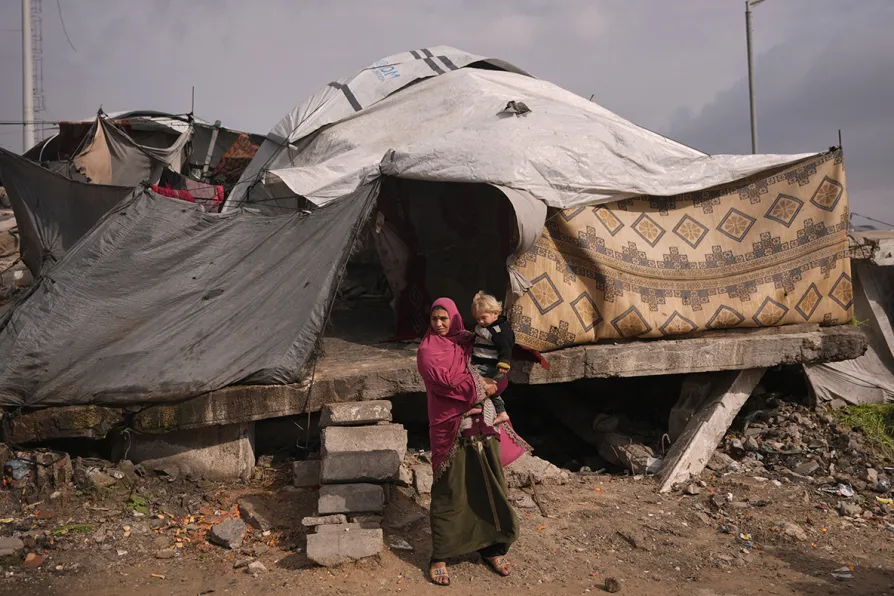 A woman holds a child as they stand in front of their tent in a makeshift camp for displaced Palestinians set up in an area in Gaza City, December 29, 2025





WINTER rain further devastated the Gaza Strip at the weekend, leaving displacement camps flooded ankle-deep as Palestinians tried to stay dry in tents frayed by months of use.
Meanwhile, Israeli Prime Minister Benjamin Netanyahu travelled to Florida today for talks with US President Donald Trump on the second phase of the ceasefire in the devastated Palestinian territory.
The first phase, which took effect on October 10, was meant to trigger a surge in humanitarian aid for Gaza, including provision of shelter.
But aid agencies say Israel continues to block critical supplies, leaving hundreds of thousands of displace people exposed to winter weather.
Mr Netanyahu made no public statement as he left Israel.
In the southern city of Khan Younis, blankets were soaked and clay ovens used for cooking were swamped.
Children wearing flip-flops waded through puddles as rainwater pooled between tents.
Some residents used shovels or tin cans to scoop water away, while others clawed at the ground to free collapsed shelters from the mud.
“Puddles formed and there was a bad smell,” said Majdoleen Tarabein, displaced from Rafah.
“The tent flew away. We do not know what to do or where to go.”
She and relatives tried to wring muddy blankets dry by hand.
“When we woke up in the morning, we found that the water had entered the tent,” said Eman Abu Riziq, another displaced woman in Khan Younis.
“The mattresses are all completely soaked.”
She said her family was still reeling from her husband’s death less than two weeks ago.
At least 12 people, including a two-week-old infant, have died since December 13 from hypothermia or weather-related collapses of war-damaged homes, according to Gaza’s Health Ministry.
Emergency workers have urged residents not to shelter in damaged buildings, but with much of the territory in ruins, options are limited.
The United Nations estimates that almost 80 per cent of Gaza’s buildings have been destroyed or damaged.
Since the ceasefire began, 414 people have been killed and 1,142 wounded, the ministry said, bringing the overall Palestinian death toll to at least 71,266.
Aid groups say deliveries fall far short of needs under the US-brokered truce.
Shelter Cluster estimates about 72,000 tents have entered Gaza since the ceasefire.
-additional online-
“People in Gaza are surviving in flimsy, waterlogged tents and among ruins,” Philippe Lazzarini, commissioner-general of UNRWA, the top United Nations agency overseeing aid in Gaza, wrote on social media.
“There is nothing inevitable about this. Aid supplies are not being allowed in at the scale required.”
Israel has said it refuses to move to the next phase while the remains of the final hostage are still in Gaza, though Hamas notes that the destruction in Gaza has hampered its efforts to find bodies.
Challenges in the next phase include the deployment of an international stabilisation force, the establishment of a technocratic governing body for Gaza, the disarmament of Hamas and further Israeli troop withdrawals from the territory.