JAMES NALTON celebrates Ruben Blades’s song Patria – played before Panama’s game against Ghana — a song inspiring hope instead of hate


 Latest editorial
Error message
An error occurred while searching, try again later.Venezuela beat the US at their own game in their own backyard
If the United States wants international success in a game it built, maybe it should embrace the joy of the game rather than the unnecessary military pageantry, writes JAMES NALTON
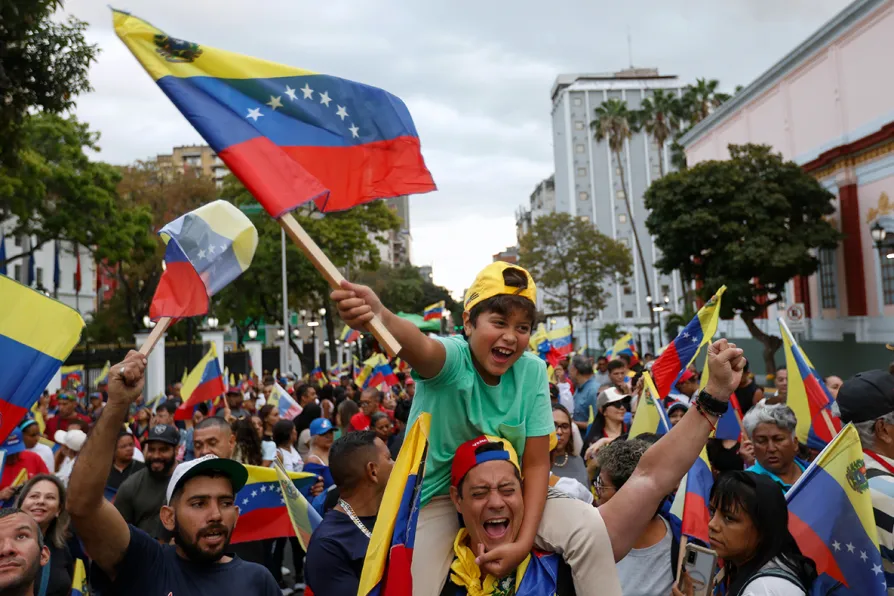 Venezuela fans celebrate a day after their team's victory over the United States in the championship match of the World Baseball Classic, at the Miraflores presidential palace in Caracas, Venezuela, March 18, 2026
Fifty years ago this month, Britain faced its hottest summer on record, as welterweight champion Stracey met his match in Mexico’s Palomino, writes JOHN WIGHT.
Including races at Newcastle, York and Chester





VENEZUELA’S triumph in the 2026 World Baseball Classic last week was the latest politically charged moment in international sport, as they defeated the United States at their own game in their own back yard.
But this is Venezuela’s game too and the visitors also had more support in Miami than the US itself.
For much of the tournament, politics took a back seat to the entertainment on show and the joy in the performances of many of the teams involved.
From Venezuela’s dramatic run to the final, defeating one of baseball’s powerhouses, Japan, before overcoming a strong showing from Italy, to the performances of the Dominican Republic and Puerto Rico, it was a tournament to behold.
In the end, it was the United States themselves who brought politics into play through the denial of visas to eight members of staff from the Cuban team, the ingrained military presence in US sports and the involvement of Donald Trump, who contributed to the pre-match hype ahead of the final by threatening to annex Venezuela.
International baseball is among the most politically charged sports due to the contrasting ideologies of its greatest exponents.
Cuba is the most successful team in the history of international baseball, having won the World Cup 25 times. A total of 38 editions of the World Cup were played before a move from Major League Baseball (MLB) and the MLB Players Association resulted in a tournament that could include players from the world’s top professional leagues.
With increased involvement of players from MLB, the United States might have expected to dominate the World Baseball Classic, but has so far only won it once in the six editions played, finishing runner-up twice.
There is understandable pride in the US around the sport of baseball, but the beauty of the game is partly that MLB is now very much an international league, and this is very much an international sport.
It can be difficult to determine which could be the designated the national sport in the United States, but even though gridiron is very popular, baseball is up there and is considered a “national pastime.”
The baseball diamond is a familiar sight in any park, whether permanent or makeshift and there is a lore to the game that arguably outdoes the other US sports.
But baseball is a designated national sport in other countries, too, including Cuba and Venezuela, while also being hugely popular in East Asian countries such as Japan and South Korea.
Just as Russian ice hockey players are still celebrated in North America’s National Hockey League, the political divides and actions of a country’s government or leaders can go out of the window when it comes to baseball. But they’re always there beneath the surface, liable to rear their head at any moment, and Trump reared his for the final.
As Venezuela triumphed, getting the winning run in the ninth and final inning of the final after the US levelled the score to 2-2 in the eighth, some of the US players warmly congratulated their opponents.
The US players, though, had set themselves up to the point that it felt like they had lost more than a baseball game.
Sports writers Howard Bryant and Ryan Rosenblatt both highlighted an issue with the US team, and how the joy with which the other nations played contrasted with the United States’ more aggressive, militant approach.
It is on this global stage, outside of the insular setting of US sports leagues, that the obsession with the military around sporting events looks almost ridiculous.
President Trump was present at the final. Before it, he threatened to annex Venezuela, a threat he has made to several countries in recent years, suggesting it would become a 51st American state. Such a serious threat has somehow become a go-to bit of banter for him ahead of sporting events.
After watching the US suffer defeat in a game they had framed as some kind of military operation, Trump posted on social media: “Statehood!!! President DJT.” A controversial, extremely partisan sports pundit who somehow became president.
In a sporting sense, the World Baseball Classic was another example of the thrilling unpredictability of knockout sport. Maybe US sports got it right when opting to determine a champion via a playoff rather than a league table.
As the world of sport reflects the imbalance in other walks of life, with rich teams dominating league tables and using others as feeder teams, the unpredictability of cup competitions can momentarily level the playing field and restore some excitement to these games.
To put Venezuela’s win solely down to luck would be unfair, though. This is a country where baseball is a national sport ahead of football, and has had hundreds of players in MLB.
It’s a reminder that countries other than the US are very good at baseball. With the likes of Japan having won the tournament on three occasions, including back-to-back for the first two editions, and Cuba, South Korea, Puerto Rico, the US and the Dominican Republic (winners in 2013) all reaching finals, it shows that this US pastime is actually a global sport.
Baseball is, and should be, a sport of which the US can be proud. The MLB, along with its Players’ Association, can take credit for the creation of this burgeoning tournament that captures the imagination of would-be players across the world, especially where the game isn’t traditionally popular. It should also be proud of its international reach and the passion for the sport around the globe, and that it is a relatively accessible game.
If the US wants international success in a game it built and grew to love more than its other sports, maybe it should embrace the joy of the pastime itself, as the other nations did, rather than the unnecessary military pageantry.