All the evidence shows voters want Labour to shift to the left — but initial signs from Andy Burnham are worrying on that front, cautions DIANE ABBOTT


 Latest editorial
Error message
An error occurred while searching, try again later.Towards a second Employment Rights Act
Prison Officers’ Association general secretary and TUC president STEVE GILLAN looks at what’s missing from the Employment Rights Act, and why we need further legislation
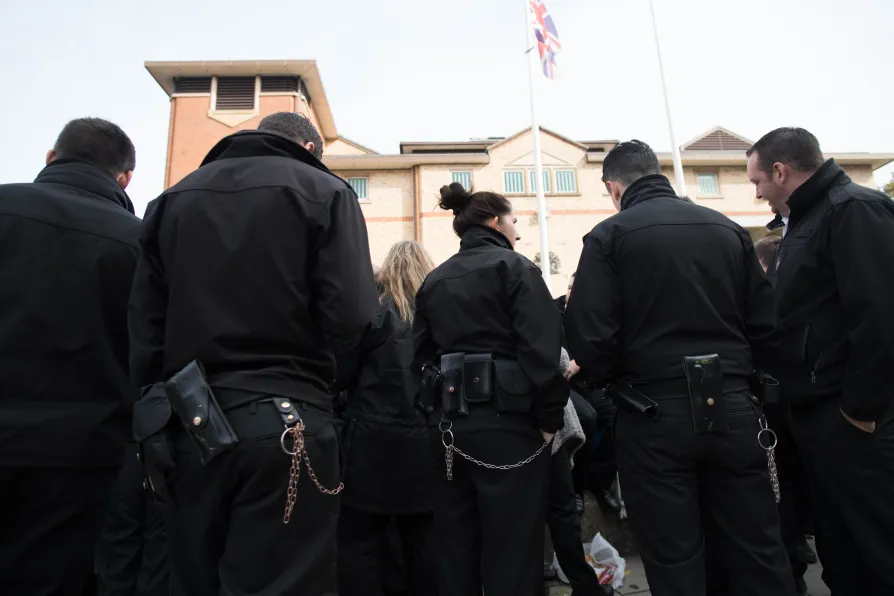 Members of the POA, the trade union for prison staff, protesting outside HMP Bedford after a damning report warned of a ‘dangerous lack of control’ at the jail, September 2018
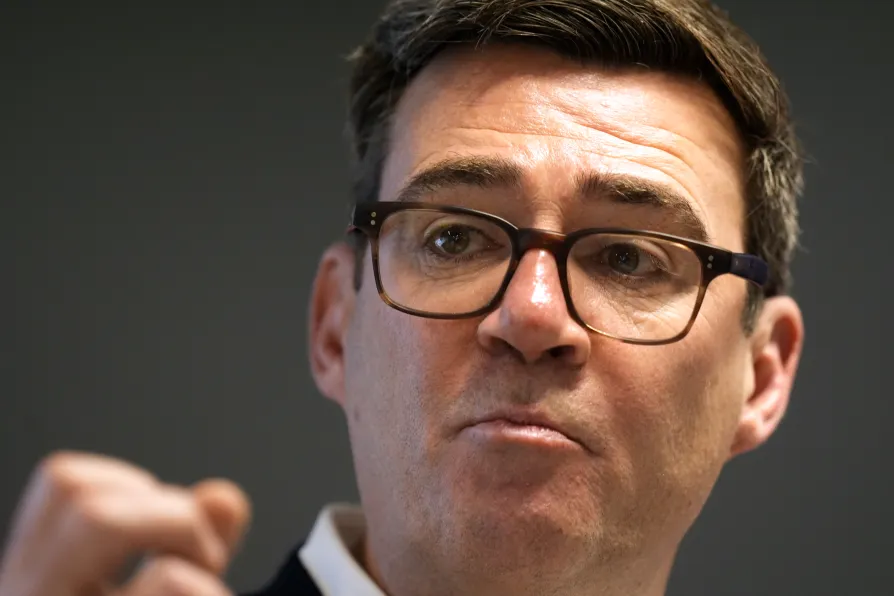
ANDY McDONALD MP says Labour must show it is capable of delivering real improvements in people’s lives — bold action is required
ANGUS REID and ANDREW JOHNSTONE report on an initiative that we must take this summer
ALLISON FEWTRELL on what Plaid Cymru's historic election victory means for the communities being failed by Wales’s housing crisis, and four things the new government can do right now
France Insoumise MP JEROME LEGAVRE speaks to Christophe Domec on building the Europe-wide peace movement that came together in the International Conference Against War last weekend
At last weekend’s International Conference Against War, LINDA PENTZ GUNTER talks to the Palestinian physician and politician about the struggles ahead to achieve a truly free Palestine





THE Employment Rights Act which received royal assent in 2025 was one of the headline policies of the incoming Labour government.
Years in the making, the genesis of the act came from work done by former shadow cabinet member and employment lawyer Andy McDonald, the MP for Middlesbrough and Thornaby East.
McDonald worked closely with trade unions, carefully building a programme of legislative change that unions would not only support but had been central to creating. However, by the time of the Labour conference of 2021 McDonald resigned, frustrated and angry at Keir Starmer’s refusal to commit to a £15 per hour National Minimum Wage.
Labour government elected When Labour were elected the responsibility for the “New Deal for Working People” passed to deputy prime minister Angela Rayner, supported by another former employment lawyer, Justin Madders MP. Madders worked diligently, building good relations with the trade union movement as the finishing touches were put to the “new deal for working people.” He was rewarded with the sack by Starmer.
Attack on workers’ rights
As the Bill made its way through the House of Commons it was attacked by the usual suspects — the big business community, right-wing media and the New Labour establishment, including disgraced former peer Peter Mandelson, who suggested that reform of workers’ rights should be slower than pledged, and curbed to go no further than the previous Labour government.
When the Bill reached The House of Lords it became bogged down with unelected peers laying multiple amendments in an attempt to kill it or water it down to such a level that it would be ineffective.
To get it through the government compromised on fundamental elements of the Bill such as employment rights, which will now be applicable after six months, instead of from day one.
Ultimately, the Act passed and it will undoubtedly improve workers’ rights, but many of the changes are not expected until late 2026 or 2027 and are subject to consultation on secondary legislation. This could see commitments weakened yet further.
POA position
The POA and many other trade unions and their members have campaigned for years for the repeal of all anti-union legislation introduced since the 1980s. It is my belief that we now need to go much further. That is why we are calling for a second Employment Rights Bill.
And it’s not just the POA, our call has been supported by prominent MPs, peers, employment lawyers and influential organisations such as the Institute for Employment Rights.
A second bill should include:
1. An Immediate repeal of all anti-union laws
2. A full ban on “fire and rehire,” enforceable by injunction
3. End all zero-hours contracts
4. A £15 per hour minimum wage with no age exemptions
5. A statutory right to collective bargaining for all workers and a legal mechanism for creating sector-wide collective bargaining
6. Amending our labour laws to comply with international standards.
7. Universal employment rights, including for workers on working visas, through a single worker status
8. All workers to be entitled to all employment rights from Day One
9. A full trade union right to access workers on employers’ premises, enforceable by injunction
10. End restrictions on industrial action and introduce a positive right to strike, including the right to take solidarity action
Abolish Section 127 Criminal Justice & Public Order Act 1994
It is this final demand, the restoration of “the right to strike” for prison officers, that is our key call.
In 1994 the right to strike for prison officers was removed by the Tory government during the passage of the Criminal Justice and Public Order Act. The government of Tony Blair gave a commitment to reinstating the right to strike but failed to follow through on this pledge when in office.
The Scottish government reinstated the right to strike in 2015 and not a single day has been lost to strike action since, but that weapon in our arsenal has undoubtedly helped create more constructive industrial relations.
The right to withdraw one’s labour is a fundamental human right recognised by the International Labour Organisation (ILO).
Prison officers take their responsibilities and duties seriously, strike action would always be a last resort. But let us be clear, having that right is one of the few ways that workers can fight back against poor pay, punishing terms of service, and workplace conditions.
Britain is supposed to be a democracy — that should include industrial democracy and universal human rights. Banning the right to strike is the action of repressive and totalitarian regimes. Is that really how the Labour government wants to be seen?
The POA has been one of the unions most impacted by anti union legislation. We have faced significant legal penalties for breaking a permanent injunction obtained by the government in 2017 that prohibits the union from “inducing” or “supporting” industrial action.
This is a scandalous and appalling restriction on the basic human right to withdraw one’s labour.
It lets the government legally exploit loyal and brave public servants, who are limited in the actions they can take to protect their pay, terms and/or conditions. The only avenue open to the POA is through costly and lengthy court action.
The POA lobbied the UK government heavily to reinstate the right to strike in the Bill, but despite giving commitments on this whilst in opposition, the government rejected the amendments tabled by POA honorary member John McDonnell MP that would have seen the right returned to prison officers.
Application to ECHR
In the meantime, the POA has been forced to go to the European Court of Human Rights (ECHR) to challenge the ban on industrial action and the legal contempt fines imposed upon the union and its officials. The outcome of this case will be known at a future date.
The POA is launching a campaign for a Second Employment Rights Bill. We look forward to working with every one of our members to help force the Labour government to end the discrimination and injustice against prison officers and once and for all legislate to give us back our fundamental right to withdraw our labour in England, Wales and Northern Ireland.
Steve Gillan is general secretary of the POA and TUC president.