To rescue Kahlo from the clutches of the corporate art market, we need to acknowledge the overt and covert political dimensions of the work, demands GAVIN O’TOOLE


 Latest editorial
Error message
An error occurred while searching, try again later.From standstill to almost socialist
FIONA O’CONNOR relishes a cinematic exploration of the writing, and the historical context of Thomas Mann’s WWI masterpiece, The Magic Mountain
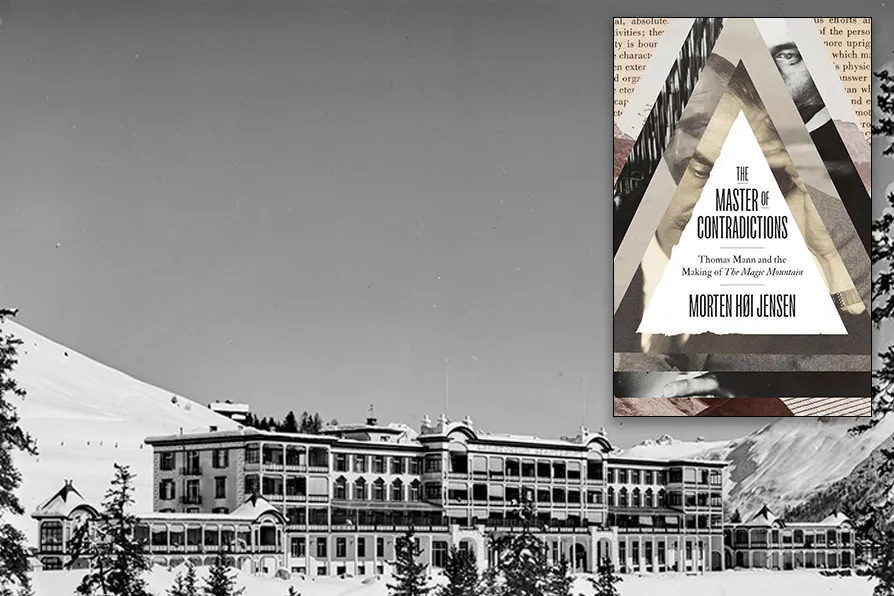 NOWHERE-LAND: The Schatzalp Sanatorium, Davos, 1906, where Thomas Mann set The Magic Mountain [Pic: Swiss National Library/CC]
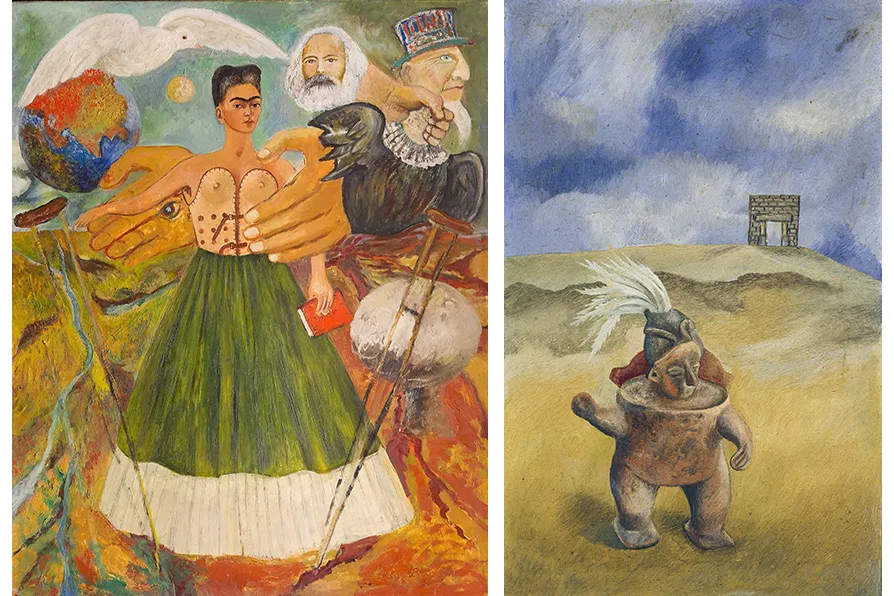
If you can see past the relentless commodification you will be rewarded by enormously powerful work, suggests JENNY MITCHELL
CHRIS SEARLE revels in the one-off collaboration between an American polymath and a British Muslim, and detects the presence of their revolutionary forebear
GORDON PARSONS revels in an ebullient production of Shakespeare’s magical comedy
BRENT CUTLER welcomes a thoughtful analysis of the Erdogan regime, viewed through the evolving history of a neighbourhood in Istanbul
GORDON PARSONS regrets the price, but is dazzled by an outstandingly ambitious study of the way art restoration in particular, and culture in general was weaponised by the Nazis





The Master of Contradictions: Thomas Mann and the Making of The Magic Mountain
Morten Hoi Jensen, Yale University Press, £22
THIS is a whole new genre – a kind of Netflix-style academic book which reads scenically yet delivers a powerful historical analysis, fully referenced.
It begins with a teenage Susan Sontag in an old Chevy, parked outside the exiled Thomas Mann’s palm-screened LA house, “a warm breeze blowing in from the Pacific, with its notes of orange and eucalyptus.”
The book then cuts back in time to a pristine Davos, Switzerland, the location for The Magic Mountain, “a magical, mysterious, even alchemical book,” as Jensen will conclude 200 pages later.
Present-day Davos we all know as the billionaire locus of the powerful, jetting in each year to decide on our economic fates. The Magic Mountain takes us to a former clinical setting. A fin de siecle European sickliness – “the dead standstill” in the hiatus before the outbreak of World War I — is represented by pampered tuberculosis patients, prone and blanket-swaddled in death-instinct stasis.
This is one angle in a tripartite structure. Another focuses on Thomas Mann the artist within his historical setting. Jensen explores Mann’s writing of The Magic Mountain, acknowledged as one of the greatest modernist achievements, through his painful evolution from a 19th-century conservative militarist, blood-lusting for war, to a Weimar Republican man of the people, almost a socialist.
During the 12-year writing period for The Magic Mountain, world history was turned inside out. Jensen’s book depicts seismic upheavals considered from Thomas Mann’s contradictory perspective, living at the very centre of the cataclysm.
The ominous movement towards the Great War is staged by Jensen in booklined studies, Bavarian lakeside villas, chilly sanitoriums. It’s a portrayal of a society unaware of its impending collapse and destruction, mirroring that of the novel. Disturbingly, it also suggests a more contemporary mirroring.
Jensen documents the 1914 casual tipping into catastrophe with historical precision: “On the night of July 31, drummers marched through the streets of Munich sounding the alarm for mobilisation. In the next few weeks, 3,000,000 soldiers and 850,000 horses would be transported on railroads across Germany to front lines in the east and the west.” Tallies of the dead that quickly followed highlight the naivety, the carelessness with which a period of extended peace was squandered.
“There was simply no historical frame of reference for the anonymous mechanised slaughter of millions,” historian Paul Fussell is quoted noting, and again the reader looks around at our present context.
The thriller strand continues post-war. Thomas Mann’s Munich becomes the location for glimpses of Hitler “clad in a dark tailcoat” and his heavily armed troops massing for an attempted putsch against the Weimar Republic. The jackboot-stamp of the far right, assassinating in the streets, destroying movements towards solidarity in communities, is also familiar in current experience.
The third mise-en-scene in Jensen’s “biopic” is the Berghof Sanitorium in Davos where Mann’s “healthy” hero, Hans Castorp, sojourns for seven years. Scenes of luxuriousness play out in sterile surroundings where terminal patients bang away at each other before sumptuous last meals of the condemned. Their X-rayed innards are obscenely revealed to them, while their unconscious drives move them blindly towards oblivion.
Against this, German philosophies are floated through characters. Goethe, Nietzsche and Schopenhauer – “philosophical battlelines between time and eternity, health and illness, reason and dissolution” — are drawn in the nowhere-land of the sanitorium, thousands of feet high in the “cottony nothing” of snow.
The infamous blizzard scene then, a magnificent literary achievement, brings Hans Castrop, and the reader – it goes on for 50 pages – close to the abyss. On the exhausted far side of existential crisis, life triumphs. The famous lines, “for the sake of goodness and love, man shall let death have no sovereignty over his thoughts” accompany Hans Castorp’s catharsis, releasing him. With masterful irony, Mann depicts him leaving the heavenly-hellish sanitorium to disappear into the war.
I thoroughly recommend this book. As a companion to a first reading of The Magic Mountain, or as a primer before a second – which, as Mann suggested, is necessary – read of the novel, The Master of Contradictions brings it all to life.