All the evidence shows voters want Labour to shift to the left — but initial signs from Andy Burnham are worrying on that front, cautions DIANE ABBOTT


 Latest editorial
Robbery on an open stage
The federal government’s plans to finance the war in Ukraine with Russian assets, and a possible deployment of German troops, put the population in Germany in the highest danger, argues SEVIM DAGDELEN
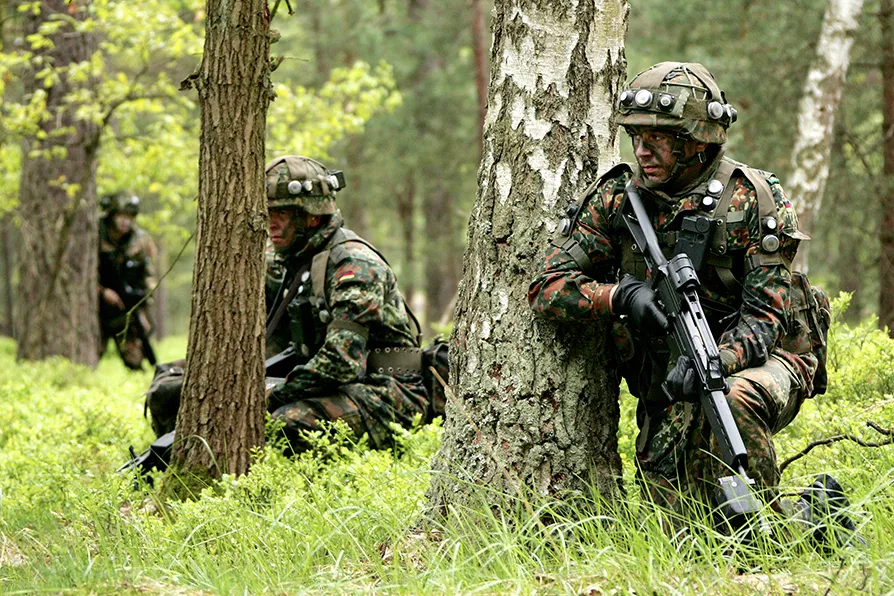 DRANG NACH OSTEN: Bundeswehr armoured infantrymen during an exercise with the training device known as the duel simulator. Photo: Bundeswehr/S.Wilke/CC
ANDY McDONALD MP says Labour must show it is capable of delivering real improvements in people’s lives — bold action is required
ANGUS REID and ANDREW JOHNSTONE report on an initiative that we must take this summer
ALLISON FEWTRELL on what Plaid Cymru's historic election victory means for the communities being failed by Wales’s housing crisis, and four things the new government can do right now
France Insoumise MP JEROME LEGAVRE speaks to Christophe Domec on building the Europe-wide peace movement that came together in the International Conference Against War last weekend
At last weekend’s International Conference Against War, LINDA PENTZ GUNTER talks to the Palestinian physician and politician about the struggles ahead to achieve a truly free Palestine





ON DECEMBER 10, EU president Antonio Costa announced that there would be an agreement on the “use” of Russian assets at the next EU summit on December 18 2025.
If problems arise during the negotiations, the summit should be extended until an agreement is reached. Costa expressed optimism about obtaining the required qualified majority at the summit.
The goal of the EU Commission is to grant Ukraine a “reparations loan.” For this, the €210 billion in frozen Russian state assets are to be used to secure the compulsory credit, for example.
Until now, Belgium, as the home country of the fund that manages the frozen Russian assets, had shown scepticism.
The risk is too great, on the one hand, of Russian countermeasures, but above all of shaking confidence in the EU’s financial centre.
With the 28-point peace plan by US President Donald Trump to end the Ukraine war, further desires have arisen. Because part of the plan is the joint use of Russian assets by the US and Russia for investment projects.
In particular, the federal government and Chancellor Friedrich Merz had recently pushed for a de facto confiscation of Russian assets in order to continue the war in Ukraine into the next year, as the financial withdrawal of the US simply leaves a lack of funds for this.
The expropriation of Russian assets is essential to keep the war going.
Expropriation as war financing
This fits with the game of confusion around the peace plan for Ukraine, which German diplomacy is performing at the forefront. In rejecting the Trump plan, particularly regarding Ukraine’s neutrality, Germany has negotiated with France and Britain together with Kiev.
But these are merely talks with themselves to make real negotiations impossible.
This pattern of deception seems to be growing into the new maxim for Ukraine as well. After US President Trump emphatically demanded elections in Ukraine and denied President Zelensky’s legitimacy, Kiev’s proposal is now on the table to hold elections within a short time, but only with security guarantees from the US and the Europeans.
A rogue who wouldn’t think of stationing Nato troops in Ukraine to supposedly secure the elections. One might think they are apparently still trying to draw Nato directly into the war in order to win it after all. But that is playing with the third world war.
Elections as a pretext for Nato troops?
Preparing for a deployment of the Bundeswehr in Ukraine, the deputy chairwoman of the SPD parliamentary group, Siemtje Moller, decreed that Europe should take on more responsibility in Ukraine in terms of security policy in the future.
“If we want to jointly pronounce security guarantees, then we must play a role,” Moller said ahead of the trilateral summit of Germany, France, and Britain with Ukraine in the “Berlin Playbook Podcast” of the Welt partner publication Politico on December 8.
Moller is positive about the question of German troops in Ukraine: “Certainly soldiers at some point, yes.” That, according to the SPD deputy group leader, is “to be decided by the Bundestag.”
Against the backdrop of Zelensky’s demands for security guarantees for Ukrainian elections, these statements can only be seen as an advance to create a perspective for directly involving Germany in the war.
Both through the impending robbery of Russian assets and a possible deployment of German troops to Ukraine, the Federal Government is putting the population in Germany in the highest danger. Economic decline and increasing war risk are thereby only two sides of the same coin.

Similar stories
SEVIM DAGDELEN asks why the European Union is targeting the Swiss academic Jacques Baud, cutting off his access to banking services
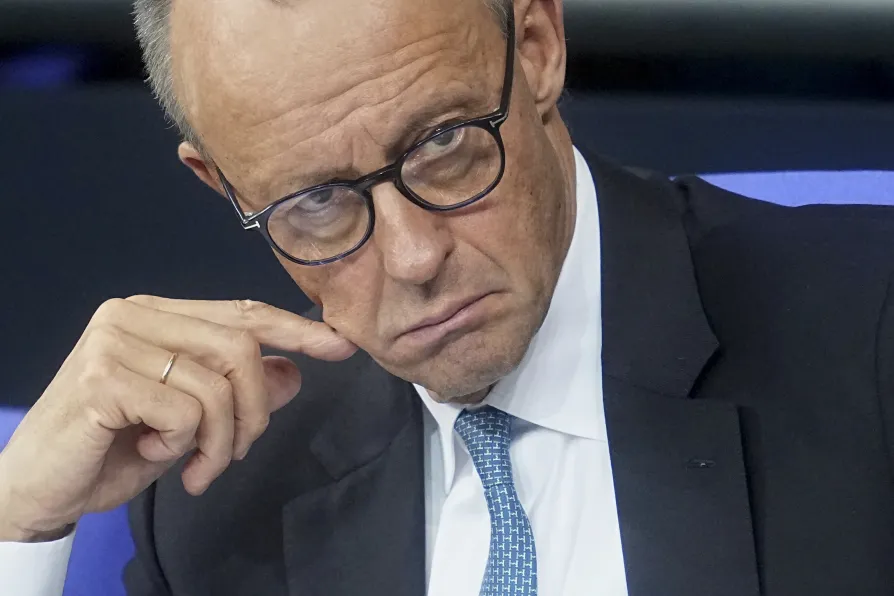
German Chancellor Friedrich Merz is pouring €11.5bn into the Kiev swamp, blocking Trump’s peace plan, and pushing Nato right up to Russia’s borders – no matter if it costs hundreds of thousands of lives, warns SEVIM DAGDELEN
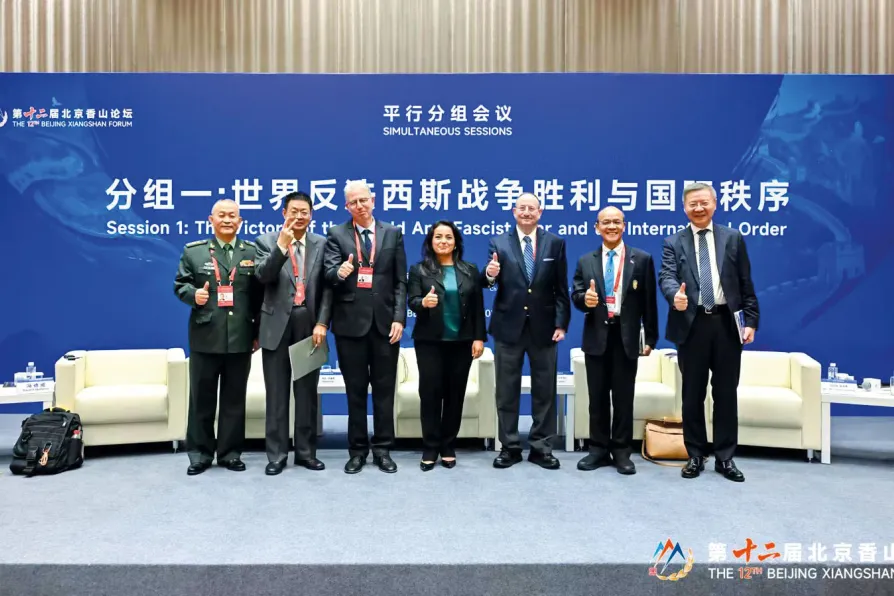
In a speech to the 12th Xiangshan Forum in Beijing, SEVIM DAGDELEN warns of a growing historical revisionism to whitewash Germany and Japan’s role in WWII as part of a return to a cold war strategy from the West — but multipolarity will win out