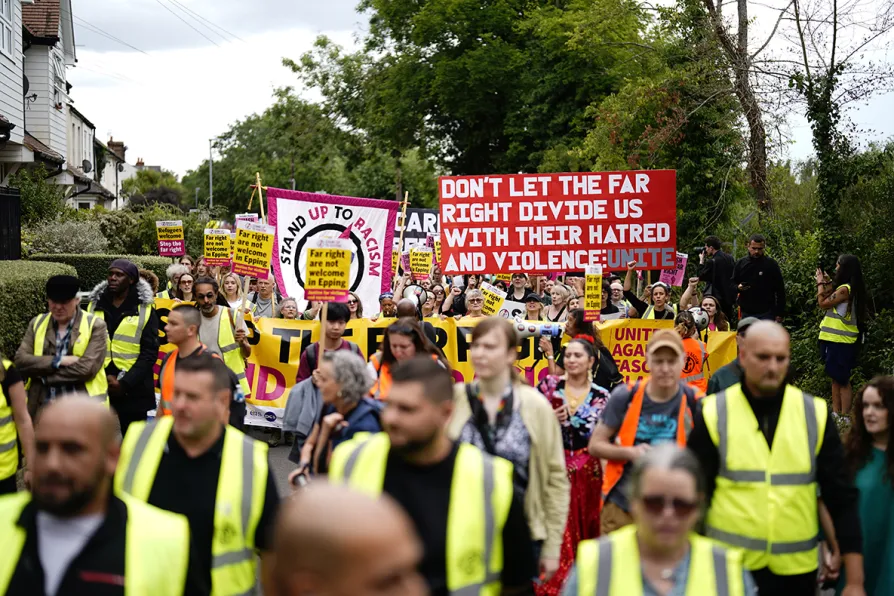
Latest editorial
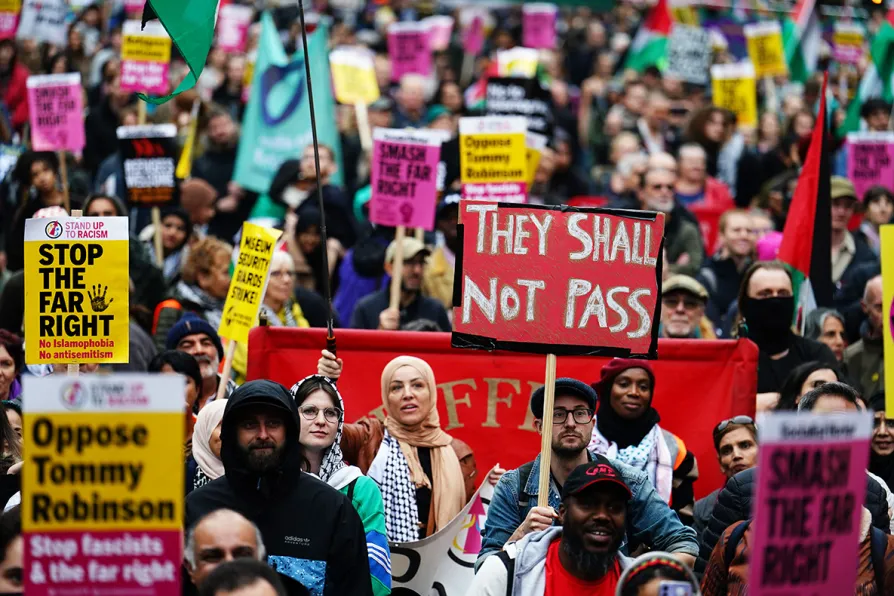 People join civil society groups led by Stand Up To Racism during a counter-protest against a Pro-UK rally endorsed by Tommy Robinson in central London, October 26, 2024





THE Scottish TUC has given a steer to the whole British labour movement in identifying the rise of the far right as the biggest challenge we face.
As Trademark Belfast’s Stiofan O Nuaillain told the TUC’s anti-racism summit last December, we have a four-year window to defeat the far right. By the next general election, something needs to have shifted dramatically if we are to ensure that some combination of Reform UK and an increasingly hard-right Tory Party do not shape the political agenda: something they already do to an extent, given Labour’s pandering to anti-immigrant scaremongering at home and Donald Trump abroad. The combined Reform-Tory vote was higher than Labour’s last July and Keir Starmer’s nine months in office have only made his party more unpopular.
Scotland’s trade unionists indicate the way forward in two respects. One is the insistence on opposition to the far right being rooted in opposition to the status quo, rather than in defence of it. This dilemma was highlighted in Scotland by the summit called by First Minister John Swinney: inviting all sizeable parties bar Reform to a government-sponsored event allows Nigel Farage to continue to pose as “the one that’s different” and lump other parties together as representatives of a broken system.
The STUC naturally engaged with the event, but makes clear the growth of the far right is fuelled by poverty, inequality and injustice which in turn are driven by the policies of the Establishment parties. Campaigning against Reform UK without simultaneously campaigning against these policies will cut no ice in working-class communities.
Andrea Bradley, opening the debate at Congress, stressed the need to identify those responsible for problems Reform UK blames on immigration by “pointing the finger at the super rich;” others called for the fight against the far right to be part of a wider battle for the positive vision of socialism, something which militates against the centrist-led “everyone but Farage” approach chosen by Swinney.
The second aspect — and one the STUC is better equipped to lead on than the British TUC, because it allows full participation by trades councils — is the importance of the labour movement response being a local, community response. Speakers from the Clydebank and Dumfries & Galloway trades councils spoke on how they confronted the far right in their neighbourhoods, through local media and on the streets. The Paisley & District trades council played the leading role in the year-long mobilisation against the far right at Erskine, which over time succeeded in isolating the racists and building local solidarity with refugees.
Reform is trying to establish itself at community level and it is here that it needs to be tackled.
Doing this effectively means re-establishing a trade union presence in communities which has often disappeared over the last four decades. Trades councils are central to any such project: vital forums for activists from multiple unions to plan action and to build bridges with community organisations. Rejuvenating trades councils where they are inactive, or overly reliant on retired trade unionists, is a priority task for the whole movement.
But there are other aspects to rebuilding community influence. It is clear that public protest and campaigning, as unions such as Unite have organised for a wealth tax or against cuts to winter fuel payments, is part of the picture, and the People’s Assembly remains the broadest-based nationwide vehicle for it. It also underlines the need to fight back within the Labour Party against a right wing that has gutted it through purges and suppression of democratic engagement, since a Labour stripped of its activist base is in no position to take on Reform locally.
Ultimately, Reform will stop being a channel for working-class anger if that anger is more fruitfully expressed elsewhere — through a militant, combative and much larger labour movement visible in every locality.

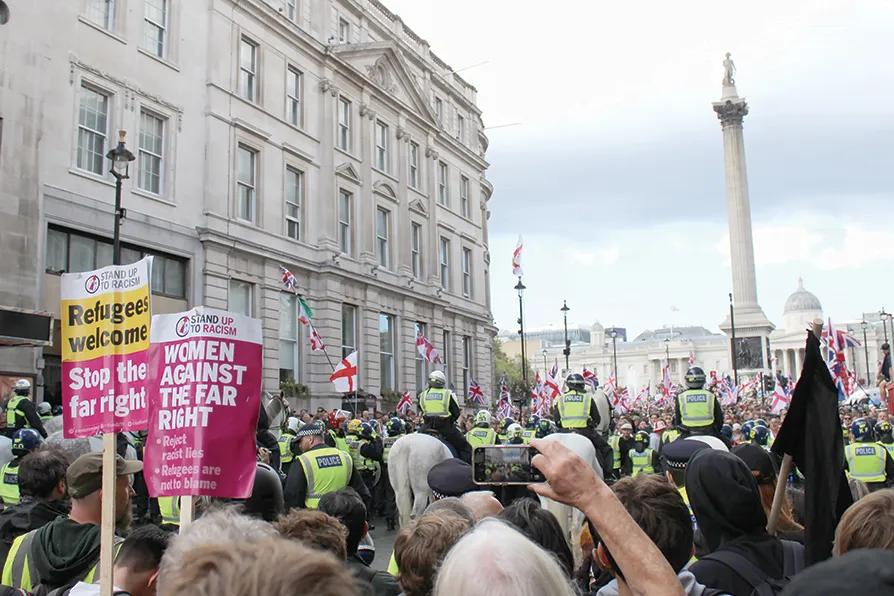
As extremist movements grow on the streets and at the ballot box, the emergence of the Together Alliance points to a vital strategy: unity across trade unions, campaigners and communities, says TONY CONWAY
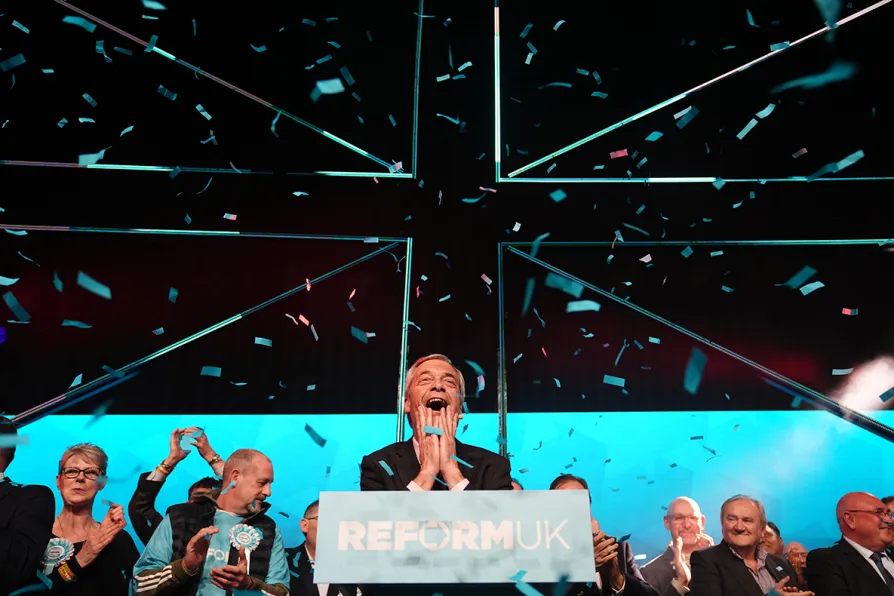
Young Communist League general secretary GEORGINA ANDREWS says the far right are filling a vacuum created by Labour’s abandonment of working-class interests — we have to give our class a better offer
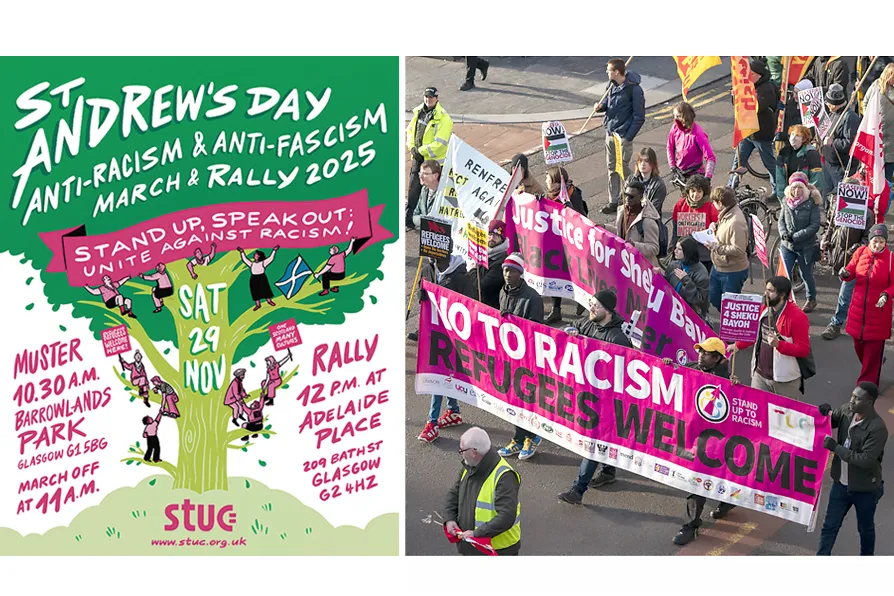
ROZ FOYER explains the significance and tradition of today’s St Andrew’s Day March and Rally