All the evidence shows voters want Labour to shift to the left — but initial signs from Andy Burnham are worrying on that front, cautions DIANE ABBOTT


 Latest editorial
Error message
An error occurred while searching, try again later.Nuclear power is inherently colonialist and unjust
The argument for a “significant expansion” of nuclear power will deliver soaring electricity prices that condemn underserved communities to unending hardship and poverty, argues LINDA PENTZ GUNTER
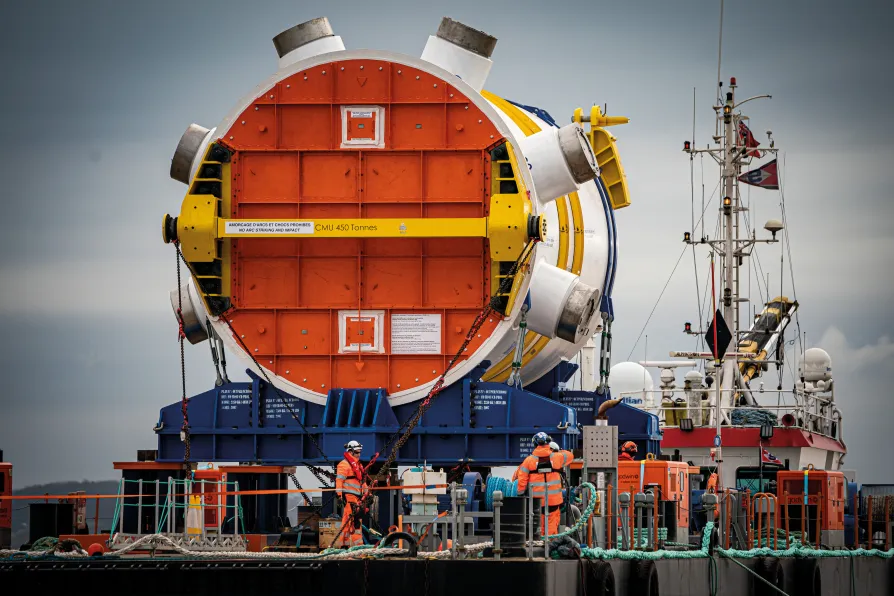 DANGERS: The first new nuclear reactor for a British power station for over 30 years arrives by barge at Combwich Wharf on the River Parrett, Somerset, to be used at Hinckley Point C, 2023

ANDY McDONALD MP says Labour must show it is capable of delivering real improvements in people’s lives — bold action is required
ANGUS REID and ANDREW JOHNSTONE report on an initiative that we must take this summer
ALLISON FEWTRELL on what Plaid Cymru's historic election victory means for the communities being failed by Wales’s housing crisis, and four things the new government can do right now
France Insoumise MP JEROME LEGAVRE speaks to Christophe Domec on building the Europe-wide peace movement that came together in the International Conference Against War last weekend
At last weekend’s International Conference Against War, LINDA PENTZ GUNTER talks to the Palestinian physician and politician about the struggles ahead to achieve a truly free Palestine





MARK JONES is right to argue in his recent article that corporate-driven energy industries should come under public control.
Regrettably, that is unlikely to happen any time soon, whereas long-lasting jobs and a sustainable energy supply are needed today.
However, whether under private or public ownership, nuclear power can deliver neither. Nor will public ownership undo the technology’s fundamental injustices.
The exploitative colonialism and racism inherent in nuclear power renders it incapable of contributing to the “just transition we all want” that Jones and many of us advocate. That’s because nuclear power relies on the victimisation of indigenous and brown populations in foreign lands to provide its fuel — uranium — all of which is imported to Britain.
A just transition cannot simply ignore the perpetual exploitation of Native American, First Nations, Australian Aboriginal and indigenous African uranium miners and millers, living in poverty without running water and electricity and subjected daily to radiation exposure.
Nor does the victimisation end there. In India, a massive mobilisation of thousands of farmers, fishermen and villagers opposed to a six-reactor Russian nuclear power plant in Kudankulam was met with lethal force. Many landed in jail, some went into hiding and at least one died. A democratic process giving voice to the people was nowhere to be seen. The plant went forward, realising their worst nightmares with the natural environment destroyed, incomes lost and small businesses devastated.
Numerous studies have shown that children living close to operating commercial nuclear power plants have higher rates of leukaemia than those living further away. Radioactive waste sites are invariably targeted at indigenous or working-class communities, where dire economic need is preyed upon for easy acquiescence.
The nuclear industry — even the nationalised version in France — is driven by multinational corporations such as Westinghouse, EDF, Rolls-Royce, Holtec and others, whose only motive is profit.
Britain as an island nation is exceedingly well positioned to deploy renewable rather than nuclear energy on a grand scale. The decision not to maximise expansion of Britain’s abundant offshore wind, wave and tidal power, as well as onshore wind, stream power and solar energy, has been a political, not a technological choice.
Jones’s comment about nuclear waste being “far more straightforward to manage” than the “mountains of unrecyclable turbine blades and solar panels,” is just plain wrong. The waste fuel from nuclear power plants is deadly for tens and, for some of the isotopes it contains, even hundreds of thousands of years.
Whether it fits in a shoebox as Jones writes, or is stacked on a football field — another metaphor used by the industry — is irrelevant given the lethality of the contents. If you opened that box or sat in that stadium, you would be dead from radiation exposure within minutes.
The new proposed small modular reactors, as a Stanford University study has shown, will actually generate greater volumes of radioactive waste than their full-sized predecessors.
Meanwhile, although somewhat complex, wind turbine blades and solar panels are both recyclable and recycled, with advances being made all the time to simplify this process. A similar effort is under way to recycle renewable batteries through the recovery rather than the continued exploitation of metals like lithium, nickel, cobalt and manganese, the major downside of renewables.
To dismiss concerns about major nuclear accidents as “catastrophism” is disingenuous and disrespectful to the hundreds of thousands of people across the former Soviet Union, much of Europe and now Japan, whose lives and livelihoods have been upended, destroyed and even lost altogether as a result of the Chernobyl and Fukushima disasters.
Many of these people were hardworking families indefinitely displaced, unable to resume their former professions.
The prospect of another meltdown is a very real likelihood, given the ageing of current reactors and the major safety uncertainties about the new designs. These latter are unproven, untested, and some use cooling systems such as liquid sodium that have already demonstrated a propensity to catch fire or explode.
A nuclear disaster on a small island like Britain would leave people with nowhere to run to.
The serious concerns around winter warmth, especially for the elderly that Jones rightly calls out, would be better met with a comprehensive energy efficiency progamme combined with renewables that includes insulation and building retrofits. These measures can reduce consumption, obviate the need for new power sources and drive down energy bills.
The huge costs associated with nuclear power will only send electric bills even higher, worsening fuel poverty.
As an example, the British government awarded EDF a guaranteed strike price that was nearly triple what consumers were already paying, to secure Somerset’s Hinkley Point C two reactor deal.
If the reactors are finished by 2027 as EDF presently claims, they will have taken 17 years to get here, 10 years later than expected.
We have seen similar outcomes in the US where Westinghouse — eager for new reactor contracts in Britain — took 15 years to complete two reactors in Georgia at a cost of £27 billion, almost triple the original £10bn estimated cost. That left consumers with the largest electricity rate increase in Georgia history.
Nuclear power falsely advertises itself as reliable, but reactors must shut down under drought and heatwaves if the cooling water sources are too hot or depleted. They must also power or shut down during extreme weather, given the inherent danger of losing the power essential to cool the reactors and the fuel pools, without which the plant can melt down.
Nuclear plants also have to close down routinely for days at a time or longer for refueling or maintenance.
Nuclear power cannot work well with renewable energy because reactors must be on all the time and therefore their power cannot quickly ramp up and down in response to demand as renewables do.
Nuclear power’s inflexibility effectively shuts out grid access to renewables and, as David Toke of 100% Renewable UK points out, “simply pushes wind and solar off the grid.”
Worse still, waiting for slow and far more expensive new nuclear plants while stifling renewables means continued reliance on fossil fuels. This increases pollution and asthma rates while the planet continues to overheat. The result is that a policy of “significant nuclear expansion” actually makes climate change worse.
Renewable energy stimulates employment all along the supply chain, for example in steel and ports, providing jobs not only to energy workers but to those in many other needed sectors. Its “fuel” is the sun, the wind and the waves which, unlike uranium, will never be depleted.
Linda Pentz Gunter is the founder of Beyond Nuclear and the author of No to Nuclear. Why Nuclear Power Destroys Lives, Derails Climate Progress and Provokes War, to be published by Pluto Press in March.