Latest editorial
Error message
An error occurred while searching, try again later.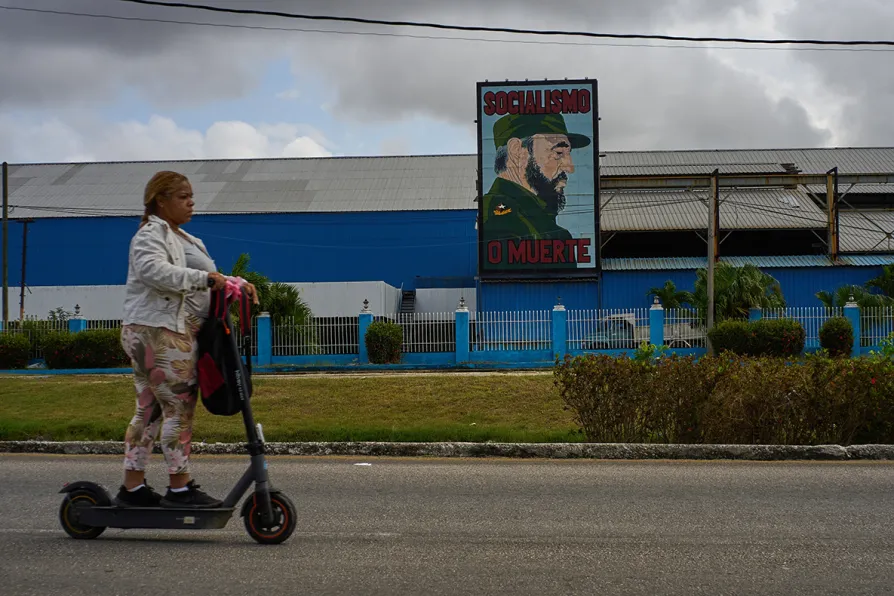 A woman rides an electric scooter past a factory displaying an image depicting the late Cuban leader Fidel Castro, bearing the words ‘Socialism or Death,’ in Havana, Cuba, March 19, 2026





ACTIVISTS have called for greater dialogue between the US and Cuba, as the Trump administration ramps up aggressive threats against the island.
Cuba has suffered decades of an illegal blockade by the US which was recently tightened after the US carried out an illegal attack on Venezuela on January 3, killed 100 people and kidnapped President Nicolas Maduro and First Lady Cilia Flores.
Washington then stopped all Venezuelan oil supplies to Cuba and threatened heavy tariffs against any country that supplied fuel to the Cubans.
Despite the threats, Cuba is preparing to receive its first shipment of Russian oil this year, just days after the government announced it was operating on natural gas, solar power and thermoelectric plants as severe power outages continue to hit an island whose power grid is crumbling.
The Russian-flagged Anatoly Kolodkin is some 3,000 nautical miles from Cuba in the Atlantic Ocean and is expected to reach the island in 10 days.
US President Donald Trump has bragged that he can “do whatever I want with Cuba,” and said he expected to have “the honour” of taking over the Caribbean nation after he has finished his illegal and unprovoked war on Iran.
But Manolo de los Santos, executive director of The People’s Forum, one of the US-based organisation in the convoy, said: “We are insisting that the dialogue on the part of the US be sincere because we have seen with great concern how, while this dialogue is being maintained, the US has not really changed its rhetoric against Cuba.”
Mr de los Santos said millions of people in the US do not want an armed conflict on the island, and do not want to wake up and “see bombs falling on Havana.”
David Adler, general co-ordinator of Progressive International, also part of the convoy, said it is the first of several initiatives in support of the Cuban people following the US oil embargo and important to highlight the “real risk of escalating hostility by the US against Cuba.”
Thursday also saw the arrival of activists from Colombia, Brazil, Uruguay and other Latin American countries, arriving with humanitarian aid.
Among them is Colombian Senator Clara Lopez of the Democratic Hope party, who said she knew the aid was “completely insufficient, but we also came with proposals because this blockade must be broken.”