All the evidence shows voters want Labour to shift to the left — but initial signs from Andy Burnham are worrying on that front, cautions DIANE ABBOTT


 Latest editorial
Keir Starmer’s racket: echoes of the French Revolution
Our political sphere, stripped of its popular component by decades of neoliberalism, sits apart from the public, writes COLL MCCAIL citing a telling parallel with the writings of French revolutionary Abbe Sieyes
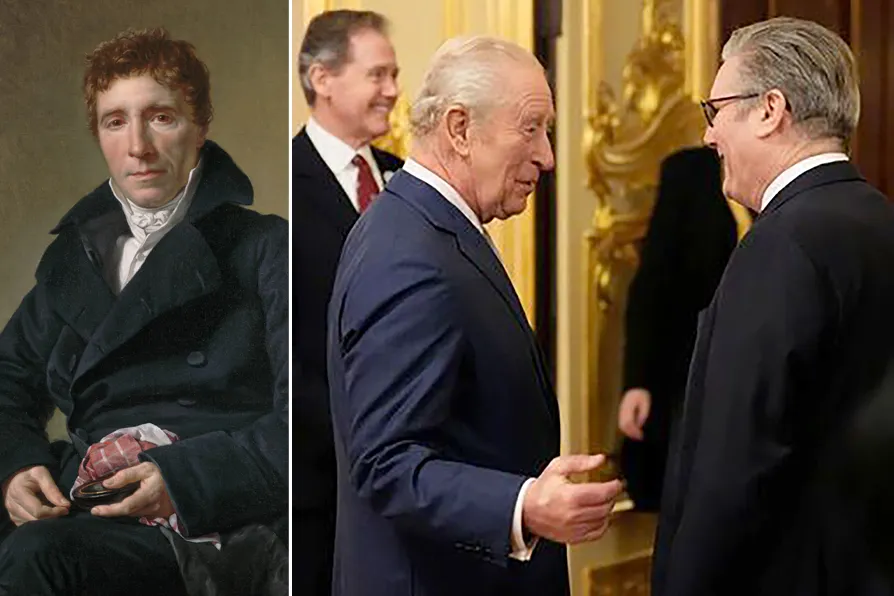 IGNORING THE ELECTORATE: (L to R) ‘Abbe’ Sieyes by Jacques Louis David, 1817 (public domain); King Charles III with Prime Minister Sir Keir Starmer at a reception at Windsor Castle last Wednesday

ANDY McDONALD MP says Labour must show it is capable of delivering real improvements in people’s lives — bold action is required
ANGUS REID and ANDREW JOHNSTONE report on an initiative that we must take this summer
ALLISON FEWTRELL on what Plaid Cymru's historic election victory means for the communities being failed by Wales’s housing crisis, and four things the new government can do right now
France Insoumise MP JEROME LEGAVRE speaks to Christophe Domec on building the Europe-wide peace movement that came together in the International Conference Against War last weekend
At last weekend’s International Conference Against War, LINDA PENTZ GUNTER talks to the Palestinian physician and politician about the struggles ahead to achieve a truly free Palestine





WRITING on the eve of the French Revolution in 1789, Abbe Sieyes, a leading political theorist of the French Revolution, noted that the nobility of the ancien regime had become a “nation within a nation.” The privileges afforded to the second estate were such that its members had become “a separate people” with their own representatives, institutions and cultures.
Sieyes was writing about the court of Louis XVI, but he could just as easily have been thinking of Jeffrey Epstein and his elite networks, whose wealth and power allowed them to stand apart from what the Frenchman called “the common order.”
In pre-revolutionary France, this impunity stemmed from the denial of political freedom to the masses, enabling the nobility to govern in its own interest because, as Sieyes noted, “its mandate did not come from the people.”
Neither, really, does Keir Starmer’s — at least in any manner to which he could be held accountable. Of course, the Labour Party won an election. But it did so by positioning itself as the primary political representative of capital, a mantle which has — for now — kept Starmer in post despite his historic unpopularity.
Today, we are a “semi-sovereign people.” Our political sphere, stripped of its popular component by decades of neoliberalism, sits apart from the public — and, consequently, rarely concerns itself with us.
It doesn’t have to. After all, our governments draw their authority not from the electorate but from bankers and brokers.
Don’t just take it from me. On February 8, Paul Mason — the crusading journalist turned Starmerite technocrat — took to X to declare that the Prime Minister must remain in post. “We cannot have a leadership contest now,” wrote Mason. “Why? Because the bond market is a daily referendum on UK political stability.”
This is the environment in which the “Prince of Darkness” flourished. The Labour Party depends on people like Peter Mandelson, whose perennial “insider” status derived precisely from his servility to elite interests — be they those of Indian-born British billionaires, Russian oligarchs or American financiers.
Mandelson’s scandalous track record was exactly what made him Morgan McSweeney’s preferred candidate for US ambassador. Turning a blind eye to his well-documented relationship with a convicted paedophile, No 10 installed “Petey” in Washington because he was a creature of Donald Trump’s world.
In order for Starmer to be able to ignore the electorate, the Prime Minister required a protection racket dedicated to shoring up support from the ruling class whose donations and patronage had assured his victory.
Mandelson was a willing recruit, having played this part first for Tony Blair and then for Gordon Brown.
He was joined by a host of individuals whose underhanded activity has made headlines this month. Under the leadership of Josh Simons, who coincidentally now serves as the parliamentary under-secretary of state for digital ID, Labour Together hired private investigators to surveil journalists from the Guardian, the Sunday Times and Declassified UK.
It’s little wonder Labour Together were worried. The right-wing of the Labour Party has a lot to hide. In January, OpenDemocracy revealed that Arden Strategies, a lobbying firm founded by former Scottish Labour leader Jim Murphy, was selling access to Labour ministers for £30,000.
Murphy’s outfit proudly advertised that they could organise a meeting with “top advisers to the prime minister” in exchange for a small fortune.
Its true nature uncovered, this clique of think tanks, lobbyists, advisers and MPs looks more like a gang of crooks than it does the apparatus of government. Loyalty to the gang, meanwhile, is rewarded handsomely.
Mathew Doyle, for example, found himself elevated to the House of Lords in spite of his close relationship with convicted paedophile Sean Morton. While the government was made aware of the former No 10 comms chief’s friendship with the sex offender in December, Doyle took his seat on the red benches on January 12.
Labour has become the “cartel party” par excellence, with no pretence of internal democracy or membership control. Politics is instead treated as a profession, practised with the aid of the resources and privileges that accompany state power.
This was, of course, the mission of the New Labour project. As Blair’s justice secretary confessed in 2003, “depoliticising key decision-making is a vital element in bringing power closer to the people.”
Taking the Thatcher revolution as read, such sentiments assumed that a society in hock to what Mark Fisher called magical voluntarism — “the belief that it is within every individual’s power to make themselves whatever they want to be” — can organise itself.
Ideologically and materially divorced from the people they claim to serve, those within and surrounding the Labour leadership look ever more like what Sieyes called “a separate people.”
This group, Sieyes argued, were “foreign to the nation” because they advance “not the general interest, but a particular one.” The scandal enveloping Downing Street has, for good reason, been understood largely on moral grounds.
Senior Labour figures have queued up to declare, for example, that Mandelson “betrayed” the country, ostracising “Petey” from the networks to which he once was so central.
Indeed, his behaviour and the political culture which enabled it amount to a grave violation of national sovereignty, subverting what little remains of popular democracy to further the ends of the wealthy.
The problem, however, is that if this amounts to “betrayal,” then Mandelson shouldn’t be the only one facing serious questions.
That is both why this week proved a near-death experience for the Starmer regime and why, ultimately, the Prime Minister remained in post. For the briefest of moments, the public caught a glimpse of the systemic decay at the heart of British democracy.
To allow Starmer to face the consequences of his mistakes would be for his successor to accept responsibility for changing things — and that can’t happen. The price for the ruling class would simply be too high. And so Starmer limps on…
Recent weeks have proved the enduring relevance of Sieyes’s diagnosis.

Similar stories

The Carpathia isn’t coming to rescue this government still swimming in the mire, writes LINDA PENTZ GUNTER
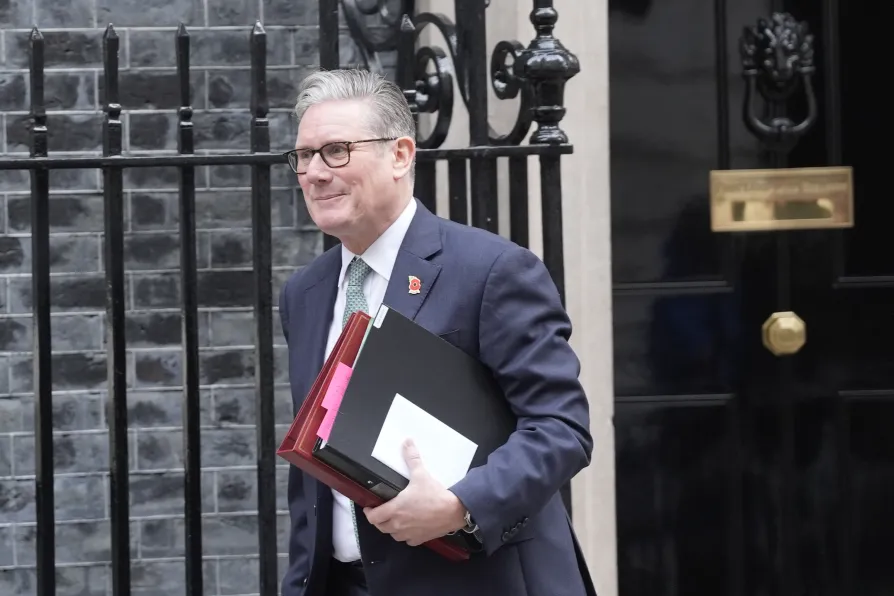
As the PM and his chief of staff’s blunders have mounted up, ANDREW MURRAY wonders who among Labour’s diminished ‘soft left’ might make a bid for the leadership
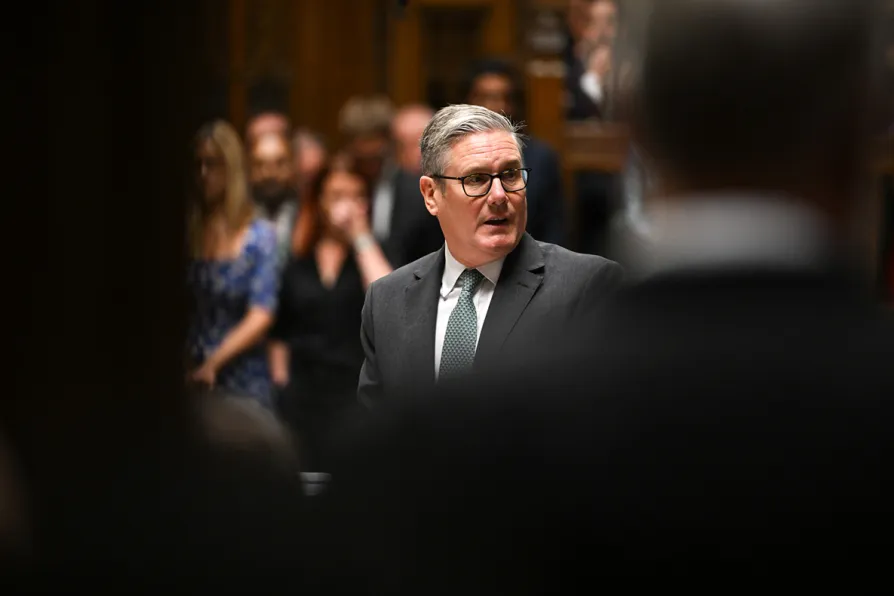
The Prime Minister’s hamfisted promotional video promising to go ‘further and faster’ coincides with Angela Rayner’s resignation over tax dodging and Mandelson’s long overdue departure over Epstein — incredible timing, writes MATT KERR
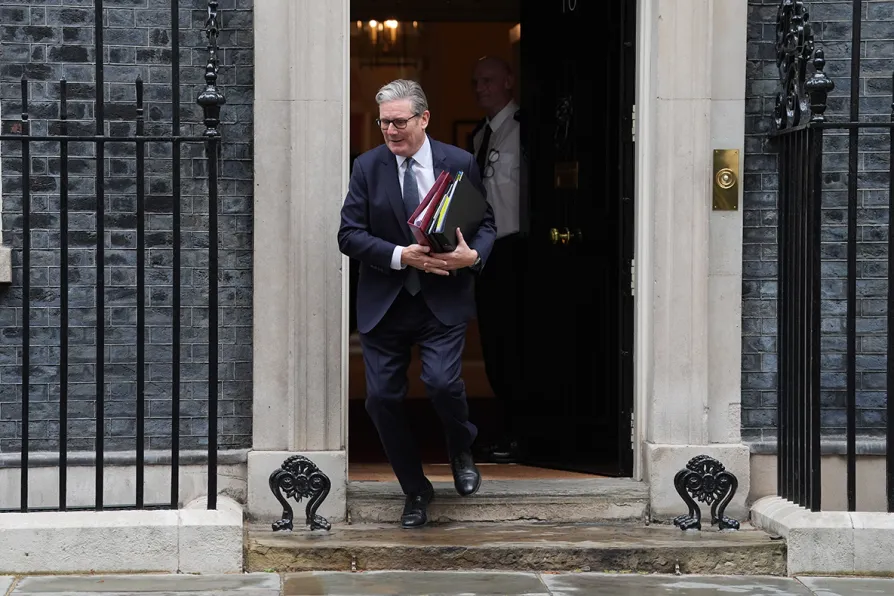
From Gaza complicity to welfare cuts chaos, Starmer’s baggage accumulates, and voters will indeed find ‘somewhere else’ to go — to the Greens, nationalists, Lib Dems, Reform UK or a new, working-class left party, writes NICK WRIGHT