To rescue Kahlo from the clutches of the corporate art market, we need to acknowledge the overt and covert political dimensions of the work, demands GAVIN O’TOOLE


 Latest editorial
Error message
An error occurred while searching, try again later.‘I want the role of a Griot to be recognised for its important role to make a change and inspire young people, and protect the planet we live on’
TONY BURKE speaks to Gambian kora player SUNTOU SUSSO
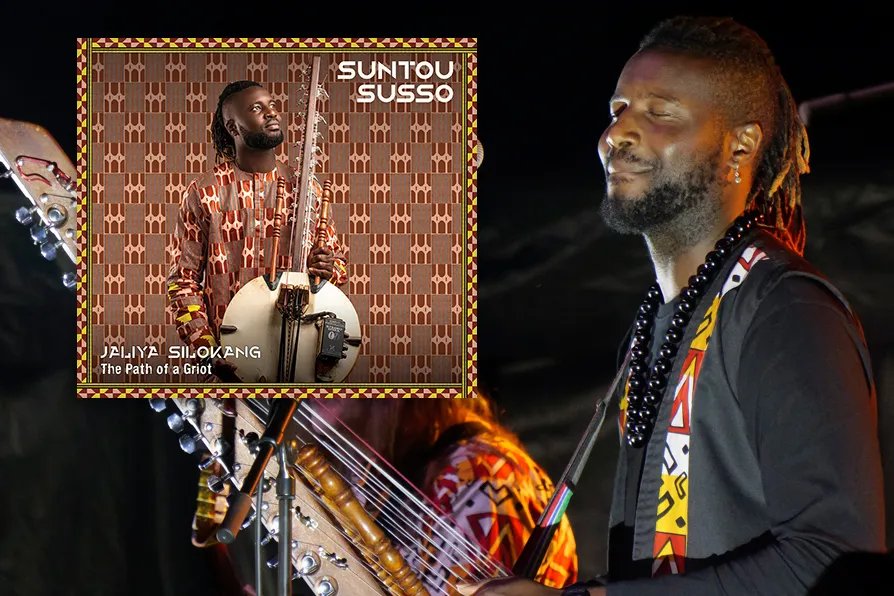 Suntou Susso, 2024 [Pic: Bryan Ledgard/Flickr]

If you can see past the relentless commodification you will be rewarded by enormously powerful work, suggests JENNY MITCHELL
CHRIS SEARLE revels in the one-off collaboration between an American polymath and a British Muslim, and detects the presence of their revolutionary forebear
GORDON PARSONS revels in an ebullient production of Shakespeare’s magical comedy
BRENT CUTLER welcomes a thoughtful analysis of the Erdogan regime, viewed through the evolving history of a neighbourhood in Istanbul
GORDON PARSONS regrets the price, but is dazzled by an outstandingly ambitious study of the way art restoration in particular, and culture in general was weaponised by the Nazis





Gambia’s Suntou Susso is a master kora player hailing from long line of Griots with an unbroken linage of 700 years.
The 22-stringed kora is a complex instrument made famous following the growth of interest in the music of west Africa in the 1980s by artists like Toumani Diabate, Jaliba Kuyateh, Ballake Sissoko and Ali Farka Toure.
In an exclusive for the Morning Star I talked to Suntou about his new release Jaliya Silokang — The Path Of A Griot and the role of a Griot in west African culture.
“I was born into this role of being a musician, storyteller, historian, peace keeper and adviser,” says Suntou. “Through music, we carry out these roles and we carry the identity of the people through music and oral history. Griots spread joy and promote peace and acceptance. My music is tied up in my life’s purpose.”
“Within the Griot tradition, the younger generation are taught the songs, the music, the teachings and culture by the generations that came before. It is passed down. I was taught by my dad and my grandfather.”
Suntou started playing kora at the age of four. “I have a fortunate gift, I can learn just by watching and listening. I used to pick up the kora and copy exactly what my dad had just played. I had great teachers. My dad and elders in the culture still continue to inspire and teach me.”
Jaliya Silokang was recorded at the iconic Rockfield Studio in Wales and in Senegal. The 10-track set also features desert blues star and fellow kora player Vieux Farka Toure, (dubbed “The Hendrix of the Sahara”) and the son of the late Ali Farka Toure on Joule Fola. Also present are Ghanaian reggae star and rapper K.O.G. who appears on Lannaya and Suntou’s sister and vocalist Binta Suso appears on Jula Jekereh.
So what was it like recording at the Rockfield Studio?
“It was so exciting for us all to record there! I am based in the UK and I like bringing the music to my UK-based band, teaching them and merging cultures. But it is also really hard for me not to return to the source when recording. Some of the polyrhythms can only truly be played by people who have been playing this music their whole lives, or where I want to use more traditional instrumentation. I really like having the different flavours, so we also worked in Senegal.”
The album is sung in Mandinka, his mother tongue: “I wanted to communicate to the young generation the environmental message and our culture and the importance of preserving it, and I want the role of a Griot to be recognised for its important role to make a change and inspire young people, and protect the planet we live on.”
The track, Yirolu Bala (“Within The Trees”), is inspired by the work of Green-Up Gambia who educate younger generations on the issues of climate change and deforestation.
And the future?
“I’m looking forward to performing all over the UK and beyond, inshallah (by God’s will)! I also have a documentary coming out as well which will be about the culture I come from. I did a UK tour with my father and brother which was special and I would love to perform with them lots more.”
Jaliya Silokang - The Path Of A Griot is self-released on CD, vinyl and download.
We have FIVE copies of Suntou Susso’s CD to give away. To enter the competition email the answer to the following question along with your name and postal address to competitions@peoples-press.com. Which country does Gambia share a border with? The winners will be drawn at random from correct entrants in seven days’ time. Prizes are non-transferrable and the competition is open to UK residents only.