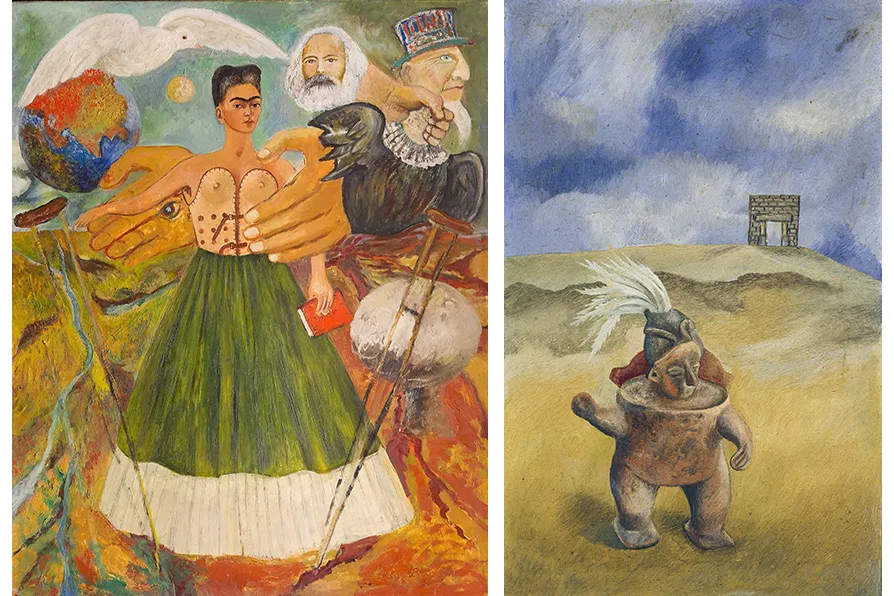
To rescue Kahlo from the clutches of the corporate art market, we need to acknowledge the overt and covert political dimensions of the work, demands GAVIN O’TOOLE


 Latest editorial
Error message
An error occurred while searching, try again later.Hear the Healers
by Curtis Brown
If you can see past the relentless commodification you will be rewarded by enormously powerful work, suggests JENNY MITCHELL
CHRIS SEARLE revels in the one-off collaboration between an American polymath and a British Muslim, and detects the presence of their revolutionary forebear
GORDON PARSONS revels in an ebullient production of Shakespeare’s magical comedy
BRENT CUTLER welcomes a thoughtful analysis of the Erdogan regime, viewed through the evolving history of a neighbourhood in Istanbul
GORDON PARSONS regrets the price, but is dazzled by an outstandingly ambitious study of the way art restoration in particular, and culture in general was weaponised by the Nazis




Here the healers have seen things, in the absence
of anaesthetic. War — bleeding onto wards, cutting
limbs from words, leaving none to describe the pain
needed to suffer the children; to decide who is salvageable;
who will be seen in the blackouts. For them, to be called
Hero, feels like an ache; a dose of the unwanted : : Powers
of Black South Londoners, unafflicted by the sickle
cell genes of their parents, are being activated. This
is the premise of Supacell — trending on Netflix. Jasmine
has the ability to heal, yet, no power to escape her
captors — deaf to her pleas — summoning her at will,
to close wounds they have inflicted on her kin. Before
the last episode there is a crisis : : On the way to help,
an ambulance is struck into silence. Red Crescent
medics lie mangled — sickled cells in a blood vessel —
oxygen depleted. Testimonies rap my heart, pull me
close to prayer, wondering: what superpower would I ask
for? I wish I qualified. Instead, I’m turned away by the sickly
swish of a stolen sickle — recklessly wielded by recreants — unable
to separate chaff from wheat. In the killing fields, they play gods,
deafened by ego, flexing beneath the Reaper’s feet.
Curtis Brown is a poet and multi-disciplinary artist based in London, published in Ink, Sweat and Tears, Under the Radar, The Caribbean Writer etc. His poetry films have been selected for several international film festivals.