All the evidence shows voters want Labour to shift to the left — but initial signs from Andy Burnham are worrying on that front, cautions DIANE ABBOTT


 Latest editorial
Error message
An error occurred while searching, try again later.The economic impact of the illegal war on Iran
US aggression has plunged us into an energy price crisis that will spark steep inflation across the board — and the shock will be much worse than in the 1970s, warns MICHAEL BURKE
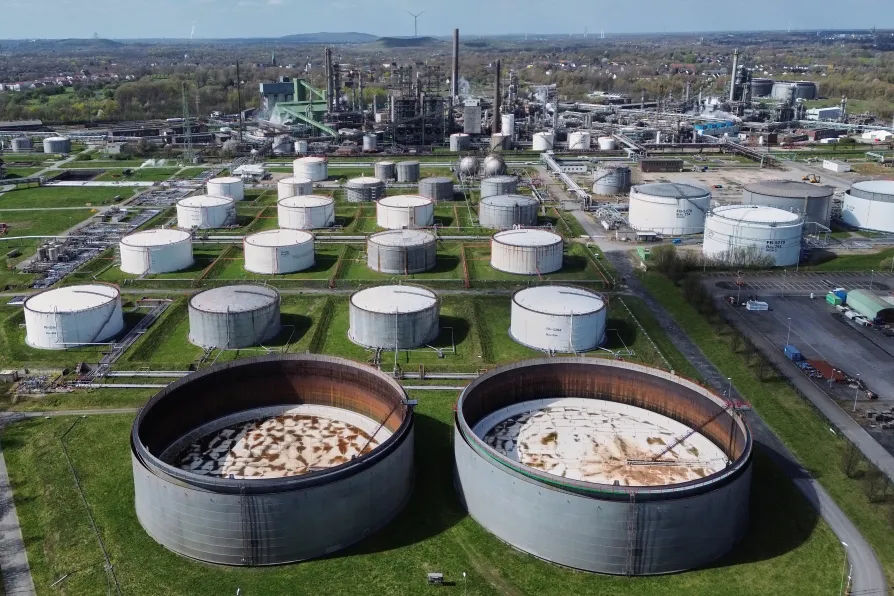 Empty oil tanks are seen at a big BP refinery in Gelsenkirchen, Germany, April 1, 2026

ANDY McDONALD MP says Labour must show it is capable of delivering real improvements in people’s lives — bold action is required
ANGUS REID and ANDREW JOHNSTONE report on an initiative that we must take this summer
ALLISON FEWTRELL on what Plaid Cymru's historic election victory means for the communities being failed by Wales’s housing crisis, and four things the new government can do right now
France Insoumise MP JEROME LEGAVRE speaks to Christophe Domec on building the Europe-wide peace movement that came together in the International Conference Against War last weekend
At last weekend’s International Conference Against War, LINDA PENTZ GUNTER talks to the Palestinian physician and politician about the struggles ahead to achieve a truly free Palestine





THE main cost of the Iran War will be in human death toll. There is also the question of the national sovereignty of Iran, as the recent destruction of nations such as Syria, Iraq and Libya testifies.
In all cases the costs will be far-reaching and will mount the longer the attacks from the US, Israel and their allies continue, Britain chief among them.
The same is true of the global economic and social costs of the war, which we already know will be considerable.
The supply of oil and of liquefied natural gas (LNG) has been severely restricted through the Straits of Hormuz. So too has the passage of other essentials such as food and fertilisers. But there has also been structural damage to the supply of energy products, following the attacks on refining and port facilities across the region, both offensive attacks and the retaliatory ones.
The extent of this structural damage cannot be known until the war is ended. But it is possible to identify some of the parameters of the economic consequences that lie ahead.
Economic impact
Before the US launched its war, along with Israel, the price of the Brent crude benchmark was under $70 a barrel. At the time of writing it is $115/bbl and has traded as high as $120/bbl. An array of oil-based products has risen between 40 to 50 per cent from a year ago, while gas prices are currently generally 90 per cent higher than a year ago.
Globally, the net oil importers require approximately 40 million barrels of oil a day (almost a quarter of which normally passes through the Straits of Hormuz). That means their daily cost of oil consumption alone has risen from under $3 billion per day to over $4bn.
But that is only part of the picture. All consumers of oil products, whether importers or not, are affected by the world price of oil, even if the direct impact is often mediated by taxes, subsidies and long-term supply contracts.
Global oil consumption is a little over 100 million barrels per day, implying that the total world cost of the consumption rises from $7bn per day to well over $10bn per day. Coincidentally, recent daily expenditure on gas consumption amounts to almost exactly the same, at around $10bn, although the increase in costs has been greater, closer to $4.5bn per day, rather than the $3bn per day rise on outlays on oil.
As natural gas prices make up about 70 per cent of the cost of fertilisers, the impact on these products has been considerable. There are also widespread reports of perishable food products rotting on ships that cannot pass through the Strait. An additional factor arises from reports that the cost of shipping insurance has risen from 0.25 per cent of the vessel’s value to 7.5 per cent.
Indirect consequences
The widespread use of fossil fuel products in both the production and distribution of many other commodities means that changes in price have a very large effect on other sectors of the economy. A severe shortage of supply will limit both production and distribution for many sectors.
The International Monetary Fund (IMF) estimates that every 10 per cent rise in the oil price adds 0.4 per cent to global inflation and reduces world GDP growth by between 0.1 per cent and 0.2 per cent. Even though the US is now an oil exporter, the official assessment from the US central bank is broadly similar in its impact on the US economy.
In Britain, the Bank of England’s rule-of-thumb on the effects of an oil price shock are completely in line with this assessment, although the Organisation for Economic Co-operation and Development (OECD) suggests that Britain is going to be one of the worst-hit of the OECD member countries among the advanced industrialised nations.
This is because of two effects. One is the very high levels of energy imports in the British economy.
The other is the peculiar system of energy pricing in this country, which regulates the price of all wholesale energy at the cost of the most expensive energy, which is usually gas.
It is this way that the market is structured (effectively at a permanent subsidy to gas producers) that makes nonsense of all the claims that reopening depleted North Sea fields will solve the energy crisis here. These fields have been closed because declining stocks mean that the remaining energy products are extremely expensive to tap. An increase in output from this source would significantly increase the price of energy in this country.
But the greatest dislocation to the economy is certain to be felt in large parts of the global South. In many countries, short-time working and energy rationing has already been put in place.
The level of strategic energy reserves is often very limited or even close to zero. Soaring prices means that some countries will simply be forced out of the energy market altogether.
In general, the economic effects from the attack on Iran will be very negative, even if the armed conflict ended tomorrow.
The longer the conflict lasts, it becomes more likely that economic slump, surging inflation and outright shortages of essentials including food will be the norm.
The world economy is both more industrialised (and energy-dependent) than it was during the 1970s oil price shock and international trade is much bigger part of the world economy. Trade now accounts for about 60 per cent of world GDP, compared to 25 per cent in the 1970s.
The 1970s oil price shock was also preceded by the long boom following the end of World War II. Now, it arises after a prolonged period of weak growth and high prices since the global financial crash in 2007-08. As a result, the misery created could be very severe.
Of course, in all crises, the rich and powerful are somewhat insulated from the effects. It is workers and the poor who bear the brunt.
As we have recently seen in the Covid crisis and the Ukraine war, energy companies, banks, food retailers and landlords are completely unscrupulous in profiteering even where their own costs are largely unaffected.
Government finances will also come under pressure when they are already weak.
There will be a clamour to cut welfare, public spending and public-sector pay to offset, but this will not be applied to military spending. It is the rampaging of the US, which seems to have declared war on half the world, which got us into this mess.
Radical measures to control prices, to direct investment and to push for renewable energy will be needed.
The alternative is that workers and the poor will be left bearing the significant costs of yet another illegal war.