To rescue Kahlo from the clutches of the corporate art market, we need to acknowledge the overt and covert political dimensions of the work, demands GAVIN O’TOOLE


 Latest editorial
Killymuck, The Bunker, London
The voice of the underclass rings out loud and clear in a challenging denunciation of the poverty trap
 Mesmerising: Aoife Lennon
[Craig Sugden]
Mesmerising: Aoife Lennon
[Craig Sugden]
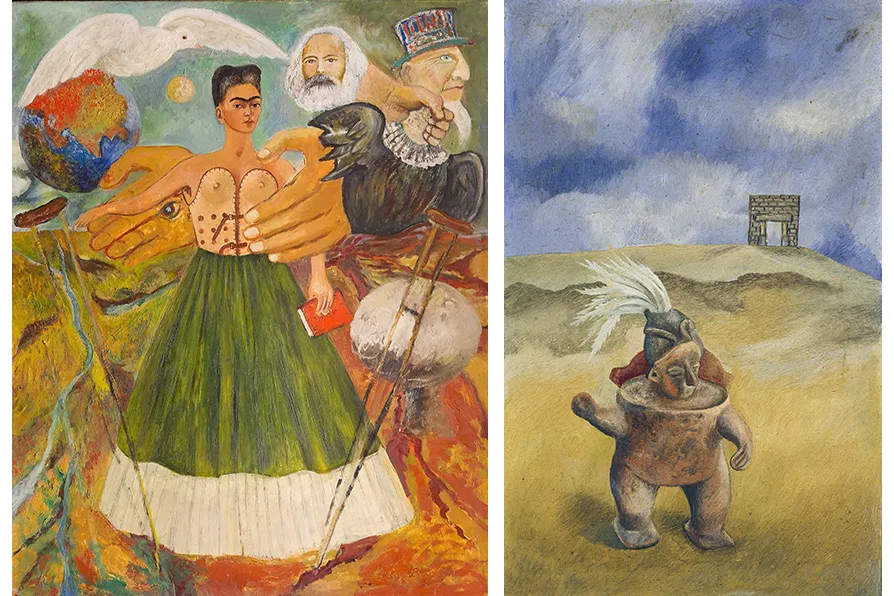
If you can see past the relentless commodification you will be rewarded by enormously powerful work, suggests JENNY MITCHELL
CHRIS SEARLE revels in the one-off collaboration between an American polymath and a British Muslim, and detects the presence of their revolutionary forebear
GORDON PARSONS revels in an ebullient production of Shakespeare’s magical comedy
BRENT CUTLER welcomes a thoughtful analysis of the Erdogan regime, viewed through the evolving history of a neighbourhood in Istanbul
GORDON PARSONS regrets the price, but is dazzled by an outstandingly ambitious study of the way art restoration in particular, and culture in general was weaponised by the Nazis





THERE are millions of women represented in the frail yet bolshie and articulate presence of Niamh in Kat Woods’s play Killymuck. A 75-minute outpouring of spleen, it’s part teenage-diary confessional, part sociology lecture and it’s as if delivered by the coolest tutor in town.
The eponymous location of Woods’s play, directed by Caitriona Shoobridge, is a housing estate, reputedly built on a paupers’ graveyard in 1970s Ireland. That, claims our anti-heroine at one point, may explain the curse on the place — the houses in a row are blighted by, in turn, an alcoholic parent, a divorce and a suicide. All are “doomed.”
Niamh (Aoife Lennon) confidently bestrides the stage, fired up by the injustice that has landed her where she is. She has chances – school exams, teachers who rate her, an older sister heralding the joy of the grammar school place.
But she is knocked back, all too often by the actions of her own fist — the best answer to eejits when her own articulate abilities fail her. This is no easy little drama and Niamh’s reflections on her mother’s fecklessness and fear in dealing with her alcoholic, abusive husband are heartbreaking.
The moments of the “other voice,” such as when actor turns narrator and informs us that children from poorer backgrounds lose 14 points off their IQ, would seem disjointed and downright clunky in most iterations.

Similar stories

SYLVIA HIKINS recommends a fascinating, revealing, superbly acted evening of theatre

ALAN MORRISON recommends a consummate, heart-warming collection about a working-class upbringing in the industrial north-east
SCOTT ALSWORTH recommends a film that is as informative as it is rage inducing

LYNNE WALSH reports from the Women’s Declaration International conference on feminist struggles from Britain to the Far East