To rescue Kahlo from the clutches of the corporate art market, we need to acknowledge the overt and covert political dimensions of the work, demands GAVIN O’TOOLE


 Latest editorial
Error message
An error occurred while searching, try again later.Best of 2025: Letters from Latin America
From feminist manifestos to exiled lovers to mythic islands, LEO BOIX selects the best fiction, poetry and non-fiction
If you can see past the relentless commodification you will be rewarded by enormously powerful work, suggests JENNY MITCHELL
CHRIS SEARLE revels in the one-off collaboration between an American polymath and a British Muslim, and detects the presence of their revolutionary forebear
GORDON PARSONS revels in an ebullient production of Shakespeare’s magical comedy
BRENT CUTLER welcomes a thoughtful analysis of the Erdogan regime, viewed through the evolving history of a neighbourhood in Istanbul
GORDON PARSONS regrets the price, but is dazzled by an outstandingly ambitious study of the way art restoration in particular, and culture in general was weaponised by the Nazis





LATIN American literature has a habit of refusing polite entrances. It kicks the door open, rearranges the furniture and asks who owns the house in the first place.
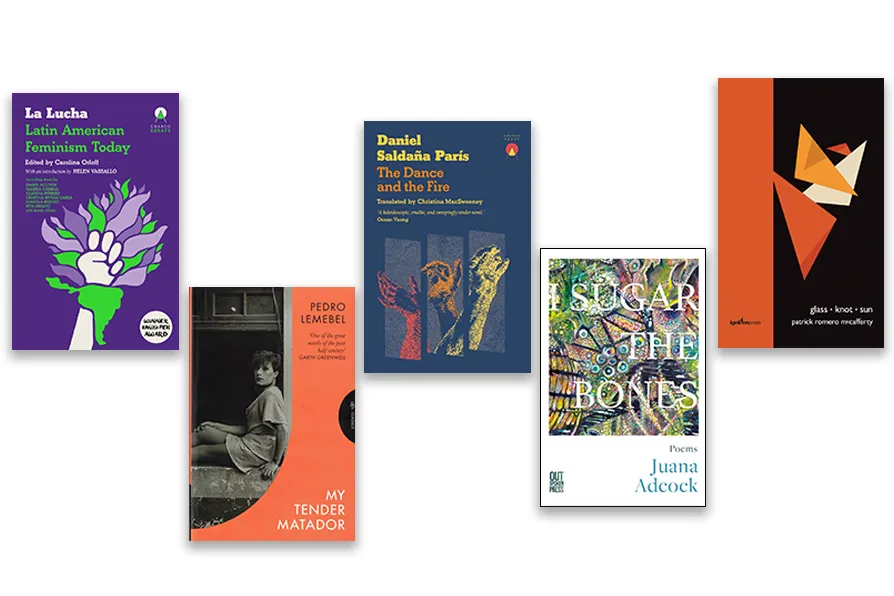
La Lucha: Latin American Feminism Today (Charco Press, £14.99) does exactly that. The book opens with the voice of Bertha Isabel Zuniga Caceres invoking her murdered mother, Berta — a reminder that, in this anthology, feminism isn’t a theory but a front line.
Across 29 essays by writers such as Valeria Luiselli, Selva Almada, Claudia Pineiro and Isabel Allende, the stakes remain ferociously high: land, language, justice.
The standout section, “La lucha es personal,” turns private experience into political voltage: Cristina Rivera Garza’s defence of documentary writing, Pineiro’s sly chronicle of Argentina’s feminist awakening, and Ave Barrera’s irresistible ode to women behind the wheel. This is feminism with calluses, metaphors and teeth.
If La Lucha brings the megaphone, Pedro Lemebel’s My Tender Matador (Pushkin Press, £10.99) slides in with sequins — and then explodes the stage. Set in Santiago in 1986, during the last gasps of Pinochet’s dictatorship, the novel follows the Queen of the Corner, a tender, ageing queer man who embroiders tablecloths while falling for a revolutionary hiding dubious boxes in his rooftop room.
Lemebel braids bolero lyrics with radio updates on protests, and even gives voice to the dictator’s icy, fashion-fixated wife, Lucía Hiriart. The result is a political novel disguised as a love story disguised as a cabaret act — or perhaps the other way around. Few books manage to be this funny, dangerous and heart-splitting at once.
Danger of a different kind crackles through Daniel Saldana París’ The Dance and the Fire (Charco Press, £11.99), set in a Cuernavaca choking on smoke, toxic air and old grievances.
Three former school friends — a choreographer, a failed film-maker, and a conspiracy-loving recluse — narrate the city’s slow burn. A new dance piece is being conceived out of ash, memory, and Mary Wigman; meanwhile the world, and their relationships, threaten collapse. It’s a triangle novel where every side smoulders, a pandemic-era vision of a world already halfway charred.
Where Saldana Paris gives us the claustrophobia of staying, Carlos Manuel Alvarez’s False War (Fitzcarraldo Editions, £14.99) gives us the velocity of leaving. His second novel is a shape-shifting fugue of displacement, darting from Mexico City to Berlin to the Louvre’s corridors, where two Latin American lovers wander through a museum maze that feels like a metaphor wearing designer shoes.
Alvarez captures migration not as drama but as daily weather — disorienting, humid, occasionally ecstatic. His prose hums with restlessness; the book is immigration bureaucracy rewritten as literature and made, miraculously, beautiful.
Lina Munar Guevara’s Imagine Breaking Everything (Peirene, £12.99) brings us back to Bogota, but with a teenage kick.
Melissa, on the verge of graduating, gets a surprise call from her mother, who vanished months ago. What follows is a weekend of anger, tenderness, and the glorious chaos of becoming oneself. There’s a trans auntie named Anahi and a chorus of school friends shaping Melissa’s worldview. The voice is electric, funny, furious — the kind of debut that announces a writer already in full stride.
In Chilco (Charco Press, £11.99), Daniela Catrileo turns the island novel inside out. “Wapi” — Mapudungun for “island” — becomes a pulse running through this story of Pascale Antilaf and her girlfriend Mari Quispe, who flee a collapsing capital for a mysterious southern island where language and landscape crack open.
Mapudungun, Quechua and Aymara weave into a narrative of Indigenous resistance and ecological grief; the island becomes both refuge and reckoning. It’s one of the year’s most urgent novels, written with lyrical fire.
Two poetry collections bring the same intensity in smaller, sharper doses. Juana Adcock’s I Sugar the Bones (OutSpoken Press, £11.99) is a bilingual blaze of chronic pain, border crossings, and political bite. In one unforgettable sequence, Lisa Simpson speaks Spanish and becomes a radical Latinx icon — because why shouldn’t she?
Patrick Romero McCafferty’s glass · knot · sun (Ignition Press, £7) looks outward and inward, from Mexico to Scotland, from landscapes to labour. His poems carry the weight of disasters and the quiet miracle of endurance; even an avocado becomes a talisman against catastrophe.
From there, the surrealists arrive on horseback — or on turtleback. Homero Aridjis’ An Angel Speaks (The Swedenborg Society, £6.47) drifts through metaphysical visions, while Vicente Huidobro’s Arctic Poems (Shearsman Books, £12.90), all Cubist fractures and avant-garde shimmer, reads like poetry carved into ice with a blowtorch. And Cesar Moro’s The Equestrian Turtle (Cardboard House Press, £6.95) reasserts queer surrealism as insurgency: wild, erotic, gloriously illogical.
All these books — from feminist manifestos to exiled lovers to mythic islands — share a single question: how do you live truthfully in a world determined to break its own stories? My only answer is in my choices — I follow the books that refuse to sit still.