To rescue Kahlo from the clutches of the corporate art market, we need to acknowledge the overt and covert political dimensions of the work, demands GAVIN O’TOOLE


 Latest editorial
Error message
An error occurred while searching, try again later.Best of 2025: Jazz albums
CHRIS SEARLE picks his favourite albums of the year
If you can see past the relentless commodification you will be rewarded by enormously powerful work, suggests JENNY MITCHELL
CHRIS SEARLE revels in the one-off collaboration between an American polymath and a British Muslim, and detects the presence of their revolutionary forebear
GORDON PARSONS revels in an ebullient production of Shakespeare’s magical comedy
BRENT CUTLER welcomes a thoughtful analysis of the Erdogan regime, viewed through the evolving history of a neighbourhood in Istanbul
GORDON PARSONS regrets the price, but is dazzled by an outstandingly ambitious study of the way art restoration in particular, and culture in general was weaponised by the Nazis





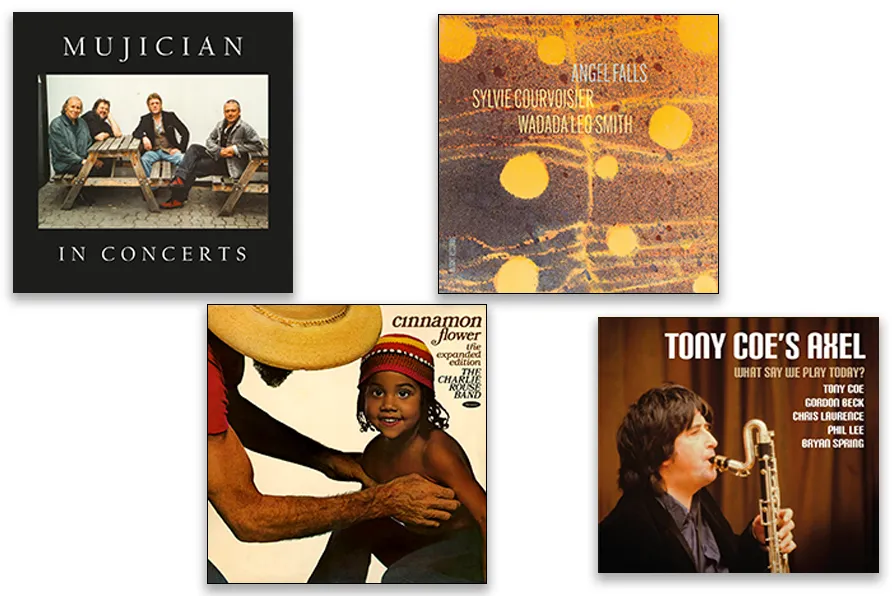
MANY jazz listeners have affirmed, that in the long wake of the John Coltrane Quartet, the foursome that has since most touched their brilliance is the English quartet, Mujician. Composed of the Bristolian pianist Keith Tippett, the south London tenor and soprano saxophonist Paul Dunmall, Luton-born seven-string bassist Paul Rogers and the Shropshire drummer, Tony Levin.
Between 1990 and 2005 they waxed six memorable albums on the US Cuneiform label, but now a triple CD has been created by Jazz in Britain, recorded from concerts in Cheltenham (1993), Vienna (2003) and Birmingham (2010). It is a beautiful sonic triptych called Mujician in Concerts, with the four members playing at their unified peak.
Sometimes haunting and hymnal as if coming from ancestral spirits — as in the opening message of Dunmall and Tippett in Cheltenham, othertimes rhapsodic and joyous: “We never spoke about the music beforehand,” declared Dunmall, “we just walked on stage and trusted in the music and each other.”
Rogers is a virtuoso bassist like no other, playing an instrument like no other, and Levin’s sense of time and moment is deeply empathetic, knowing instinctively the musical minds of his quartet-mates. Tippett and Levin are gone, but thanks to devoted and skilled travelling recordists, Andy Isham and Steve Trent, these long and precious musical instants are still with us, throbbing with life and artistry.
Between 1959 and 1970, Washingtonian tenor saxophonist Charlie Rouse (1924-88) was the featured horn of Thelonious Monk’s Quartet, and his husky, quasi-adenoidal tone became the companion sound to Monk’s genius melodies and “brilliant corners.” But he showed another sphere when he recorded Cinnamon Flower in 1977, an album full of sounds of Brazil. The new reissue on Resonance Records includes this release with some overdubbing, plus the tracks in their undubbed, original form.
So we have a Latin feast of Rouse with Brazilian compadres trumpeter Claudio Roditi, pianist Dom Salvador and drummer Portinho, plus the great Michigan-born bassist Ron Carter, late of the Miles Davis Quintet. Rouse is joyous, in another element, on Cinnamon Flower, buoyed up by a relentless rhythmic upsurge and melodic beauty, for example on Desencontro (Disenchantment), and his notes leap up blissfully on Alvorada. It’s a powerful reissue, racked with elation and flair.
The great Mississippi-born trumpeter Wadada Leo Smith is 84 this year, but it hasn’t curtailed his mighty breath. His new album is Angel Falls (Intakt Records), partnered with the Swiss pianist Sylvie Courvoisier, whose pianism he describes as “advancing as if she’s going there to save creation.” In the destructive era of Trump and Musk that is certainly what they are both doing, with power and beauty too. Wadada’s horn talks fire and Courvoisier’s keyboard words make a palaver of freedom. No wonder one track is called Sonic Utterance, for that is what the entire album is.
Finally there is the burning saxophonist of Canterbury, the late Tony Coe. In 1977 his quintet, Axel, recorded the tracks of What Say We Play Today? (Jazz in Britain Records) at the Camden Jazz Festival. It’s taken 48 years, but now it’s there for us.
Pianist Gordon Beck, guitarist Phil Lee, bassist Chris Laurence and drummer Bryan Spring join Coe for a gripping performance, with the final title track reaching 28 minutes. Throughout, sheer musicianship excels, with the luminous, underrated Lee taking on the prominence of a second horn, and Coe playing clarinet, bass clarinet, soprano and tenor saxophones as if he were born to each. The fivesome create their own inventive sound, driven by uniqueness.